Get Full Government Meeting Transcripts, Videos, & Alerts Forever!
Get email alerts on the Health Insurance Assessment topic
No spam. Unsubscribe anytime.
Carroll County seeks delegation meeting after $164,000 interlocal trust assessment
Summary
County officials said a receiver for a dissolved New Hampshire interlocal health trust has assessed Carroll County about $164,000 to cover outstanding claims; commissioners voted to ask the county delegation to consider the payment and to hold a supplemental budget meeting.
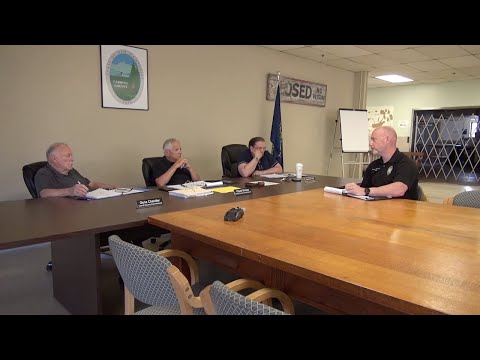
Carroll County commissioners voted to ask the county delegation to meet and consider a supplemental budget request after the receiver for a dissolved New Hampshire interlocal health trust issued an assessment of about $164,000 to the county.
The county’s executive director told commissioners the trust, which had collected premiums and worked with Harvard Pilgrim as the health plan administrator, was dissolved and a receiver was appointed. The receiver, the executive director said, set a county assessment equal to Carroll County’s 6.5% share of the trust’s base and told officials that, “if we pay the assessment, he’ll pay all of our outstanding claims.”
County leaders said the receiver requested the payment “by today,” though the board and staff are relying on the county delegation’s supplemental budget process — which runs through Aug. 31 — to authorize use of fund balance for the unbudgeted expense. The executive director told the commission that the county has the fund balance to cover the assessment but needs the delegation’s formal approval to proceed.
Why it matters: officials said providers could otherwise bill individual employees or members for claims if the trust’s liabilities are not covered. Commissioners described the situation as out of the county’s hands and said they sought the delegation’s review to avoid exposing employees to collection actions and to preserve the county’s claims payments.
Discussion and next steps
Commissioners described several uncertainties raised by the collapse of the interlocal trust: whether the receiver’s assessment will prove final (staff said additional money could be requested if more claims arrive within the year-long provider submission window), whether some money could be refunded later if the assessment exceeds actual claims, and who will administer claims going forward (the secretary of state’s office and a court-appointed receiver were described as involved).
After discussion the commission approved a motion asking the county delegation to convene and consider a supplemental appropriation from fund balance to cover the $164,000 assessment. Commissioners also voted to send a letter to the delegation requesting a meeting to address the assessment and other pending supplemental items. Commissioners said they had already contacted the secretary of state’s office for information on the process and that the delegation had been notified earlier but had not yet held a meeting.
Votes at a glance
- Motion to ask the delegation to consider the interlocal trust assessment and handle approval via the supplemental budget process: approved (motion and second made on the record; one commissioner spoke in opposition during the roll call discussion). - Motion to send a letter to the delegation requesting a meeting on the assessment and other supplementals: approved unanimously on voice vote.
What county staff said about the assessment
Staff characterized the assessment as a receiver-driven calculation tied to outstanding claims through June 30 and said providers have up to a year to submit late claims, which could change final amounts. County staff said Carroll County’s portion equals 6.5% of the pool of participants that the receiver used to apportion the assessment.
Officials said the county recently switched employee coverage to Anthem effective July 1 and that employees’ current coverage is not disrupted by the assessment process; however, staff stressed their preference to have the delegation authorize the county payment rather than put employees at risk of retrospective collection.
Context and uncertainty
Commissioners and members of the public questioned why the trust failed to carry sufficient reserves or reinsurance and whether the trust’s structure and oversight contributed to the assessment. Several commissioners described the matter as an unexpected, unbudgeted expense and urged the delegation to treat it as urgent. County staff said they had sought and received initial guidance from the secretary of state’s office but had not resolved all legal or administrative questions.
The commission did not adopt a final payment at the meeting; instead it asked the delegation to consider a supplemental appropriation and instructed staff to keep the delegation and providers informed as the situation develops.