Get Full Government Meeting Transcripts, Videos, & Alerts Forever!
Columbus officials highlight recycling gains and landfill pressure, urge more diversion
Summary
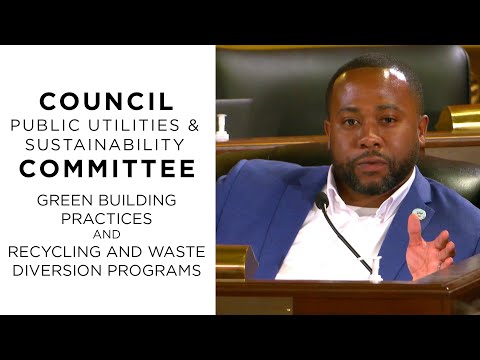
Council Member Weiss opened a Public Utilities and Sustainability Committee hearing where city and Franklin County officials outlined existing recycling, food‑rescue and convenience‑center programs that divert tens of thousands of tons from the landfill each year and warned that roughly 40% of household waste could still be diverted under current programs.
Council Member Weiss opened the Public Utilities and Sustainability Committee hearing with an informational overview on waste and recycling in Columbus. Tim Swager, the city’s refuse administrator, told the committee: “We visit 350,000 of our residents every single week.”
The city and the Franklin County solid-waste district (Swayco) described existing diversion programs and the potential to send far less material to the region’s landfill. Swager said a recent landfill characterization found “about just over 40% of what residents currently throw away could be recycled in our current programs.” He added that curbside recycling and the city’s yard‑waste program now divert significant tonnage: “With our biweekly yard waste program, we have over 16,000 tons diverted” and “we also divert 34,000 tons just through the curbside recycling.”
Joe Lombardi, executive director of Swayco, said the district operates the county landfill and two transfer stations and that keeping tonnage down is a regional priority. “We only have 1 landfill here in Central Ohio,” Lombardi said, noting that an Ohio EPA approval in February 2016 extended the landfill’s permitted life to 2062 based on then-current data but that continued growth could shorten that projection. Lombardi warned that if disposal destinations change, transportation costs would rise, pressing municipal budgets and, ultimately, residents.
Why this matters: The city provides refuse service from the general fund rather than charging each household directly; higher…
Already have an account? Log in
Subscribe to keep reading
Unlock the rest of this article — and every article on Citizen Portal.
- Unlimited articles
- AI-powered breakdowns of topics, speakers, decisions, and budgets
- Instant alerts when your location has a new meeting
- Follow topics and more locations
- 1,000 AI Insights / month, plus AI Chat