Lancaster County unveils GIS-based road inventory, staff says 48% of county centerline data compiled
Loading...
Summary
Public works staff and consultants described a new GIS-integrated county road inventory and mapping tool intended to list ownership, maintenance responsibility and future pavement-condition analyses; the inventory is 48% complete and will be expanded if FY26 funding continues.
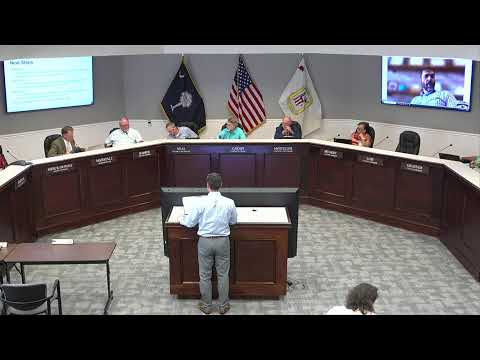
Lancaster County staff briefed the county council July 15 on a new GIS-based road inventory intended to replace out-of-date paper records and fragmented datasets and to provide a searchable public map of road ownership and condition.
Public works staff member Jeff Cato said the county currently maintains roughly 1,400 miles of publicly maintained roadway and that the most recent consolidated inventory work shows 681 miles of county-managed GIS centerline, of which 324 miles (about 48%) have been integrated into the new system.
Cato said the inventory combines deeds, county GIS, assessor records and other datasets to determine ownership and maintenance responsibility for road segments. The platform will be GIS-integrated, expandable and maintainable so the county can update accepted roads or abandoned segments without returning to a paper binders system.
The tool includes planned features for pavement-condition ratings (engineered "good/average/poor" categories), layer-based displays (state, county, municipal, private roads) and searchable segment IDs. Cato demonstrated how the map can be queried by road name or by a four-digit segment ID and said staff have allocated $100,000 in the FY26 budget to continue developing the infrastructure prioritization plan.
Consultants from Kimley Horn and the county—s new GIS analyst, Marcus Cureton, joined the presentation and said the platform will use Esri software and can host multiple layers (traffic counts, stream crossings, signage, stormwater crossings) and could, if desired, include automated updates or AI-assisted workflows in the future.
Council members asked whether the map would display maintenance responsibility layers (state vs. county) and whether traffic or pavement-wear data could be shown; Cato and the consultants confirmed both are feasible. Cato said the inventory will eventually be accessible on the county website with search and click-to-display functionality similar to other statewide roadway information tools.
Ending: Cato told council the inventory would continue in phases this fiscal year and could go live if FY27 funding is approved.