Get Full Government Meeting Transcripts, Videos, & Alerts Forever!
Get email alerts on the Youth Sports Protections topic
No spam. Unsubscribe anytime.
House committee hears wide-ranging debate on youth-sports bill; agencies urge clarifications, federations seek exemptions
Summary
Proyecto de la Cámara 5‑21 would impose age-based limits on competition and practice, caps on games and weekly practice hours, and rules on outdoor activity during hottest hours. DRD supports the goal and asked that protections extend to 18-year-olds and that funding and enforcement resources be assigned; COPUR and federations warned a one-size-f
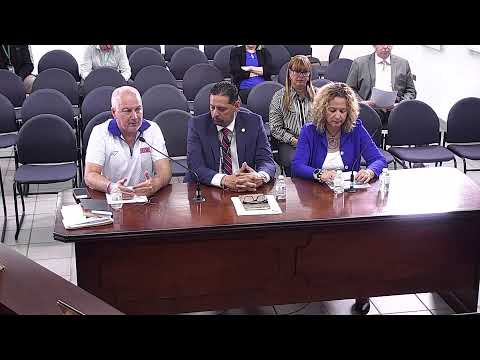
Lawmakers, sports officials and federations spent an extended House public hearing debating Proyecto de la Cámara 5‑21, a measure that would amend Ley 28 (2019), the charter of rights for child and youth athletes, to set specific rules on participation, practice hours, travel and heat exposure for minors in organized sport.
What the bill would do
As presented at the hearing, the bill proposes: - For ages 5–8: participation limited to strictly recreational activity; no formal competition; official match scoring not shown until age 9. - For ages 9–17: limits on competition in high‑effort or contact sports to a maximum of two games per day and three games per week, with a minimum rest period of 1 hour 30 minutes between matches. - Practice-time caps: maximum weekly practice of 4 hours for ages 5–11 and 6 hours for ages 12–17, counting school sports and private leagues. - Prohibitions on outdoor competitions and training under direct sun between 11 a.m. and 2 p.m.; a Sunday–Thursday curfew: games and practices may not end after 10 p.m.; and during Monday–Thursday no event may be scheduled that requires more than 80 minutes of travel time from a team’s home site.
Department of Recreation and Sports (DRD)
Edwin Hernández and María Isabel Velázquez García presented the DRD position. The department endorsed the bill's purpose and recommended key changes: DRD suggested extending protections to 18‑year‑olds by aligning the amendment with the law’s existing age range (the law defines child and youth athletes through age 18), and urged that the legislative initiative include resources to ensure enforcement.
Velázquez noted the DRD already maintains a protection/regulatory framework, offering trainings, a parent-school program and a published guide that is distributed to entities seeking accreditation. "La práctica deportiva en la niñez debe enfocarse en el su desarrollo motor, en su desarrollo emocional y social del niño," said Sara Rosario of the Comité Olímpico (quoting the broader testimony), while DRD staff described efforts to identify regional interventors. DRD told members it has been training nine regional intervenors (it had sought 14 in budget requests) to help with oversight.
Federations, clubs and other stakeholders
Sara Rosario, president of the Puerto Rico Olympic Committee (COPUR), and federation representatives said the measure's intent is laudable but warned that the proposal is overly broad for the diversity of sports. "La infancia en el deporte debe ser una etapa de formación y de no de exigencia," Rosario said, and she recommended exemptions or tailored rules for federations and for disciplines governed by international bodies, noting federations already use sport‑specific technical rules and age categories.
Club and league representatives raised recruitment and competitive‑opportunity concerns. Ferdinand Cedeño (Puerto Rico Basketball School) urged the committee to consider college‑recruiting realities and argued that rigid limits on games and weekly hours could reduce exposure to scouts and impede athletes’ pathways to scholarships. He and others asked for clearer exemptions for federations and for high‑performance pathways.
Other concerns and operational details
Witnesses and committee members discussed enforceability and costs: who pays for shade structures, how municipalities and small community clubs will comply, and whether the DRD has staff and budget to inspect and sanction noncompliant entities. DRD officials said many of the regulatory and educational materials are available but that budget constraints limit active enforcement outside the San Juan metro area; the DRD said it has started training regional staff and will expand monitoring if resources are provided.
Several legislators and witnesses urged the committee to rely on DRD's existing regulatory framework and on a public rule‑making process that would use scientific and sport‑specific criteria to set final parameters, rather than attempting a single uniform statute for every discipline. Members also asked whether prescriptive language should be narrower and more sport‑specific and whether the law should exempt federations that operate under international competition rules.
Next steps
No vote or final action was taken. Committee members signaled interest in harmonizing the bill with DRD regulations and in convening stakeholders (federations, COPUR, municipalities and club representatives) to refine definitions, exceptions and enforcement mechanisms. The committee recorded a request that DRD provide its existing guide to the committee record within five days.
Ending
The hearing produced broad agreement on the bill’s goals — protect children’s health and promote appropriate development — while highlighting the tension between uniform statutory limits and sport‑specific technical needs. The committee will consider technical changes and stakeholder input before reporting any recommendation.