Get Full Government Meeting Transcripts, Videos, & Alerts Forever!
Get email alerts on the Municipal Finance topic
No spam. Unsubscribe anytime.
Sunnyvale council tables broad fee-schedule overhaul after staff presentation; asks for line-by-line review
Summary
After a multi-department staff presentation on proposed user-fee updates, Sunnyvale Town Council voted 6-0 to table first reading of the comprehensive fee-schedule ordinance and asked staff to return with a breakdown emphasizing fees that affect existing residents.
Sunnyvale Town Council on Monday voted to table the first reading of a sweeping update to the town's fee schedule until the Oct. 13 meeting, citing concerns about how some changes would affect current residents. The motion to table passed 6-0; Councilmember Robert (Robert) Woodrow moved to table the item and Councilmember Clark seconded the motion.
Staff said the update was the product of a comprehensive review intended to bring fees into compliance with state law, align them with peer cities and reduce the general-fund subsidy for user-provided services. "We had 1 fee that's gonna be decreased, 4 increased, and then 31 fees that are currently set, and then 2 new fees are added," said Mikaela (town staff member), who led the presentation. She told the council the package would reduce the general-fund subsidy for general fees from about 41% to roughly 31%.
Why it matters: Town staff told the council the review was intended to make fees recover more of the direct costs of services so taxpayers do not fully subsidize users of specialized services such as commercial plan review, animal-control boarding and large-event support. Council members pressed staff on the potential effect on homeowners, arguing that residents already pay property taxes to support town services and that some changes would amount to an additional, regressive cost.
Key proposals and examples given during the presentation included: - Research/copy requests: proposed increase from $25 to $30 to cover staff time for ordinance research and photocopying. - Mailing-label requests: increase from $75 to $80 to cover label cost. - Large-event park deposit: new refundable $500 deposit for events over 100 people to cover dedicated police presence and facilities support; separate $75 per-attendant (parks or police secondary) charge was described. - Contractor registrations: moving several contractor-registration fees from $75 to $125 to cover ongoing registration and complaint-handling costs. - Animal-shelter/animal-control: proposed increases and new fees including raising boarding from $10 to $200 per day (staff said $200 better reflects market boarding costs), dangerous-dog registration from $130 to $150, and passing vet testing costs to owners when applicable. - Residential building-related items: additions of fees for remodels/renovations, deck/patio/porch covers and temporary certificates of occupancy; staff said residential permit fees had not been updated in nearly 20 years. - Engineering/planning: changes to bring fee structure into compliance with House Bill 3492 (requiring certain flat fees and limiting some calculations tied to construction cost).
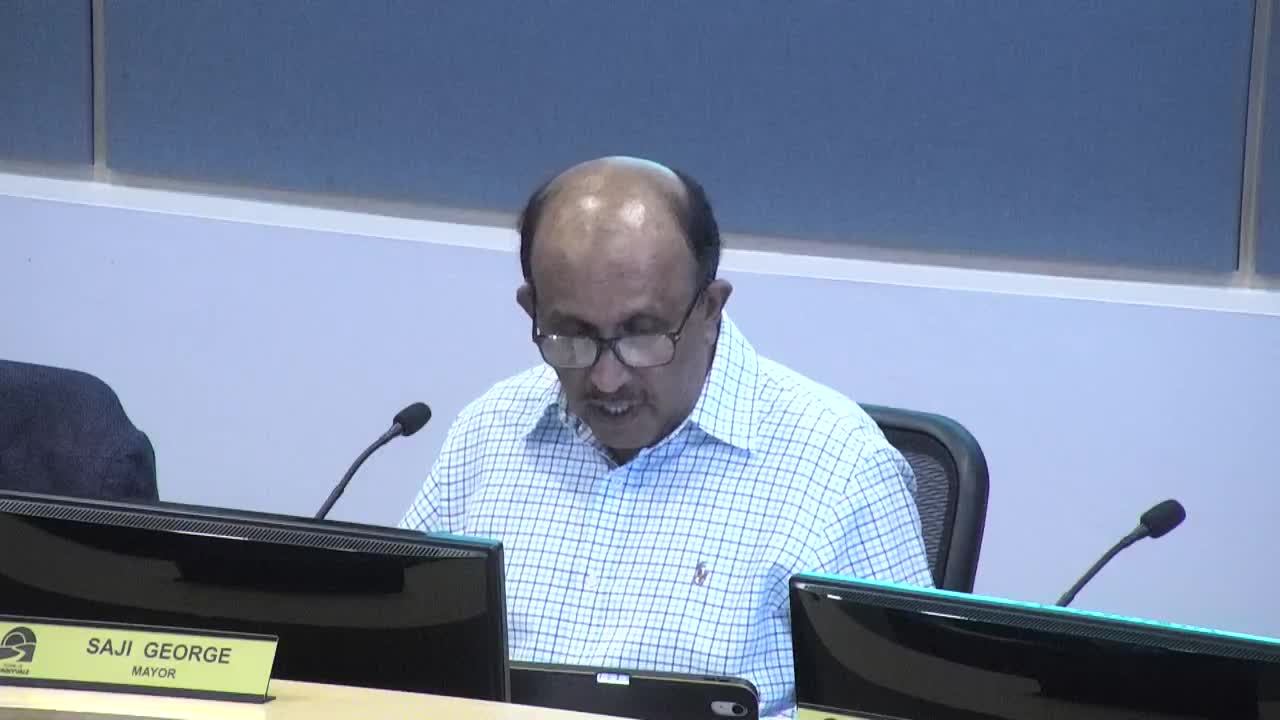
Council debate focused on whether fees intended for commercial or new-development activities would in practice affect current homeowners. Mayor Sajid George and other council members asked for clearer separation between fees that would primarily affect developers and those that would affect existing residents. Councilmember Woodrow argued against broad increases that he said would feel like a second tax: "Tax is a tax, fees a tax," he said during debate, adding that he wanted more time to review residential-facing proposals.
Council asked staff to return with a refined presentation that separates fees by (a) residential vs. non-residential impact, (b) new vs. existing residents, and (c) explicitly lists the new fees staff proposes to create. Mikaela said she would provide a line-item breakout and the requested comparisons to peer cities and the North Central Texas fee study.
The council directed staff to return the item for discussion at the Oct. 13 meeting and indicated staff should prepare either a workshop or a separate meeting to walk council through the proposed resident-facing fees in detail.
Ending: Staff will prepare the requested line-by-line breakdown and examples of where the revenue will be booked (e.g., general fund vs. utility fund) and bring the item back on Oct. 13 for further council consideration.