Get Full Government Meeting Transcripts, Videos, & Alerts Forever!
Get email alerts on the Education Budget topic
No spam. Unsubscribe anytime.
Winston‑Salem Forsyth County Schools interim superintendent details budget shortfall, Article 46 supplement complexities
Summary
Interim Superintendent Dr. Katie Moore briefed commissioners on an FY25 budget shortfall now estimated at $11.3 million, described appeals to the state Department of Public Instruction on interest and explained how Article 46 local supplement funding has been handled and will be separated for transparency.
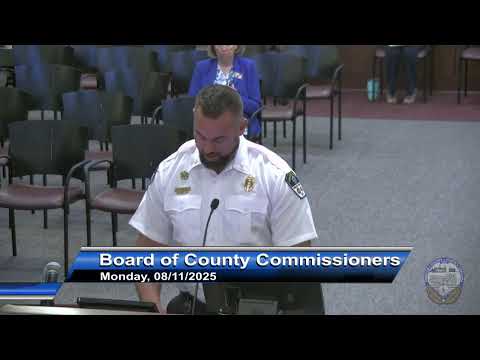
Dr. Katie Moore, interim superintendent of Winston‑Salem Forsyth County Schools (WS/FCS), told the Forsyth County Board of Commissioners at an Aug. 11 briefing that the district is seeking flexibility and additional local funding to address an FY25 shortfall and that accounting and policy changes are under way for Article 46 supplemental pay.
The most newsworthy point: Moore said the district’s net shortfall to the Department of Public Instruction (DPI) has declined since June and is now $11.3 million, and she said the district has been notified DPI will begin charging interest at 1% per month on any balance remaining after Sept. 20. "We have until September 20 to pay the 11.3 that is owed," Moore said.
Nut graf: The briefing explained why the shortfall changed, how Article 46 funds have been used to top up veteran teacher pay in prior years, and what the district and county are doing to increase transparency and manage cash‑flow and interest exposure while the district appeals state decisions.
Moore described two parts of the district’s request to the commissioners: (1) a capital outlay reallocation of $3.8 million drawn from project savings and (2) an additional local funding request of $4.7 million to address operating needs. Moore said the $3.8 million is part of roughly $6.6 million that appears available on county ledgers but some of that is obligated to projects; the $3.8 million portion was unspent and undesignated.
On the state shortfall and interest, Moore said the figure has fallen from earlier estimates (about $18 million in late June, then $13.7 million after closing the school year) to $11.3 million based on DPI cash‑withholdings and final accounting. She said the school board will request an appeal through the state board of education panel to seek waiver of the 1% monthly interest the superintendent’s office intends to charge if a balance remains after Sept. 20.
Moore explained Article 46 and local supplements: Article 46 provided a separate monthly flat supplement that began at $200 per month and later rose to $300. The district has historically combined local supplements and Article 46 supplements on employee paychecks, but the underlying salary schedules show separate components and a subset of longer‑tenured certified staff received an additional, one‑time adjustment in fiscal year 24. Moore said the district will start showing Article 46 as a separate payline (separate PRC code) so commissioners and staff can track revenue and spending annually. "We need to show where the money is going and how it's being used," she said.
Moore also noted the district used about $4 million in fund balance tied to Article 46 one year to increase pay for veteran teachers and that has contributed to the present gap between recurring supplement commitments and available Article 46 revenue. The district is undertaking reconciliations and agreed to provide the county the requested reconciliation reports on a quarterly basis (the county’s budget ordinance requires quarterly reporting).
Commissioners and Moore discussed practical steps: whether child‑nutrition funds (the district reported about $2.22 million temporarily withheld) could be used to reduce interest exposure; which debts to prioritize; and whether commissioners might consider temporary forgiveness or offsets. Commissioner Bill Gray urged leniency, saying "find the ways to offer grace of forgiveness." Moore said she and district staff would continue to seek legislative help, pursue DPI appeal channels and bring detailed reconciliation reports back to the county.
Moore described operational consequences and emphasized impacts on students and staff: with personnel reductions already underway, the district is monitoring how staffing changes affect classrooms and will report back as reductions and savings materialize. She told commissioners to expect further budget conversations this fall and that additional clarity should be available by February–April when position reductions and their budgetary effects are clearer.
No formal county action was taken at the briefing; Moore indicated the school board will request the county to reduce the district’s appropriation for certain payments to the sheriff and county (SRO and exceptional children nurses) so funds can remain on the county side and avoid back‑and‑forth checks.