Get Full Government Meeting Transcripts, Videos, & Alerts Forever!
Get email alerts on the Energy Pipeline topic
No spam. Unsubscribe anytime.
Forsyth advocates press commissioners to oppose Transco’s SSEP pipeline over safety and local impacts
Summary
Environmental groups urged the Forsyth County commissioners to pass a resolution opposing the Southeast Supply Enhancement Project, citing proximity to schools, hospitals and existing pipeline corridors and urging regulators to require more study. Williams (Transco) representatives defended safety practices and described economic benefits.
Caroline Hansley, a campaign organizing strategist with the Sierra Club, and Jessica Mendez Rowe of the Piedmont Environmental Alliance urged the Forsyth County Board of Commissioners on Aug. 11 to adopt a resolution opposing the Transcontinental Gas Pipeline Company’s Southeast Supply Enhancement Project (SSEP).
The speakers told the commissioners the project would add two new Transco pipeline segments in North Carolina and Virginia to transport about 1,600,000 dekatherms per day and that the proposal would run in places close to homes, schools and medical facilities in Forsyth County. "This proposed pipeline, in fact, is not going to bring any benefit to our local economy and, in fact, will only bring risks to our health and to our safety," Hansley said.
The nut graf: Environmental advocates said state and federal decisions are imminent and a formal county resolution could be submitted as public comment to regulators. The project is under Federal Energy Regulatory Commission (FERC) review and the North Carolina Department of Environmental Quality (DEQ) is taking public comment on state water quality permits that include hearings in early September.
Advocates presented specific concerns. They said Transco’s application seeks to move an additional 1,600,000 dekatherms per day through a 42-inch pipeline and that roughly 93% of that gas, they say, would serve three large commercial users for power generation rather than local residents. They cited FERC’s decision to prepare an environmental assessment rather than a full environmental impact statement and said the assessment process has not addressed cumulative safety questions raised by the presence of multiple, collocated pipelines. "The benefit of the projects are not realized by those who are impacted," Mendez Rowe quoted from Transco’s own application to emphasize the point about local benefits.
Speakers identified local institutions near the proposed right-of-way: Novant Health Kernersville Medical Center, a VA clinic, four public schools (Caleb Creek Elementary, Union Cross Elementary, Southeast Middle and Robert Glenn High School), the North Carolina Leadership Academy charter school and Bishop McGuinness High School. They said the right-of-way crosses major roadways (U.S. 421, N.C. 66, I‑40, I‑74) and pointed to federal pipeline safety agency (PHMSA) limits on calculating impact zones for multiple adjacent pipelines.
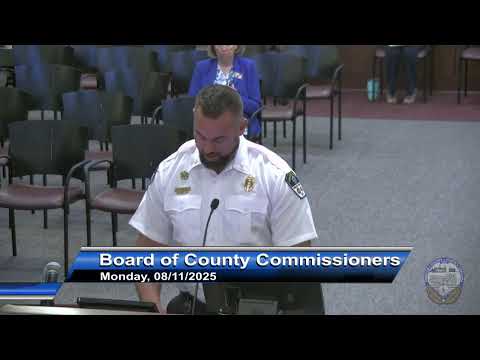
Representatives of Williams, the company that owns Transco, briefed the commissioners later in the meeting and defended the company’s safety and community practices. Mike Achi of Williams described the Transco system as an established interstate pipeline network and emphasized its maintenance and monitoring program, saying, "safety is first and foremost for us." Williams said the local portion of the SSEP would add looping in the existing corridor and compressor modifications, and that the company conducted community outreach, first‑responder briefings and technical integrity testing such as inline inspection tools, cathodic protection and aerial patrols.
Williams also described projected project benefits: the company listed a roughly $1.2 billion capital investment, an estimated 3,000 jobs tied to the project (about 1,300 construction jobs) and local business activity during construction. The company stressed that FERC is the lead federal permitting agency and noted multiple public participation opportunities, including the FERC docket and state DEQ public comment periods.
Commissioners asked Williams about specific safety incidents cited by opponents and about how advocacy messages were solicited from supporters. Williams said it tracks incidents and performs corrective actions, and said supporter emails came from opt‑in advocacy campaigns; commissioners and staff noted some residents reported receiving messages they did not expect and asked Williams to stop mass solicitations pending clarification.
The advocates concluded by asking the county to resume and build on prior county positions on clean energy and to file any opposing resolution as a comment in both the FERC docket and state permitting processes. They highlighted a DEQ public hearing scheduled in Kernersville on Sept. 4 and reminded commissioners that FERC plans a comment period in November on a draft environmental assessment that would end Dec. 7, after which FERC may act on Transco’s certificate request.
The commissioners did not vote on a resolution during the briefing; advocates asked the board to consider a formal resolution at an upcoming meeting so it could be filed with regulators.
The county manager and staff said Williams and other stakeholders will continue outreach and that commissioners could direct staff to draft a resolution if they choose.