Get Full Government Meeting Transcripts, Videos, & Alerts Forever!
Get email alerts on the Water Wastewater Rates topic
No spam. Unsubscribe anytime.
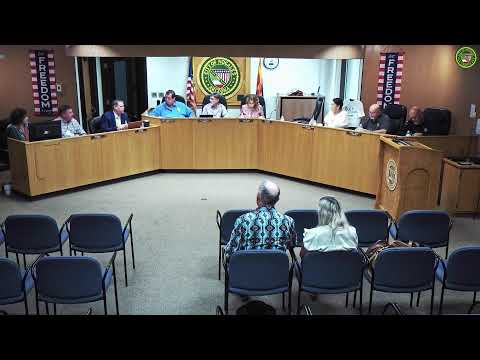
Nogales leaders weigh tens of millions in water and sewer costs, possible rate doubling
Summary
City officials reviewed a 2020 WIFA loan program, an updated rate study and options that could more than double residential water bills as they decide whether to borrow roughly $38 million to finish previously engineered projects and address long-term system needs.
Nogales — City officials presented a financial “bookend” analysis July 30 showing municipal decisions on a 2020 Water Infrastructure Finance Authority (WIFA) loan will shape utility rates for years.
"I started working for the city as your financial adviser ... In early 2020 the city issued its water and wastewater loans through WIFA, approximately $15,000,000 — $10,000,000 for water, $5,000,000 for wastewater," Michael Vasquez, managing director at Willdan Finance Services, told the council. "To complete the 2020 projects, the city would have to borrow an additional $30,400,000 for water, an additional $7,500,000 for wastewater — that's a total of $38,000,000."
Why it matters: Council members were told the city is already paying debt service on $15 million that produced designs and a small number of completed projects; completing the projects and addressing degraded infrastructure will require substantially more borrowing or higher rates. Vasquez presented three scenarios: (1) pay off existing debt and do no further construction; (2) borrow the additional $38 million to finish the 2020 projects; or (3) borrow to finish the 2020 projects and issue further debt over the next 10 years to address broader system needs (staff estimated roughly $37 million more over 10 years — about $22 million water, $14.5 million wastewater).
Council members repeatedly raised accountability and timing. "We paid for engineering for these projects and they weren't going to be done," Councilman Doyle said, arguing earlier choices left the city with detailed plans but few completed projects. Several members asked for a forensic accounting of how the original WIFA funds were spent before asking residents to pay more.
Officials stressed constraints from lenders. "If you go buy a car with very little money in your savings account, are you gonna get good rates?" City Manager Kramer said, reporting state WIFA contacts told staff low enterprise fund reserves make borrowing more difficult or costlier. Vasquez said some loan forgiveness features tied to the original WIFA package still appear possible but emphasized that new borrowing would be serviced by utility rates, not general excise taxes.
On potential rate effects, staff said a preliminary scenario could require a substantial rate increase; council members and consultants used an illustrative figure of about a 113% increase in some scenarios — roughly doubling typical residential bills — though Vasquez described the analysis as “bookend” estimates and said a final rate study will refine numbers. "This is a study session. No action," an official reminded the room during the discussion.
What council directed and next steps: Staff said they will continue the formal rate study and return with more detailed, vetted scenarios and supporting documents. Multiple council members requested a written accounting of the 2020 WIFA expenditures and the list of shelved projects before any formal rate proposal. Vasquez and staff also recommended hiring dedicated project management oversight if the city borrows again so engineering dollars translate into completed construction.
Ending: The council did not vote on rates or borrowing July 30. Officials said they will present the rate study and additional documentation at future meetings and suggested study sessions in September and October to give the public and council time to review options.