Get Full Government Meeting Transcripts, Videos, & Alerts Forever!
Get email alerts on the Railroad Crossing Public Comment topic
No spam. Unsubscribe anytime.
Resident tells council railroad work at Fourteenth Street crossing left street blocked; city attorney cites easement/legal complexity
Summary
A resident said recent railroad track work left asphalt in the roadway and blocked a public crossing near the county jail; the city said responsibility depends on easements and federal/railroad authority and offered to follow up.
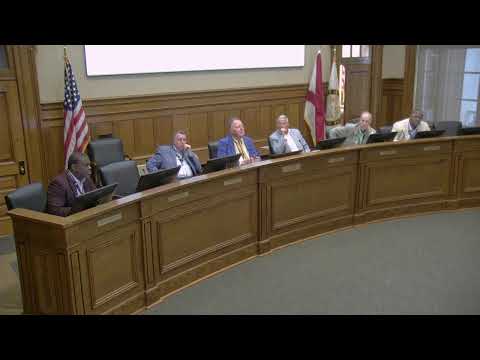
Stanford Kelly, who said he lives at 2614 Fourteenth Street, told the Tuscaloosa City Council that recent railroad track work at the crossing near Sixteenth Street and T.Y. Rogers Jr. Avenue left a section of asphalt that prevents residents from crossing the tracks. "They tore the road up, put down new cross ties, new rails, and left the asphalt in the middle of the road where the public can't go back and forth across the railroad," Kelly said during the citizens' comment period.
Kelly said the blocked crossing is near the county jail and described prior disruptions, asking the council to take action to reopen the thoroughfare. He said the work included new ties and rails but left a "power last fall in the middle of the road" that blocks vehicle movement.
A council member acknowledged the complaint, noted safety concerns and said decisions involving railroads sometimes require balancing safety and convenience. The mayor and staff said they had been in contact with public safety and other agencies about quality-of-life impacts such as train horn noise. City Attorney Holmes responded that responsibility depends on whether the railroad has an easement or the city holds an easement over railroad property, and that the specific crossing's legal status would determine what steps the city could take.
Kelly told the council he has had difficulty getting railroad companies to act in past situations and asked the city to pursue the matter. The mayor and council offered to speak with Kelly after the meeting and to follow up with relevant city staff and legal counsel to determine what authority the city has regarding the crossing.
No immediate enforcement action was ordered at the meeting; staff indicated they would take the next steps to determine easement status and potential remedies.