Get Full Government Meeting Transcripts, Videos, & Alerts Forever!
Get email alerts on the Economic Development topic
No spam. Unsubscribe anytime.
Taunton economic director urges Lakeville to build developer pipeline; committee sets survey and blight review
Summary
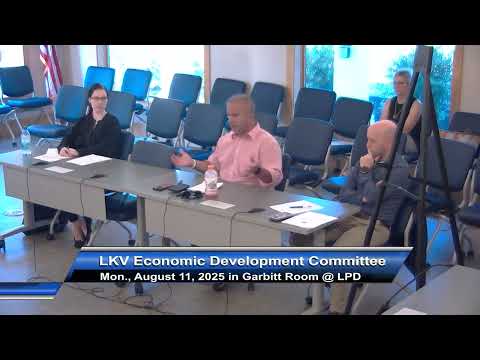
Jay Patikos, economic and community development director for the City of Taunton, told the Town of Lakeville Economic Development Committee on Aug. 11 that targeted outreach, a single local developer champion and community forums helped Taunton attract investment and that Lakeville should inventory sites, name a single outreach contact and run short resident and business surveys.
Jay Patikos, economic and community development director for the City of Taunton, told the Town of Lakeville Economic Development Committee on Aug. 11 that targeted outreach, a single local developer champion and public community forums helped Taunton break through long-running local resistance and attract new projects.
Patikos spoke during a guest presentation at the committee's meeting and described tools and tactics Lakeville officials could use, including active outreach to national and regional retail/restaurant real-estate teams, a subscription commercial-leads service he uses, more visible community engagement and a small set of financial tools such as tax-increment financing (TIF) or grant packaging where available. "You need 1 person, 1 developer to believe in it," Patikos said of starting redevelopment on large, blighted parcels.
The presentation came as committee members discussed local constraints that complicate business attraction, notably limited municipal water and sewer infrastructure along Route 105 and the strip the committee repeatedly described as "blighted." Patikos acknowledged the utility limits but said some projects build private wastewater systems or package infrastructure costs into deals. He recommended inventorying town-owned and privately held sites, identifying a single outreach point and using community forums so residents hear proposals and questions before matters reach town meeting.
Patikos described Taunton examples he said Lakeville could study: a multi-building redevelopment on a former mall site where utilities and highway access made phased industrial and distribution buildings viable; a housing project that returned a payment at closing and long-term tax revenue despite a large developer tax-exemption package; and smaller placemaking projects such as a five-store retail pad that generated visible activity. He also described a market-outreach tool he uses, RetailSphere, and said its list-based outreach to real-estate decision-makers helped him reach executives and site selectors. Patikos said the vendor lists in his market tool cost about $9,000 per year; he noted municipalities sometimes negotiate lower pilot or town prices.
Committee members followed the presentation with questions about zoning, re-use of the former hospital site and how to attract anchors such as supermarkets. Members noted Lakeville lacks a formal blight bylaw and face a history of resistance at town meeting for rezonings; several speakers said that reality drives some developers toward Chapter 40B (state affordable housing) routes that avoid local rezoning votes.
Public comment emphasized agribusiness and farm-related tourism as complementary opportunities. Noel (resident) suggested farm venues and agritourism, saying those draws supported retail spending in neighboring towns and could fit Lakeville's rural character.
Actions and committee next steps recorded during the meeting included: - Reorganization: The committee accepted a motion to change committee leadership for the rest of 2025; the motion to have the sitting chair step down and nominate the Select Board representative Lorraine as chair carried (outcome: approved). The committee also confirmed that Brian will remain vice chair. (Motion language and outcome recorded in the meeting minutes.) - Minutes approval: The committee voted to approve the July 14, 2025 minutes. Roll call recorded: Wilga, aye; Driscoll, aye; Carboni, aye; Costant, abstain; Sol Davila, aye. Outcome: approved. - Survey and homework: Committee members agreed to draft two short surveys ahead of the next meeting: one 10-question resident survey and one 10-question small-business survey. Members were asked to propose at least 10 candidate questions each before the next meeting so the group can finalize a short instrument for digital and paper distribution. - Site inventory and outreach roles: The committee assigned members to begin an inventory of high‑priority parcels and to identify a single outreach point (staff or volunteer) to log commercial leads and follow incoming inquiries. Patikos recommended that whoever fields leads return contacts promptly; he credited quick responses for several Taunton wins. - Blighted commercial property bylaw: Planning‑board delegate Dan Wilga said towns such as Ashland have adopted commercial blight bylaws with enforcement and fines; the committee asked staff to explore model language for possible future referral to planning/select board and town meeting.
Patikos cautioned that retail often requires low land cost and anchor tenants to be viable; he said in many cases housing or mixed-use starts first, and smaller commercial pads or targeted facade investments can catalyze additional activity. He recommended community forums and televised sessions so neighbors can ask questions before zoning or permit hearings, and described Taunton's community forums for larger projects as helping reduce opposition at final public hearings.
The committee closed the meeting by setting work assignments and scheduling its next meeting for Sept. 15, 2025, at 6 p.m. Committee staff Emily will serve as a staff point of contact for draft survey distribution and web updates. Jay Patikos left contact information with committee staff for follow-up assistance.
The discussion included examples and numeric clarifications given by Patikos (approximate figures provided by the speaker): a 275-unit housing project in Taunton expected to start construction next month; a larger mills redevelopment where a developer received a long-term tax incentive (Patikos cited a $16,000,000 tax-break package in his example) and the city's one-time receipt of closing funds quoted by him (~$2,400,000); and a suggested RetailSphere cost of about $9,000 per year for a subscription of real-estate leads. The committee did not adopt any TIF or incentive agreement during the meeting; members asked staff to prepare background materials for later decisions.
Patikos summarized his outreach advice this way: "Call the owner. Sometimes it's amazing what happens when you just call these people." The committee's next regular meeting will revisit the business guide and finalize survey questions and outreach responsibilities.