Get Full Government Meeting Transcripts, Videos, & Alerts Forever!
Get email alerts on the Immigration Registry topic
No spam. Unsubscribe anytime.
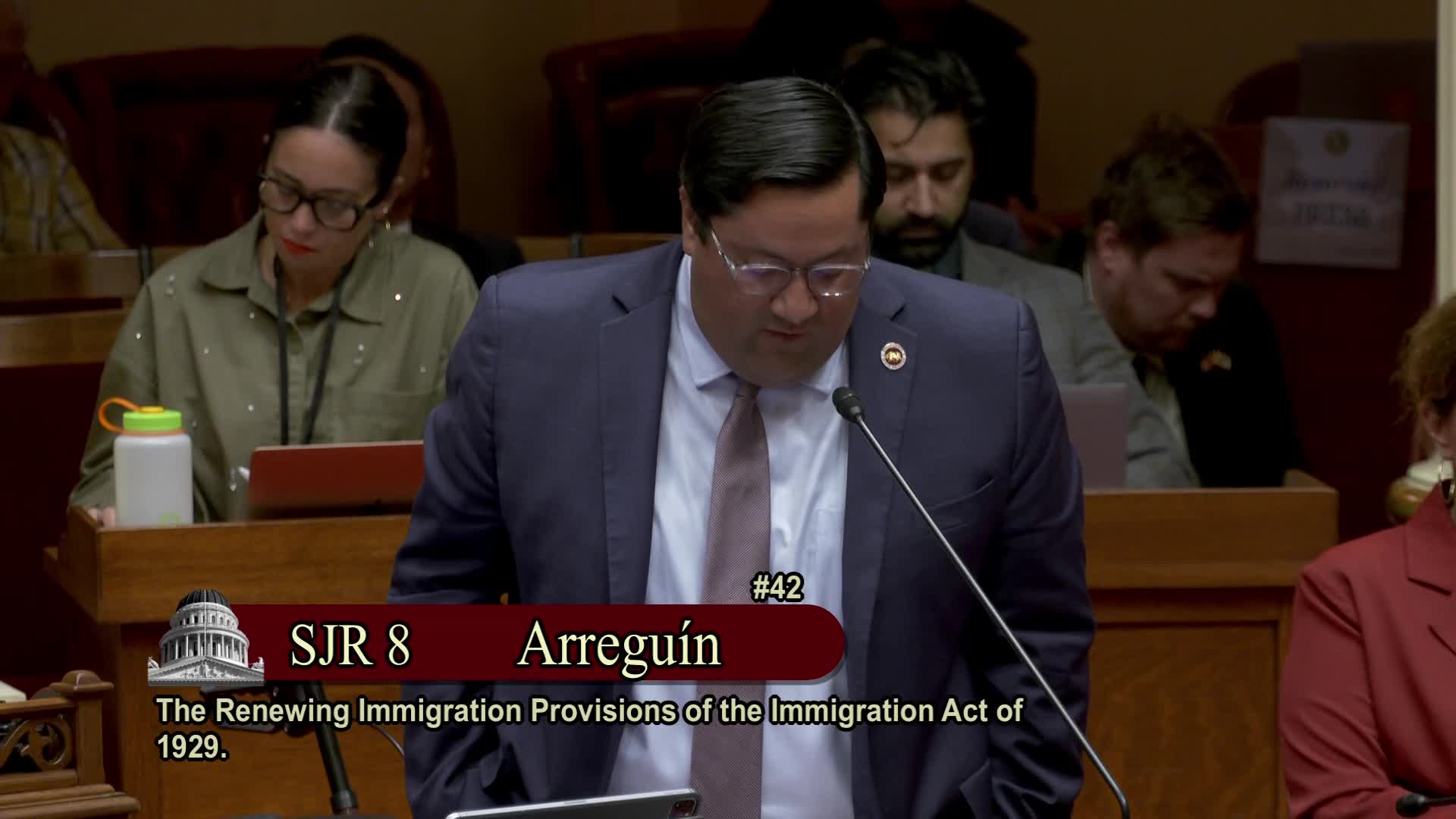
Senate urges Congress to update 1929 immigration registry; SJR 8 passes unanimously
Summary
The California State Senate on Aug. 27 adopted Senate Joint Resolution 8, urging Congress to modernize the federal registry created in 1929 so longtime undocumented residents can pursue lawful permanent status.
The California State Senate on Aug. 27 adopted Senate Joint Resolution 8, a nonbinding state resolution asking Congress to modernize the federal “registry” established in 1929 so that longtime undocumented residents can apply for lawful permanent residency.
Senator Adegin, the resolution’s author, told colleagues the registry “was originally created in 1929 to provide a pathway to legal residency for individuals who've lived in The United States for an extended period of time,” and called on Congress to consider a rolling eligibility rule such as residency of seven years or more.
Supporters said the registry is a narrowly targeted, immediate tool that could grant status to people who have lived, worked and raised families in the United States for decades while Congress continues to consider broader immigration reform. Senator Reyes said the resolution “reaffirms California's commitment to protecting and uplifting our immigrant communities.”
Opponents urged caution. Senator Trovo argued that the registry would be a stopgap that risks leaving people “living in the shadows, at risk of exploitation” and said it should not replace comprehensive, durable congressional reform.
Senator Weiner, speaking in support, framed the issue in concrete terms: “These are people who are taking care of our elders in their homes. These are people who are making sure that we have food. These are people who are building our homes.” He urged federal action to create a feasible path to status.
The resolution also cited two federal bills that sponsors say mirror California’s request: HR 1511 in the House and a related Senate measure put forward by U.S. Sen. Alex Padilla. SJR 8 noted the registry cutoff date has not been meaningfully updated since a 1986 change that effectively froze eligibility and said a modernized registry could affect millions nationwide.
After roughly 25 minutes of floor debate that included both expressions of urgency and calls for broader reform, the Senate adopted SJR 8 by roll call, Ayes 28, Noes 0. Because SJR 8 is a state resolution addressed to Congress, it does not itself change federal law.
Next steps: Because SJR 8 is a formal statement from the California Legislature, its chief effect is political — a formal request to California’s congressional delegation and to Congress to act. Any actual changes to immigration status would require federal legislation.
Votes at a glance: SJR 8 was adopted by a roll-call vote recorded as Ayes 28, Noes 0.