Get Full Government Meeting Transcripts, Videos, & Alerts Forever!
Get email alerts on the Property Tax Assessment Cap topic
No spam. Unsubscribe anytime.
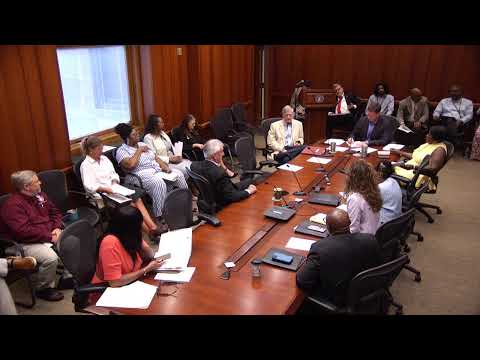
Jefferson County assessor says 7% assessment cap will reduce revenues; schools could lose about $1.6 million
Summary
Tax assessor's office presented county commissioners with preliminary numbers showing a limit on assessed-value increases under a new 7% cap will shrink potential revenue gains; officials were urged to consider budget cuts totaling about $1.6 million for schools.
John Poe, a representative of the Jefferson County tax assessor's office, told county commissioners the state—nacted 7% cap on increases to assessed property values will reduce the county's potential revenue gains and create budget shortfalls for several funds.
Poe said the county—xperienced a rise in overall taxable value for 2025 but because assessed values are capped at 7% the county will not collect the full amount of revenue that would otherwise result from market increases. He provided preliminary estimates showing an approximate $1,051,981 shortfall to the county general fund, $386,439 for roads, $128,813 for sanitation and a total potential loss to the school system of $1,596,009.04.
Those figures, Poe told the commission, come from this year's abstract and the assessor's office calculations comparing true value under market conditions with the capped assessed values. "This year's abstract...because of the cap this year's number is $978,670,372," he said, and described the difference between uncapped market value and capped assessed value as "about 14 weeks" (meaning roughly $14 million in assessed value potential, per his presentation).
Commissioners pressed Poe for procedural clarifications about how protests and board rulings interact with the cap. Poe explained that property owners retain the right to protest their "true value" and that the board of equalization can set a reduced value following a protest. Under the cap, however, an assessed value that has been reduced by a protest may only increase by up to 7% in a subsequent year, meaning growth the assessor records in market value may not be fully reflected in assessed values for tax purposes.
Poe and commissioners also discussed timing: valuation changes are generally applied with a one-year lag, so market shifts this year may affect taxed assessed values in a later year. Poe said the assessor's office sent explanatory letters about exclusions and the cap when the policy was released because there remained unresolved details early in implementation.
Commissioner discussion referenced fiscal prudence and the county's need to identify cuts or reserves to absorb the shortfall; one commissioner remarked, "Cal. We need to find $1,596,000 in cuts," reflecting the amount Poe identified for the schools.
The presentation included additional context: roughly 5,649 protests were filed this year (many tied to a large property owner filing at scale), and the assessor's office fields questions about how investor activity and rehabilitation of homes affect sales comps that drive assessed values. Poe advised that sales-based valuations reflect market activity and that the board of equalization can apply different approaches (including income-based methods) when considering protests.
The assessor's office recommended commissioners review the numbers and consider their budget implications as staff and the board continue implementing the new statutory cap.
Ending: Commissioners did not take a formal budget vote during the presentation; they thanked the assessor's office for the briefing and said they would consider the figures as they move forward with budget planning and any necessary cuts.