Get Full Government Meeting Transcripts, Videos, & Alerts Forever!
Get email alerts on the Emergency Services Mill Levy topic
No spam. Unsubscribe anytime.
Clear Creek officials consider 6.89‑mill increase after survey shows voters can be persuaded on fire and EMS funding
Summary
County officials reviewed a poll of 200 registered voters showing an initial 37.2% support for a proposed emergency‑services mill levy that rose to about 50% after targeted messaging; commissioners and agency leaders discussed ballot language, TABOR/debrucing language and a proposed 11.459‑mill total split (9.000 to fire, 2.459 to EMS).
Clear Creek County commissioners and municipal leaders reviewed a consultant’s survey and debated final ballot language on a proposed property‑tax increase to fund the Clear Creek Fire Authority and county EMS, saying the county must decide whether to place a measure before voters this year.
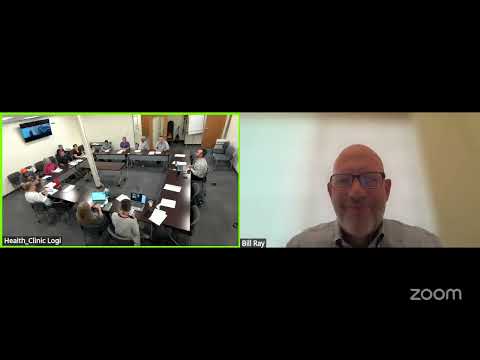
Bill Ray, the pollster who presented the survey, told the Public Safety Financing meeting that his sample of 200 registered voters—interviewed July 9–16—showed 37.2% initial support for the mill‑levy question and 53.9% opposed. After respondents heard information about service impacts and staffing, Ray said, support rose to 50.6% with 40% opposed, a shift he described as “statistically a tie” within the poll’s margin of error of plus or minus 6.8 percentage points.
Ray said the survey was conducted from a database of roughly 4,000 active registered voters in the emergency services area. Interviews combined live telephone calls (38.5%) and text‑invited online responses (61.5%), and Ray said the firm excluded a small number of responses from outside the study boundary after they were discovered.
Why it matters: Commissioners and agency officials said current funding shortfalls threaten service levels. Aaron (EMS), representing Clear Creek EMS, described an operating deficit and staffing shortfall: he said EMS currently projects roughly a $530,000 deficit this year and that adding three paramedics to staff a third full‑time ambulance would cost about $315,000, producing what he called a multi‑hundred‑thousand‑dollar shortfall if new revenue is not secured.
Survey takeaways and persuasive messaging
Ray said responses were most persuadable when messaging linked preserving prompt response times, maintaining service levels, and the county’s “cardiac save” outcomes to the proposed revenue. He highlighted that messages about recruiting and retaining professional firefighters to replace lost volunteer capacity and maintain wildfire mitigation performed strongly, particularly with voters aged 65 and older and with some unincorporated voters.
At the start of the poll question as asked in the field, Ray reported 37.2% “yes” and 53.9% “no.” He said the firm randomized message order and then asked whether respondents would be more or less likely to support the measure after hearing the materials; that follow‑up produced the 50.6% yes result.
Commissioners and municipal officials emphasized the tradeoff Ray described: many residents are worried both about rising taxes and the prospect of slower response times or reduced service if funding is not secured. Commissioner Rebecca said voters’ concern about pocketbook impacts was “not surprisingly” high, reflecting recent property‑assessment changes and cost‑of‑living pressures.
Ballot language, TABOR and “debrucing” concerns
County counsel Peter (last name not provided) advised the group about constraints on ballot wording under Colorado’s Taxpayer’s Bill of Rights (TABOR). “Unfortunately, the way that the constitutional language for TABOR reads, you must start the ballot question with that language exactly as you see it,” he said, explaining there is limited flexibility in the opening sentence but additional explanatory bullet points can follow.
Several commissioners and municipal representatives said the current draft’s final paragraph—standard “debrucing” language that would allow the district to collect and spend revenue without statutory or constitutional limitation—could be misread by voters as an open‑ended authorization to spend however the district pleases. Peter said the debrucing language is common and legally necessary if the board wants revenue to be exempt from TABOR limits, and that he would attempt to “wordsmith” a clearer, more concise version that complies with legal requirements.
Proposed levy total and split
County staff and consultants discussed a proposed total levy of 11.459 mills, which the group said was set as an upper bound and mirrors the mill rate charged by nearby Evergreen Fire Rescue. The draft under discussion would increase the existing 4.569‑mill base (in place since 1988) by 6.89 mills. Under the draft distribution discussed at the meeting, roughly 9.000 mills would be allocated to the Clear Creek Fire Authority and 2.459 mills to Clear Creek EMS; Ray and staff said the split could be adjusted later through intergovernmental negotiations if the measure passes.
Officials said the package would not fully meet long‑term needs. County staff noted that getting to a level of service Ray’s team had modeled as “good” for the fire authority would require about 14 mills for fire alone—well above the current proposal—and that the current ask is a first step rather than a final solution.
Local officials flagged financial details and near‑term capital needs. A fire‑authority speaker said high‑use frontline apparatus will need replacement within a few years, and that acquiring a modern engine can cost hundreds of thousands of dollars and may take multiple years to procure. Ray and county staff estimated the proposed 11.459 mills would generate roughly $755,000–$788,000 in new countywide revenue (estimates presented in the meeting materials varied by assessment assumptions); consultants noted those totals are tentative and depend on final assessment rates and certification by the assessor.
EMS financial status
Aaron (Clear Creek EMS) told the meeting that EMS will exhaust its fund balance absent new revenue: he said the organization projects roughly $200,000 in year‑end reserves this year but expects no fund balance by early 2026 without a new revenue source. He said the service is already requesting mutual‑aid ambulances—Gilpin County or others—to cover significant numbers of calls (Gilpin was asked to stand by or transport for Clear Creek multiple times in 2024), and he said adding a third staffed ambulance is now essential to maintain response capacity.
Next steps and schedule
Commissioners agreed they will continue refining ballot language and messaging, and that the Board of County Commissioners must finalize and approve the exact ballot language at a forthcoming meeting. County staff stated that final language needs board approval on August 19; Peter confirmed he will provide more concise, legally compliant wording of the debrucing paragraph and the explanatory bullets.
Several commissioners and municipal representatives urged a robust public education effort if a measure goes to the ballot, including town halls, simple pocketbook‑oriented examples and online calculators illustrating costs for homeowners. Multiple officials said they prefer messages that emphasize maintaining response times and service levels rather than abstract tax language.
No binding vote was taken during the meeting. Participants scheduled a work session and continued public outreach: the group set an additional work session for August 18 (11 a.m.) and reiterated that the board will make the up‑or‑down decision on whether to place the measure on the ballot at the August 19 meeting.
Ending
Officials said the survey provides a starting point for messaging and outreach but is only one tool in the decision process. Several commissioners and municipal leaders said they favor moving the measure forward and preparing a focused campaign to educate voters before an August decision.