Get Full Government Meeting Transcripts, Videos, & Alerts Forever!
Get email alerts on the Ethics Post Employment topic
No spam. Unsubscribe anytime.
Prince George’s County committee discusses extending post‑employment lobbying ban for former council members
Summary
The Government Operations and Fiscal Policy Committee examined CB 68‑2025, a proposal to prohibit former Prince George’s County council members from compensated representation on matters they previously handled for three years; sponsor asked to hold the bill for amendments.
CB 68‑2025, an ordinance to amend the Prince George’s County code of ethics, was presented to the Government Operations and Fiscal Policy Committee on Sept. 25.
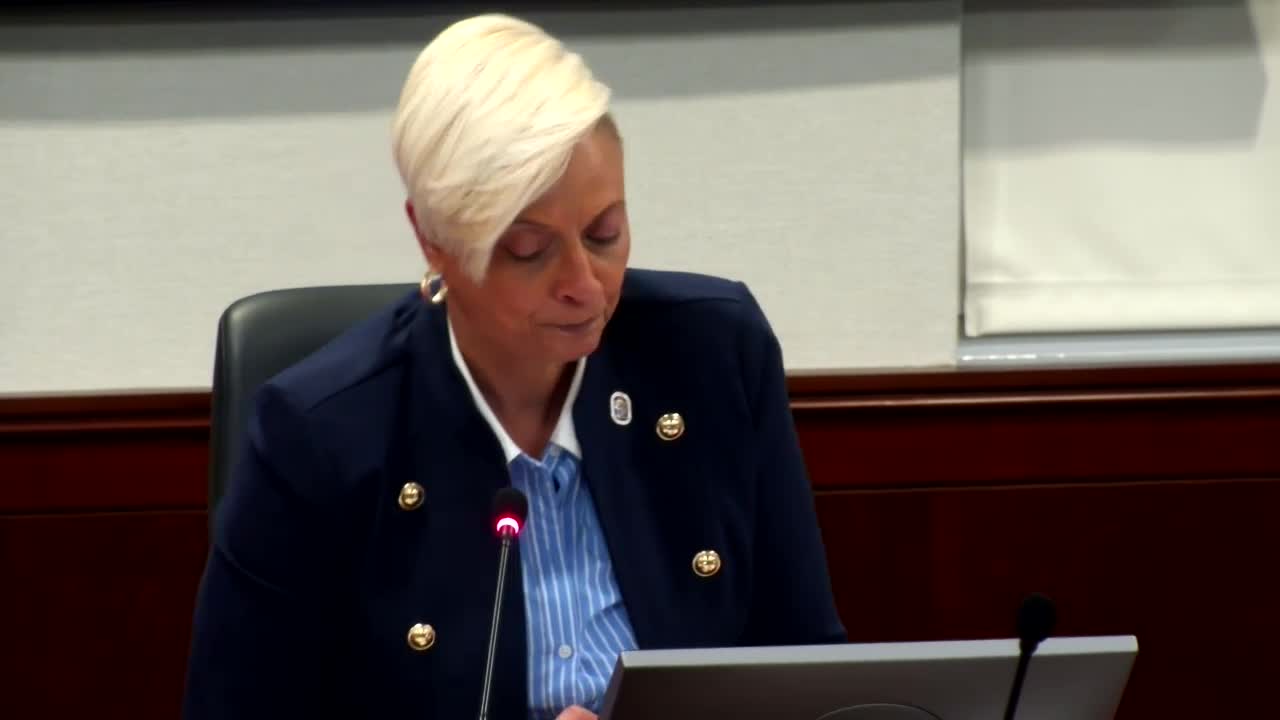
Council member Fisher, the bill sponsor, said the measure would prohibit former county council members from assisting or representing another party for compensation in matters that were the subject of legislative action by Prince George’s County government for three calendar years after leaving office. Fisher said she introduced the bill to “continue to build public trust,” and that she may amend the proposed three‑year restriction to two years after discussion with colleagues.
The Office of Ethics and Accountability (OEA) submitted a statement taking no position and said the legislation would require OEA to monitor the post‑employment prohibitions for an additional two years after a member leaves county service, but that the office believes it can handle the additional work within current resources. Alex Hertel, budget and policy analyst, recommended clarifying the draft’s use of the undefined phrase “substantially participated,” citing Montgomery County’s use of the term “significant participation” as a model.
Committee members asked whether a former council member who accepts compensated work on matters subject to legislative action would have to register as a lobbyist. Alexander Bamidele, legal counsel for OEA, confirmed that an individual who lobbies for compensation would be required to register as a lobbyist under existing registration requirements. Members also discussed the overlap between the proposed rule and the Maryland Rules of Professional Conduct for attorneys, which one member noted prohibits representation on matters in which an attorney participated while serving in a judicial, quasi‑judicial or decision‑making role.
Fisher said she was seeking time to work on clarifying language and to collect feedback. Council member Leggay moved to hold the bill to the committee’s next meeting; the motion was seconded and carried on a 3‑0 voice roll call.
The committee did not take final action on the ordinance; the sponsor requested a hold to draft amendments addressing the definition of participation and the appropriate post‑employment timeframe.
What’s next: The sponsor indicated she will circulate amendments and return the bill to the committee at a later GOP meeting for further consideration.