Get Full Government Meeting Transcripts, Videos, & Alerts Forever!
Get email alerts on the Animal Welfare topic
No spam. Unsubscribe anytime.
Austin council restores medical authority to shelter veterinarians, requires rescue notice for lactating animals
Summary
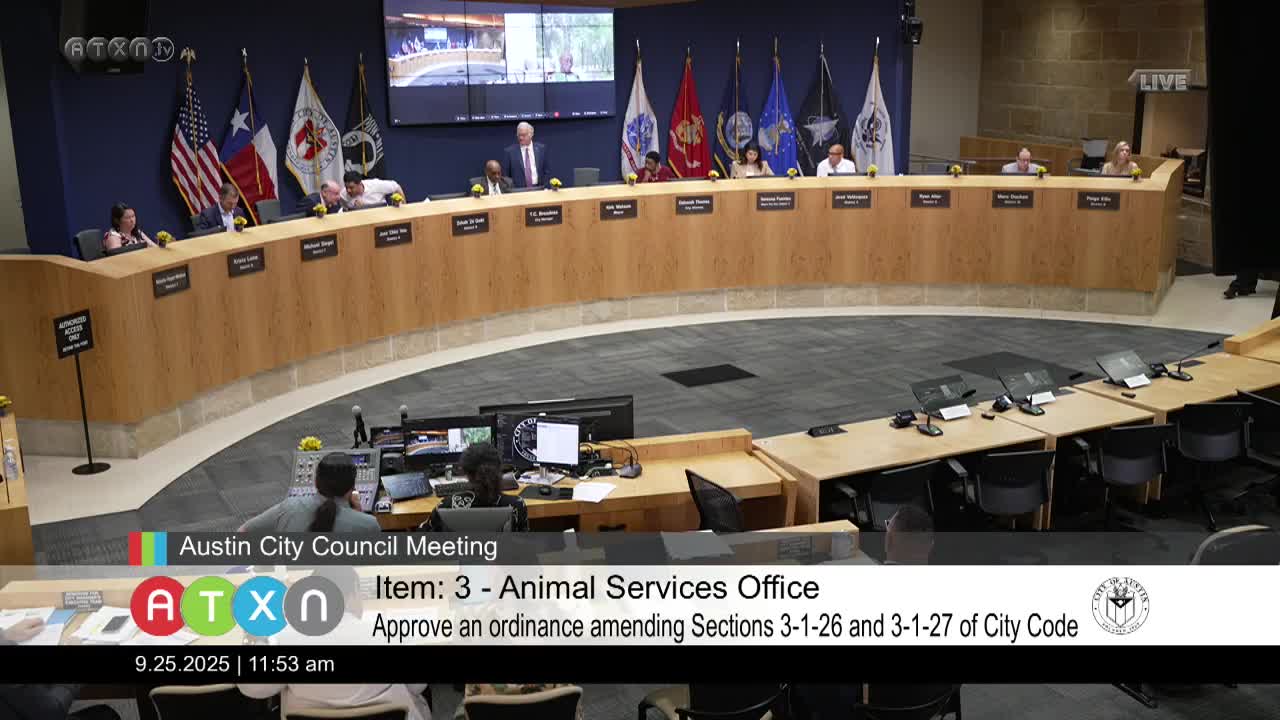
After weeks of public debate, the City Council adopted changes to the city animal-services ordinance that restore medical decision-making to Austin Animal Center veterinarians and add a requirement that Austin Pets Alive be notified when lactating animals are available for transfer.
The Austin City Council on Sept. 25 adopted an amendment to the city animal-services ordinance that restores veterinarians at Austin Animal Center (AAC) primary authority to make medical and surgical decisions for city-owned animals and directs staff to notify a rescue partner when animals are lactating.
The move followed hours of public comment from rescue groups, veterinarians and residents and a council amendment offered by Mayor Kirk Watson to add a specific notification requirement for lactating animals. Councilmember Ann Kitchen Lane made the initial motion to pass the ordinance as posted; the mayor’s amendment was adopted 6–4 with one abstention and the council then approved the ordinance as amended without further objection.
Why it matters: The change addresses a long-running dispute between AAC operations and community rescue partners over whether visibly pregnant or nursing animals should be spayed at the municipal shelter or transferred to rescues. Supporters said returning medical discretion to trained shelter veterinarians will allow faster, humane care and better use of scarce kennel space. Opponents warned the change could hide outcomes from the public and result in more animals being euthanized without full transparency.
Key facts and votes - Motion to adopt item 3 (ordinance change) was moved by Councilmember Lane and seconded by Councilmember Vela. - Mayor Watson proposed an amendment directing the city manager to notify Austin Pets Alive (APA) of lactating animals so APA can pick them up within three hours of Austin Animal Center providing notice; that amendment was seconded by Councilmember Alter and passed on a recorded voice count of 6 yes, 4 no, with Councilmember Ellis abstaining. - The ordinance as amended was then adopted by the council without further objection.
What council and speakers said Public commenters included veterinarians, rescue volunteers and Austin residents. Veterinarian Paige Nelson said in her remarks that "spaying pregnant animals is safe and humane" and urged the council to trust shelter veterinarians’ medical judgment. Ellen Jefferson, president of Austin Pets Alive, said removing the public-notice requirement would “start closing our city doors to the community again” and urged transparency and continued partnership. Community speaker Sandra Muller urged the council to be “proactive rather than reactive,” saying the shelter was already strained.
Councilmembers expressed competing priorities across animal welfare, shelter capacity and transparency. Councilmember Lane said she intended to restore professional discretion to medical staff while requiring clearer data reporting; Councilmember Duchin and others urged more stakeholder engagement and better data before wholesale changes.
Implementation and direction The adopted amendment leaves medical decision authority with AAC veterinarians and adds the mayor’s direction that the city manager must notify APA of lactating animals so APA can pick up lactating animals within three hours of notice from animal services. Council discussion referenced the 2011 no-kill implementation plan and a 2025 strategic plan as relevant policy documents.
What remains unclear Speakers on both sides asked for clearer reporting of transfers, court-ordered euthanasias and other outcomes. Several commenters said they had conflicting figures about transfers and intake and urged the council to require consistent, publicly available data from AAC and its partners.
Next steps Council staff and the city manager’s office will implement the adopted direction and the mayor’s motion. Councilmembers asked staff to continue working with partners on reporting, process clarity and capacity, and several members said they expected follow-up briefing materials and data in coming weeks.
Ending note The vote concluded a heated public debate over municipal shelter practice and rescue partnerships that has stretched across multiple meetings this year. Councilmembers described the action as an attempt to balance professional medical judgment at the shelter with continued collaboration with rescue organizations.