Get Full Government Meeting Transcripts, Videos, & Alerts Forever!
Get email alerts on the Environmental Policy topic
No spam. Unsubscribe anytime.
Marshall County adopts ban on underground carbon sequestration and storage
Summary
The Marshall County Board of Commissioners unanimously approved an ordinance banning carbon dioxide sequestration and underground storage in the county, citing concerns about groundwater and rupture risks; commissioners suspended rules to adopt the measure immediately.
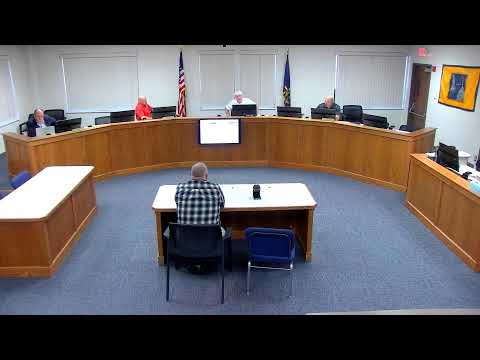
Marshall County commissioners voted on Sept. 15 to adopt an ordinance banning carbon sequestration and underground storage within the county.
The ordinance, introduced by Nicholas of the county planning staff and supported by the Planning Commission, prohibits transportation and deep geologic storage of compressed carbon dioxide that proponents say is intended to prevent emissions from reaching the atmosphere.
Nicholas, appearing as the Planning Commission representative, said the draft ordinance is intended to protect local aquifers: "We have a very large and very pure water source aquifer under our county and under our state, we're not a fan of this. So, in the best interest of protecting the health and the future of our county, its environment, and the people, we're proposing this ban."
Commissioners cited public-safety and environmental concerns raised during presentations and from examples elsewhere. One commissioner noted incidents in other states where pipeline or storage failures caused serious harm, saying, "There was a big incident in 2020 in… Mississippi. Seven people died from this. A pipeline ruptured, basically suffocated everyone within, like, a 45-mile radius of the rupture." That speaker characterized such risks as part of the rationale for the ban.
The board first approved the ordinance on first reading and then moved to suspend the rules to carry the ordinance through second and third readings immediately; the motion to suspend rules and pass the ordinance on second and third reading carried. No roll-call vote totals were recorded in the public transcript.
Supporters of the ordinance said the science about subsurface behavior can vary by local geology and that the county's aquifers warrant a precautionary approach. During the discussion commissioners acknowledged federal and state policy shifts but said the local ban was intended to preserve water resources and public health pending clearer scientific consensus.
The ordinance was recorded on the meeting agenda as Ordinance No. 2025-21, described during the meeting as an amendment to Marshall County's zoning ordinance to ban carbon sequestration and storage. The county attorney and commissioners indicated the ordinance will be entered into the county record and enforced according to local permitting and zoning rules.
Commissioners did not identify any immediate permits or projects affected by the change. The transcript does not list a legal challenge or an appeal schedule.
The board's action places Marshall County among other local governments that have considered or adopted limits on underground carbon storage. The ordinance text and the county's formal adoption record will be posted in the county clerk's office and on the county website when finalized.