Get Full Government Meeting Transcripts, Videos, & Alerts Forever!
Get email alerts on the Enrollment Jefferson Dual Assignment topic
No spam. Unsubscribe anytime.
Portland schools begin public process to phase out Jefferson High dual‑assignment, aim for vote in early 2026
Summary
District staff outlined a timeline to end dual assignment for Jefferson High School and reposition it as a neighborhood comprehensive school; public engagement events are scheduled and a potential change would take effect fall 2027 if approved.
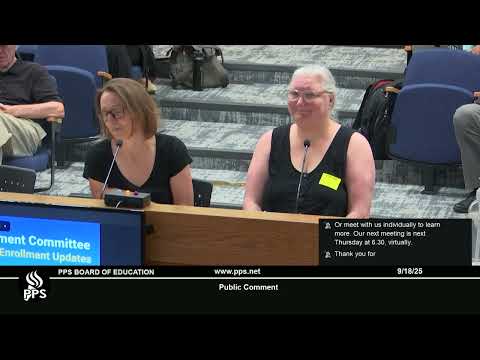
Portland Public Schools staff said Sept. 18 they will begin a multi‑month public engagement process to consider phasing out the district’s long‑standing dual‑assignment policy for Jefferson High School.
The district plans a series of outreach events this fall and a timeline that could lead to a board decision in January 2026; if approved, staff said the change would position Jefferson as a neighborhood comprehensive high school beginning in fall 2027. "We are proposing to phase out the dual assignment, positioning Jefferson as a comprehensive neighborhood school in the fall of, 2027," Assistant Superintendent for School Planning and Modernization Margaret Calvert said during the committee meeting.
The proposal responds to a persistent enrollment gap across high schools in the North/Northeast corridor. Calvert showed district enrollment trends that, if unchanged, would leave Jefferson with roughly 500 students while nearby Grant enrollments exceed 2,100 — a current gap of about 1,600 students that the district says affects course variety and extracurricular offerings.
The dual‑assignment policy, in place for more than a decade, allows students in designated zones to choose between Jefferson and neighboring comprehensive high schools. Calvert said the policy "has inadvertently led to underenrollment at Jefferson and overcrowding at schools like Grant and Roosevelt." The board previously directed staff to study ways to increase Jefferson enrollment via a December 2022 resolution, Calvert said.
District staff described a two‑pronged approach: (1) localized enrollment and marketing work to boost interest in Jefferson and other schools and (2) the formal engagement and scenario work around dual assignment. Candace Gross, chief communications officer, said the district is running a phased communications campaign — a global brand push called "Legacies are Made at PPS" alongside localized toolkits and prioritized website launches for low‑enrollment ZIP codes — to drive awareness and enrollment.
Calvert outlined the public schedule: a three‑week tour of back‑to‑school nights and tabling; four formal public engagement nights in October to review scenarios; a November analysis of community feedback; and a December staff proposal and work session that could culminate in a January 2026 board vote. Calvert emphasized the process is intended to be deliberative and open: "We're approaching it in an open ended way ... we want to bring you all a list of options," Doctor Armstrong said, indicating the superintendent’s office will weigh community input before any final recommendation.
District staff said they have interviewed 16 principals over August and September and will hold engagement sessions near the middle‑grade feeders to reach families making transition decisions. Staff also said renderings of the modernized Jefferson campus have drawn interest at outreach events.
The proposal is not yet a board action. Staff described it as a recommendation in development and said the formal scenarios and community feedback will inform any proposal put before the full school board.
The committee heard questions about geography and equity in outreach. Directors asked staff to publish which K–8 and middle schools have been engaged and to ensure maps and catchment data accompany future briefings so board members and community members can see which neighborhoods and student populations would be affected.
Next steps listed by staff include the October public sessions on scenarios, a November synthesis of feedback, a December work session with a formal recommendation, and a possible board vote in January 2026.