Get Full Government Meeting Transcripts, Videos, & Alerts Forever!
Get email alerts on the Route 79 Design Funding topic
No spam. Unsubscribe anytime.
Lakeville selectmen hear Route 79 design update as costs, right-of-way needs grow
Summary
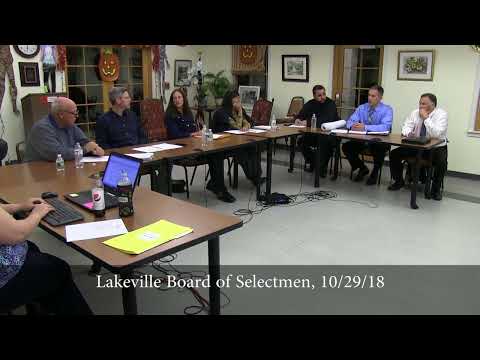
The Lakeville Board of Selectmen met with consultants from Beta Group on Monday to review the Route 79 reconstruction project, hear where the design stands with the Massachusetts Department of Transportation and discuss rising cost and right-of-way implications.
The Lakeville Board of Selectmen met with consultants from Beta Group on Monday to review the Route 79 reconstruction project, hear where the design stands with the Massachusetts Department of Transportation and discuss rising cost and right-of-way implications.
Matt Shute, project manager for Beta Group, said the 25% design “has been completed and submitted to MassDOT. Just today, we responded to all the comments that we received from MassDOT on the project,” and that MassDOT will schedule a resolution meeting to go over outstanding comments before a public design hearing.
The update matters because the project’s estimated construction funding on the draft Transportation Improvement Plan (TIP) has grown to about $9.3 million, compared with roughly $4.5 million when the work was first programmed. Bill McGrath, a senior associate with Beta Group, said changes in MassDOT policy and design standards — including a push to provide continuous sidewalks and wider bicycle shoulders — account for much of the increased cost and added drainage infrastructure.
McGrath described the MassDOT design process the town is in: after the 25% submission comes a public design hearing, then a 75% and 100% final design submission, and a PS&E (plans, specifications and estimates) submittal before the project can be advertised for construction. He added that MassDOT prefers sidewalks on both sides of a road and has asked the project team to document alternatives, but that MassDOT will accept a design if the town requests a design exception.
Beta told the board the town has paid about $300,000 to the consultant so far for work to date. The firm provided a range of additional costs for final design and limited construction-phase services of roughly $500,000 to $600,000. Beta said its construction-services role on a MassDOT project is typically limited because MassDOT provides a full-time resident engineer during construction; the consultant’s remaining fees reflect detailed design, additional survey work, borings, retaining-wall and traffic-signal design and subconsultant expenses.
Board members asked how the design might change between 25% and 100% and whether the suggested shared-use path alternative — a two-way, separated bicycle/pedestrian path on one side of the road — would require resubmitting the 25% design. Beta said that alternative would be a significant change requiring resubmission, and that the town had indicated it did not wish to pursue that option.
The consultants also described right-of-way needs. Beta estimated permanent land takings of about 1,700–1,800 square feet and roughly 16,000 square feet of permanent easements for items like hydrant relocations and stormwater outlets; they said those figures are preliminary and that appraisal work is needed once the 75% design is complete. McGrath said completion of the 75% design is a critical trigger for the right-of-way process and that the town should be prepared to move quickly on appraisals and property-owner communications.
Utility relocation was raised as a near-term task: Beta said a utility site walk planned for December will review each pole and overhead facility with utility owners so the utilities can produce force-account estimates for reimbursable relocation work. Beta noted reimbursement levels vary by utility and by type of work.
On timing, Beta and the board discussed the schedule included in materials the consultants distributed. The project’s draft TIP listing is for the 2019–2023 program; Beta anticipated a design public hearing in January or February 2019 and said construction could take two seasons, putting completion around 2022 if the schedule holds. McGrath cautioned that additional design requests, policy changes or delays in approvals could push the timeline.
Selectmen emphasized the need for a clear, phase-by-phase budget forecast for the town’s budgeting cycle so the Board can plan for upcoming design expenditures and possible right-of-way costs at next year’s town meeting. Board members also asked Beta to flag any items where the town’s action could accelerate or delay the project.
The meeting closed with the board agreeing to a future public meeting on the design when materials are farther along and with consultants providing a refined timeline and a breakdown of expected consultant fees by submission stage, Beta said.
Next steps spelled out by Beta were a MassDOT resolution meeting on 25% comments, a design public hearing in early 2019, preparation of the 75% submission (which will enable appraisals and right-of-way coordination) and a PS&E submittal before construction advertising.