Get Full Government Meeting Transcripts, Videos, & Alerts Forever!
Get email alerts on the Fiscal Reserves topic
No spam. Unsubscribe anytime.
Regional finance panel discusses E&D levels, special-ed stabilization and OPEB funding; recommends delay pending Freetown input
Summary
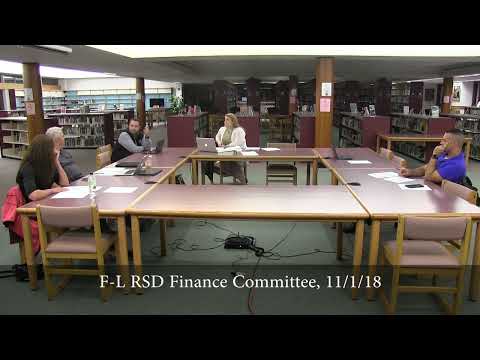
Members of the Freetown-Lakeville Regional Finance Subcommittee on a range of fiscal-reserve issues, focusing on Excess & Deficiency (E&D) account levels, creation of a special education stabilization fund and planning for other post-employment benefits (OPEB).
Members of the Freetown-Lakeville Regional Finance Subcommittee on a range of fiscal-reserve issues, focusing on Excess & Deficiency (E&D) account levels, creation of a special education stabilization fund and planning for other post-employment benefits (OPEB).
The subcommittee reviewed certification work on FY18 E&D and discussed target ranges for combined E&D and a possible special-ed stabilization account. Committee members said the current 5% statutory cap on E&D would translate, on the district’s roughly $38 million budget, to about a $1.9 million reserve and that a combined target in the 1.0–1.2 million range (about 3% of the budget) could be a working goal. The committee agreed it needs more work on minimums, replenishment plans and town-level funding sources before recommending a firm policy to the school committee.
Why it matters: E&D and stabilization policy affects the district’s ability to respond to unplanned special-education placements, legal costs, utility volatility and capital maintenance, and it changes the timing and size of assessments to the Town of Lakeville and Freetown.
Key details and committee direction - FY18 closing: staff reported that the district submitted roughly $218,000 for review and certification and that approximately $29,000 of surplus in the general fund was transferred into E&D for that period. The administration said it has filed the package with the state and is awaiting review. - Reserve targets: multiple members proposed a working goal of a combined E&D plus stabilization target equal to roughly 1.0–1.2 million (about 3% combined of the current budget) while acknowledging the number could change as the budget and enrollment evolve. One participant noted that special-education volatility is often the principal driver of midyear draws on reserves. - Special-education stabilization: several committee members said they prefer a separately earmarked stabilization/stabilization-style fund for special education to improve accountability and transparency (town voters would see a discrete article rather than a line buried in the operating budget). The subcommittee agreed it should recommend to the full school committee that the district establish a special-education stabilization fund, but members asked to defer final recommendation until representatives from Freetown can participate in the decision. - Replenishment and timing: the group discussed funding mechanisms (fall town meeting transfers of one-time revenues or free cash, annual transfers spread across years, and possible redirection of future debt-service savings). Members cautioned against relying on recurring operating receipts to seed stabilization, and said that one-time revenues (e.g., free cash or unexpected state aid) are the preferred source for initial funding. - Auditor guidance: the subcommittee reviewed an auditor’s letter suggesting a reserve guideline equivalent to approximately two months of rolling operating expenditures as a floor; the auditor did not set a single mandatory number but provided guidance. Committee members said they want staff to assemble a roll-forward showing two-month operating-expenditure equivalents and the historic pattern of draws from E&D.
OPEB (retiree health) discussion The committee also discussed other post-employment benefits (OPEB). Lakeville staff described a long-term funding plan that currently uses one-time town revenue to seed an OPEB trust and that would accelerate contributions once pension obligations decline. Lakeville identified an unfunded OPEB liability in the low tens of millions and said it is making modest annual contributions (the town’s current plan included roughly $230,000 per year, recognizing additional annual funding will be required to fully fund the liability over time).
Committee next steps and staff assignments The subcommittee asked administration staff to: produce a department-level budget monitoring report showing the most likely midyear E&D exposures; provide a short actuarial funding schedule for OPEB (and note whether the district can join a county trust); and prepare draft policy language and funding options for (1) an E&D floor/ceiling target, (2) a special-education stabilization fund and (3) a multi-year replenishment plan. Members agreed to continue the conversation at the next meeting and to invite Freetown representation before forwarding a joint recommendation to the full school committee.
Votes and formal actions - Acceptance of minutes (Oct. 4): motion passed; recorded voice votes and one abstention were noted. - Recommendation to create a special-education stabilization fund: the committee proposed recommending creation of the fund to the full school committee but decided to postpone final recommendation until Freetown participants can be present; no binding appropriation or initial funding was approved.
What’s next: staff will return with the requested financial schedules and draft policy text; the subcommittee set a follow-up meeting and expects to bring a formal recommendation to the full school committee after Freetown’s input.