Get Full Government Meeting Transcripts, Videos, & Alerts Forever!
Get email alerts on the School Facilities topic
No spam. Unsubscribe anytime.
Consultant: Pennridge facilities need roughly $202 million over 10 years, district to prioritize safety, HVAC and athletics
Summary
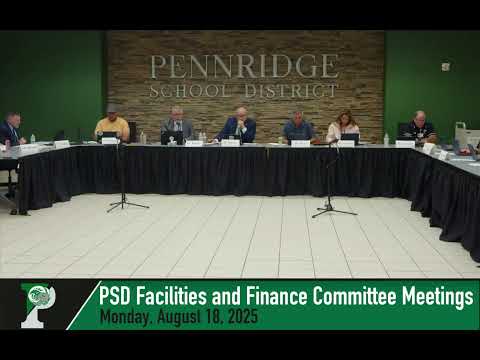
Consultants from ICS presented a districtwide facilities assessment to the Pennridge School District facilities committee on Aug. 18, showing an approximate $202 million 10‑year estimate and recommending priorities focused on safety, classroom HVAC and athletics.
Consultants from ICS delivered a facilities assessment to the Pennridge School District facilities committee on Aug. 18, summarizing six months of building inspections, staff interviews and data analysis and showing an approximate $202 million package of potential projects over a 10‑year horizon.
The consultants said the district’s total portfolio replacement value is roughly $810 million under current market assumptions and cited industry guidance (1.5–3.0 percent of replacement value per year) that would equate to roughly $12 million to $24 million annually. ICS recommended the district target the lower end of that range as a realistic planning figure and use CIP360 software to maintain a living capital plan.
ICS described a prioritization framework built on three guiding principles: ensure buildings are warm, safe and dry; right‑size facilities to program and enrollment; and address educational program requirements. Using that framework, the consultants removed items that could be deferred (for example, some window and fixture replacements and furniture/FF&E) to focus on higher‑priority work that affects building habitability and code compliance.
The presentation highlighted several technical findings. Classroom HVAC—specifically unit ventilators found under windows in many elementary schools—was identified as nearing or beyond typical useful life in five years. ICS presented two cost views: (1) direct mechanical system replacements, and (2) package replacements that include full classroom conditioning (air conditioning) and appropriate ventilation to current standards. The consultants estimated a typical incremental cost to add full classroom cooling during a replacement at roughly $2 million per building, and showed a phased, multi‑year scenario for seven elementary schools.
ICS also included allowances for asbestos remediation, accessibility work (ramps and elevators), campus athletics and other site and electrical upgrades. The consultants said asbestos remediation costs and other environmental items were included in the repository of needs but noted actual abatement timing should be tied to project work scopes and regulatory triggers.
The consultants said the district now has a CIP360 site with the assessment data loaded and that the district’s staff will be able to review and update condition notes, deferred‑replacement decisions and project timing in the software. ICS said the $202 million figure is an order‑of‑magnitude estimate that includes escalation assumptions (4 percent annual escalation used for items scheduled further out) and is not an approved plan; it is a starting point for administrative prioritization.
During committee discussion, members and staff discussed LED lighting as a lower‑priority energy item that can be bundled with larger projects, the district’s preventive maintenance practices that keep some equipment operating beyond typical life expectancies, and the operational data the district uses (FMX work orders, annual inspections) to refine replacement timing. Facilities staff indicated they already track asbestos and hazardous materials with a contracted environmental firm and that FMX ticketing and annual inspections inform condition adjustments in CIP360.
The presentation closed with next steps: ICS will provide a final written report, the CIP360 database will remain live for district updates, and the district and ICS will work together to refine project scopes and budgeting assumptions. The consultants repeatedly framed the deliverable as an informational, dynamic repository rather than a district capital budget or final plan.