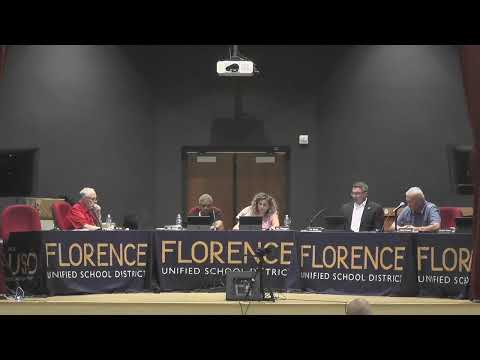
Florence Unified board adopts state-aligned cell-phone policy after parent comment
Loading...
Summary
The Florence Unified School District governing board approved ASBA Policy Advisory 906, a student cell-phone policy aligned with recent state law, after public comment and staff explanation of emergency exceptions and progressive discipline.
The Florence Unified School district governing board voted to adopt Policy Advisory 906 on student use of wireless handheld devices after public comment and staff questions about emergency access and enforcement.
The vote followed public comment from parent Michelle Talavera, who urged the district to ensure any restriction "allow students access to their devices in the event of an emergency" and challenged language she read as requiring documented medical conditions to permit phone access. Talavera said the district's written enforcement practices that keep confiscated phones in the office "for the entirety of the school year" raised privacy and access concerns and asked the board to change the policy.
District staff described how the policy will be implemented. "During emergencies a student may use a school phone or their personal device," Miss Erickson said, adding that the policy intentionally leaves the term "emergency" broad because response depends on the situation. The district's implementation guidance, staff said, requires parental contact at each stage of progressive discipline and aims to avoid isolating students from family communication during catastrophic events.
Board members asked about enforcement and privacy. Erickson said third-offense discipline would require the student to sign their phone into the office for two weeks; a fourth offense would require phones be signed into the office for the remainder of the school year, and parents would be contacted at each step. Erickson also said school staff would not open a student's phone; only law enforcement with a warrant could do so.
Trustees moved and seconded adoption of Policy Advisory 906 and the motion carried. The board approved the policy after discussion of implementation details and potential legal review of the district's enforcement procedures.
Board members and staff said the policy is intended to reduce classroom distractions and restore student engagement; principals reported teachers are seeing more student social interaction and fewer phone-related classroom interruptions since implementation steps began.
The board did not amend the ASBA advisory at the meeting; trustees directed staff to follow up on implementation details, including whether the district should seek legal counsel review of specific enforcement language about medical documentation and long-term confiscation.