Hearst adopts $88 million FY2026 budget, raises property tax rate; water rates increase 2%
Loading...
Summary
The Hearst City Council on Aug. 12 approved the city's fiscal 2026 budget and set a property tax rate of 0.611882, adopting related ordinances and a 2% water and wastewater rate increase. Council debated funding pressures including healthcare and wholesale water costs; one council member voted no on the budget and tax-rate increase.
Hearst City Council voted Aug. 12 to adopt the City of Hearst's fiscal 2026 operating budget and to set a property tax rate of 0.611882, and approved a 2% water and wastewater rate increase.
Assistant City Manager Clayton Fulton presented the budget to the council as an executive summary, describing the $88 million operating program and how it aligns with council priorities. "The budget that we'll review tonight is really a culmination of work that started back in January with the citizen survey, that led into the town hall forum, which then led into the council strategic retreat," Fulton said during his presentation.
Council approved ordinance 26-03 (first reading) adopting the FY2026 budget and ordinance 26-04 setting the tax rate at 0.611882. The council also ratified the property tax revenue increase required by state law (ordinance 26-03b). One council member spoke against the tax increase and recorded a no vote on both the budget and the tax rate, saying they could not "in good conscience" raise taxes given local financial strain on residents.
Why it matters: the adopted budget funds general government services, public safety, utilities and special sales-tax funds (crime control and community development). City staff said the proposed budget responds to rising costs, with health care and personnel costs as the largest drivers. Fulton told the council the budget includes pay-plan adjustments and aims to sustain public safety staffing while holding smaller rate increases for utilities.
Key details - Total operating funds presented: roughly $88,000,000; about 94% is in the general, enterprise and two half-cent sales tax funds. - The proposed property tax rate: 0.611882 per $100 of assessed value, composed of a maintenance-and-operations portion of 0.528626 and debt service of 0.083256. - The city manager described net increases across major funds of roughly $3.26 million, driven primarily by healthcare costs, pay adjustments and wholesale utility cost increases. - The city's enterprise (water/wastewater) fund includes a planned 2% rate increase; the average residential bill was estimated to rise about $2.15 per month if the rates are approved.
Council comments and dissent One council member identified themselves as staff at a local nonprofit and said they had to vote no because they see residents who are struggling financially; that member explicitly explained their vote during the meeting and recorded a no on both the budget and the tax-rate ordinance. Council otherwise approved the budget and tax rate by majority vote; council discussion referenced the city's efforts to prioritize public safety, infrastructure and economic vitality.
Related actions adopted alongside the general budget - Ordinance 26-02 (first reading) adopting the Crime Control and Prevention District budget for FY2026 (funded by a half-cent sales tax) was adopted earlier in the meeting as part of the budget hearings; staff said that fund covers about 54% personnel costs and supports license-plate-reader programs and the shared jail contract. - Ordinance 26-05 (first reading) adopting water and wastewater rates (2% increase) was approved; staff noted nearly half of the enterprise fund's operating costs are wholesale water and wastewater costs.
What happens next The ordinances were approved on first reading at the Aug. 12 meeting as recorded. Staff said they will continue program-level reviews throughout the fiscal year to track costs and service-level priorities. The city indicated continued monitoring of wholesale water costs and healthcare trends for future budgets.
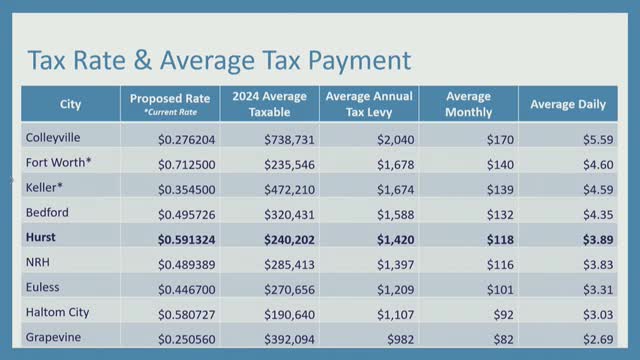
Ending note City staff highlighted comparative metrics (daily cost to homeowners, the city's position among peer cities) during the presentation to illustrate the local tax burden and service trade-offs. Council members expressed intent to monitor program performance and return to the budget process in January for the next cycle.