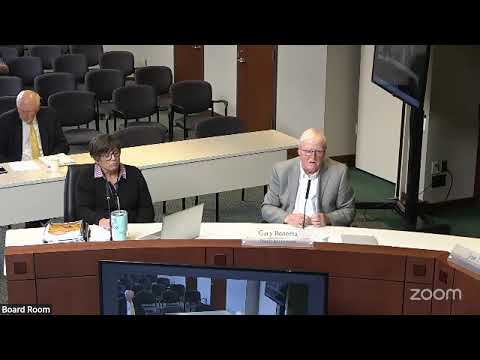
Sheriff urges priority for jail mental‑health pod; proposes three‑district patrol model to improve supervision
Loading...
Summary
Sheriff Eric DeBoer urged the Board of Commissioners to prioritize a dedicated mental‑health pod in the county jail and described a proposed three‑district patrol reorganization that would shift some township‑funded supervisor positions to county control over a three‑year phase‑in.
Sheriff Eric DeBoer briefed the Board of Commissioners on two related public‑safety items: the long‑standing proposal for a dedicated mental‑health pod inside the county correctional facility, and a reorganization that would move the sheriff's office to a three‑district patrol model to improve supervision and service.
On the mental‑health pod, DeBoer described the continuing and growing volume of detainees with mental‑health needs and the security and care challenges posed when those individuals are housed in general population or must be moved across the facility. "A majority of people that we house in our correctional facility suffer from some sort of mental or mental health or medical issues," DeBoer said. He said prior planning work (engineering studies) was done under previous administrations and that earlier estimates were larger than the original request, which stalled the project. "I reinstituted and resubmitted for a CIP," he said, adding that county staff and the sheriff's office are exploring partnerships with Community Mental Health to combine resources and grant funding.
On cost, commissioners and staff referenced historical planning figures. One commissioner asked for a ballpark; staff recalled prior estimates in the range of $3 million to $5 million. "I think originally, it came in at 5,000,000, and that might have been... it would be significantly more than that with current construction costs," one participant said. DeBoer said plans and preliminary work exist and urged that the project be prioritized: "I just wanna make sure that that does fall on our priority list as far as getting that done." Several commissioners said they had visited the jail and could see the need for a specialized pod.
Sheriff DeBoer also described an internal organizational change the office proposes to improve supervision and operational deployment: moving seven township‑funded sergeant positions gradually under county funding and adding a lieutenant to create three geographically based district headquarters. The change is intended to allow consistent local supervision, reduce mismatches between funding and deployment, and create clearer chain of command and mentoring opportunities for sergeants and deputies. "We realized... while we had the personnel, we couldn't deploy them correctly because some of the supervisors... were being funded by townships," DeBoer said. He described a three‑year phase‑in with the county covering one‑third of the supervisory cost in year one, two‑thirds in year two and full funding in year three.
DeBoer said some township leaders have been receptive in informal conversations but added that detailed contract discussions would be needed if the board endorses the plan. Administrators confirmed the budget packet includes the first‑year position and a recommended transfer to support contracted deputies; implementation will require coordination with contracting municipalities.
Why it matters: A dedicated mental‑health pod and greater supervisory alignment for patrols would affect staff safety, detainee care, and long‑term operating costs. Both items would require multi‑year funding and coordination with outside partners and contracting jurisdictions.
What’s next: Commissioners asked administration and the sheriff for additional information and timeline options; staff said preliminary plans and historical engineering studies exist and can be shared. Commissioners directed staff to include the items in CIP/budget discussions and suggested further review at finance committee meetings.