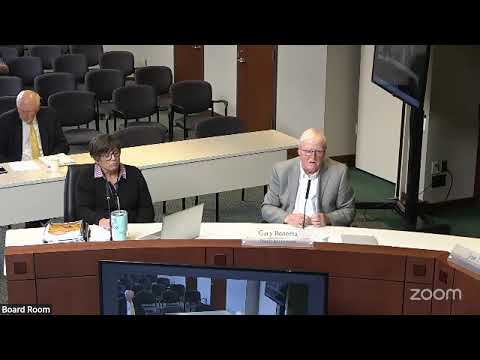
Ottawa County commissioners review five-year capital improvement plan; administrators propose building strategic plan
Loading...
Summary
County staff presented a draft fiscal‑year 2026–2030 Capital Improvement Plan (CIP), outlining ongoing and proposed projects — from building automation and ADA work to courthouse security and parks — and recommended creating a countywide building strategic plan to guide long‑term facility decisions.
County administration presented a draft five‑year Capital Improvement Plan (CIP) covering fiscal years 2026–2030 and asked the Board of Commissioners to review the plan and the proposed next steps before formal consideration later this month.
"This is a fiscal year 26 to 2030 plan," said Staff member Karen, the presentation lead, describing the CIP packet and how projects, funding sources, current approved amounts, encumbrances and unencumbered balances are shown. She told commissioners the packet combines countywide projects, including parks projects funded by the parks millage, so commissioners can see the county's overall capital needs in one document.
Karen said the plan lists projects already funded and those proposed for future years. She walked commissioners through several categories and examples, including countywide exterior door replacements (recommended in 2026), phased replacement of jail air‑handling units, a countywide building automation system (the administration estimates a roughly $4.3 million countywide project), elevator replacements, courtroom technology upgrades and courthouse single‑point‑of‑entry security stations modeled after the Family Justice Center.
"New in 2026 is renovating the treasurer's office," Karen said, and described carry‑forward grant work at public health and ongoing park projects, such as the Ottawa Sands trail and Idema Explorers Camp.
Karen also flagged a new contingency line in the CIP to help the county respond to cost increases and unplanned developments that have affected prior projects: "Really new conceptually to the plan this year is a contingency project... we created that as making it a little easier," she said, citing recent tariff and equipment‑cost pressures.
The presentation included a recommendation to add an implementation project for a countywide building strategic plan. Karen said that departments submit projects with broad and varied estimates and that a strategic plan would help the county evaluate project scope, timing, funding sources and priorities before assigning dollar amounts. "There's a real need for a strategic plan built around space, department needs, growth," she said. She described the proposed approach as top‑down: identify priorities, evaluate fit and timing, and then place projects into the CIP with clearer cost estimates.
Commissioners asked for clarity on how the new "holding‑pen" line for strategic initiatives would work. One commissioner asked whether the item was "a holding pen for ideas," noting the plan shows figures in different out‑years such as $1.2 million, $15,000 and $3.6 million. Karen confirmed the line is intended to capture ideas that need further study rather than firm project budgets and said she expects the strategic planning effort to produce clearer project estimates and scheduling.
Staff also reviewed recent CIP accomplishments, including completion of the sheriff's body‑worn and in‑car camera project with related facility renovations, a major server replacement, parking and paving work, and the Family Justice Center opening and related court consolidations.
Commissioners and staff discussed next steps and schedule: administration will continue departmental review; the CIP is scheduled for consideration on the board agenda August 26 and the fiscal year 2026 budget will incorporate the 2026 CIP projects. Project funding for 2026 would become available on October 1 if the budget proceeds as planned.
Why it matters: The CIP guides which county facilities and infrastructure projects will be funded and when. Creating a building strategic plan could change how projects are prioritized and timed across departments, affect grant applications and influence future tax‑supported spending.
What’s next: Staff will bring the CIP back through committee and the August 26 board agenda; public notices and the formal budget calendar remain in play. Commissioners asked that CIP materials be available to finance and planning committees for additional review before final action.