Panama adopts Security Council program for August, schedules high‑level maritime security debate
Summary
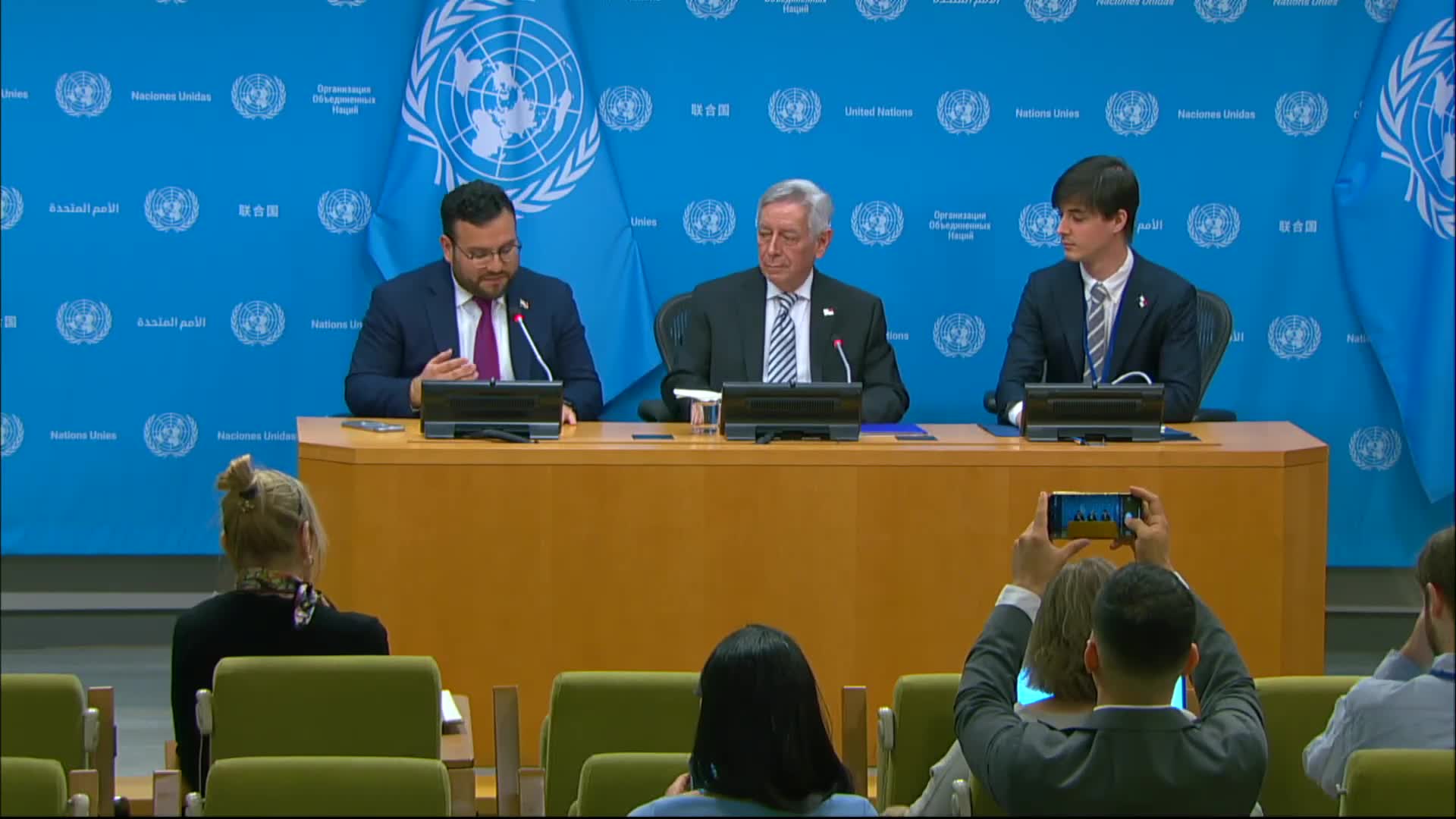
Panama, holding the U.N. Security Council presidency for August, adopted a program of work that schedules 22 meetings, including an emergency session on Ukraine and a high‑level open debate on maritime security on Aug. 11 chaired by Panama’s president, the council’s permanent representative said at a press briefing.
Panama, which holds the United Nations Security Council presidency for August, told reporters that the council adopted a program of work that for now lists 22 meetings and will include a high‑level open debate on maritime security on Aug. 11 chaired by President Jose Raul Molino.
At a press briefing at U.N. headquarters, Panama’s permanent representative to the United Nations (speaking as council president for August) said the program "has been adopted" and that printed copies had been distributed to attendees. The representative also announced an emergency meeting on the maintenance of international peace and security in Ukraine scheduled for 3 p.m. the same day the briefing took place.
The program lists country‑specific briefings and consultations on situations remaining on the council’s agenda, including "particularly West Africa and the Sahel, Yemen, Lebanon, South Sudan, and Syria," the representative said. He added that, while Haiti is not formally on the month’s adopted agenda, the council intends to hold a briefing on the situation there, possibly in the final week of Panama’s presidency.
Why it matters: Panama framed the month around maritime security in part to highlight the country’s global maritime role, including the Panama Canal, a national ship registry and related environmental and economic concerns. The scheduled high‑level debate will include briefers from the International Maritime Organization, Interpol and the Panama Canal Authority and is intended as a forum to discuss links among maritime security, international peace, economic stability and environmental sustainability.
"One of your questions was the one in Haiti," the permanent representative said when explaining the council’s handling of the Caribbean nation, adding that the "crisis in Haiti has been going on for a long time" and that a Security Council meeting or briefing was being worked on.
On the maritime event, he said: "The purpose of having a high level event concentrating on maritime security is not to bring any kind of message to any government." He emphasized the aim is to continue debate and to highlight Panama's maritime services and the canal's global role.
The briefing also drew questions from reporters about several items likely to surface during the month. On UNIFIL — the U.N. Interim Force in Lebanon — the permanent representative called the matter "one of the thorniest issues" on the agenda and said members have differing views on whether the mission should continue, be reduced or be allowed to phase out. On Gaza, he said members were "very much" engaged and described both humanitarian concerns and broader political questions as part of the expected council debate. He said Iran’s cooperation with the IAEA and the possibility of a snapback of sanctions are also likely to prompt discussion.
Panama’s delegation noted operational details tied to the canal and maritime sector raised in the briefing: the country completed a canal expansion several years ago but still faces water‑supply constraints for canal operation and for human consumption; Panama also maintains a long‑standing ship‑registration system that it says serves global commerce.
Reporters also asked about migration through the Darién Gap and about domestic cannabis policy. The permanent representative said recent government efforts, together with shifts in destination‑country policies, had reduced transit through the Darién Gap in recent months and that migration remained a national concern for human‑rights and environmental reasons. On cannabis, he said any change in Panamanian law would require approval by Panama’s National Assembly and characterized Panama as "a relatively conservative country," noting that past medical‑cannabis legislation would be a matter for domestic debate.
The mission said it will keep the press updated through a distribution list managed by Juano Callejano and Fernando Gomez of the mission. "We deeply value the essential role that the press plays in shedding light on the work of the Security Council," the deputy permanent representative said in closing the session.
(Notes: All quotes and paraphrases come from remarks at the August Security Council press briefing by Panama’s permanent representative to the United Nations and by Deputy Permanent Representative Ricardo Moscoso. Specific briefers named for the Aug. 11 maritime debate were identified in the briefing; exact job titles and name spellings are taken from the briefing.)