Get Full Government Meeting Transcripts, Videos, & Alerts Forever!
Get email alerts on the Human Relations Council topic
No spam. Unsubscribe anytime.
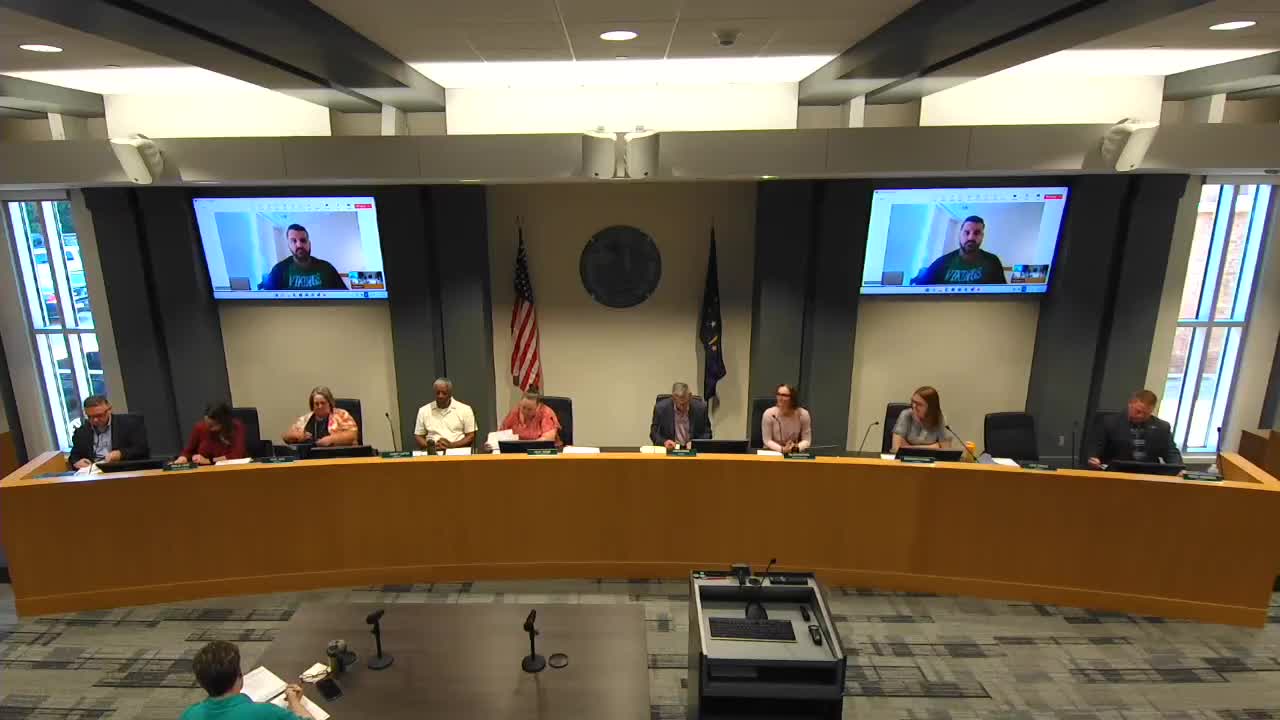
Valparaiso council approves changes to Human Relations Council, 5-2
Summary
The Valparaiso Common Council voted 5-2 to approve Ordinance 8-20-25, changing appointment authority for the Human Relations Council and removing the word "advisory" from its name; members debated checks-and-balances, the mayor's role and the council's oversight.
The Valparaiso Common Council approved Ordinance 8-20-25 on a 5-2 roll call vote, changing the composition and role of the city's Human Relations Council.
The ordinance revises Valparaiso Municipal Code sections to establish appointment authority split between the council and the mayor (six appointments by the council, three by the mayor) and removes the word “advisory” from the council's name, a change supporters said raises the body's public visibility.
Councilwoman Hunt, who led the presentation, said the changes "reflect the City Council's ongoing commitment to building an inclusive, respectful, and equitable community" and described the split-appointment model as a way to "ensure broad representation, diverse perspectives, and foster...shared governance." She told colleagues the rewrite "introduces a more balanced structure with appointments made by both the city council and the mayor — 6 by the council, 3 by the mayor."
Supporters argued the revision creates checks and balances and signals that the Human Relations Council should be a public-facing body rather than only an advisory panel. President Capitan said the changes are "the next step in establishing a collaborative, inclusive, and impactful body" and voiced appreciation for past and present members' service.
Opponents centered their remarks on separation of executive and legislative duties and how the change would affect the mayor's ability to receive direct advice. The mayor objected to moving the panel from an executive advisory role, saying the mayor's office oversees city service delivery and that the commission had been effective advising the mayor's office; he warned the ordinance shifts the body toward advising the council’s legislative functions. The mayor said in part that the commission "has worked well for the city." (Statements attributed to the mayor are taken from the meeting record.)
Councilmember Domer rebutted criticism that the ordinance was a "power grab," saying the amendment requires collaboration and that the council simply seeks to be part of appointment decisions. Domer said the change "adds council appointments and council perspectives" and emphasized that the board's charge, mission and values would not change.
After discussion, the council called the roll. The tally recorded Papillo and Anderson voting no; five council members voted yes and the ordinance passed 5-2.
What this does and what it does not do: the ordinance changes who appoints members and how the body is titled; it does not, as presented at the meeting, change the stated mission, charge or statutory duties of the Human Relations Council. Council members said funding and any future operational changes would follow existing budget and governance processes. No additional funding or program authority was enacted as part of this ordinance at second reading.
Votes and next steps: Ordinance 8-20-25 was adopted on second reading. Implementation details such as appointment timing and any revisions to bylaws were discussed as matters for future council or mayoral action, not as part of this ordinance's language.
Local reaction at the meeting included public comment earlier and later in the meeting from residents who expressed concern or support for the council’s composition change. The council did not take additional administrative actions on the topic at the meeting.