Get Full Government Meeting Transcripts, Videos, & Alerts Forever!
Get email alerts on the Economic Development And Permitting topic
No spam. Unsubscribe anytime.
Supervisors approve film permit ordinance introduction and one‑year MOU with Chamber; fees to be developed
Summary
The board introduced an ordinance creating a film permitting chapter and approved a one‑year memorandum of understanding with the El Dorado County Chamber of Commerce to support film permit activities; fee schedule and reporting details will return to the board for finalization.
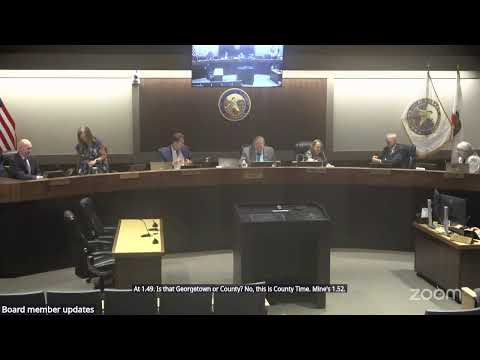
The Board of Supervisors on Aug. 12 approved introduction of an ordinance to add a film permits chapter (Title 5, Chapter 58) to the county code and authorized a one‑year memorandum of understanding (MOU) with the El Dorado County Chamber of Commerce to support film permitting and related activities.
Planning Director Karen Gardner said staff used the state film office’s model ordinance as a basis for local rules and that the proposed ordinance would replace a 1990 film resolution. Gardner clarified the county’s intent regarding still photography: "the intent of the ordinance is to only charge film fees for still photography, such as a commercial photographer shooting photos for a car ad as an example." She said portrait and private still photography (family or student portraits) would be exempt when they do not require road or facility closures, staff reimbursement, or drone use; staff proposed adding explicit wording to clarify these exemptions.
Gardner said the county is still developing a fee schedule tied to actual staff costs and overhead and expects to return with fees in September after consulting Parks and other departments. She also said the MOU with the El Dorado Chamber is structured to allow periodic review and updating of roles and reporting; the MOU is for one year with no automatic extensions, and staff expects to return before July 1 of the coming fiscal year to realign payments and contract timing.
Public commenters raised concerns about the MOU and using county funds to support the Chamber: one commenter asked why the Chamber was selected, whether the county budget included the MOU payments, and whether the role had been subject to a request for proposals. Another commenter said the Chamber should be self‑supporting and expressed concern that the Chamber often advocates for business interests.
Board members voted to introduce the ordinance, find it exempt from CEQA, and authorize the chair to sign the one‑year MOU; the board approved the motion by voice vote. Supervisors asked that staff return with a fee schedule, described how payments would be scheduled to align with the fiscal year, and noted reporting requirements the board requested for the Chamber and the film office.
Next steps: staff will return with a detailed fee schedule (based on staff costs and departmental rates), the finalized MOU payment schedule aligned to the county fiscal year, and reporting metrics for film activity and revenue.