Get Full Government Meeting Transcripts, Videos, & Alerts Forever!
Get email alerts on the Water Policy topic
No spam. Unsubscribe anytime.
Developer asks council to consider temporary culinary water for Jordan Park as water‑share negotiations continue
Summary
Developers of Jordan Park described a continuing inability to secure secondary irrigation water due to ownership and bylaw disputes among local water companies; they asked council to consider a temporary exception to allow culinary water for irrigation as a last resort and council voted to postpone action pending further study.
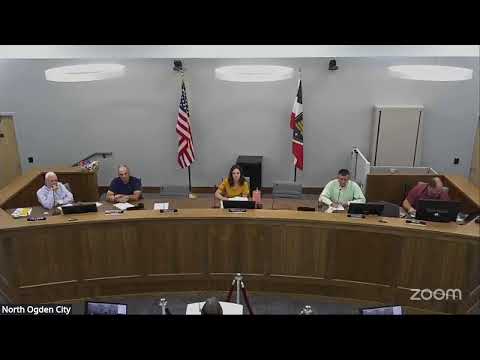
Barry Gettleman of Hamlet Homes and developer Rick Skadden told City Council members on Sept. 9 that Jordan Park, a newly platted 37‑lot subdivision north of Mountain Road, is ready for limited development but lacks a reliable secondary (irrigation) water supply because of disputes and bylaw limitations among local water companies.
Gettleman and Skadden said they have purchased water shares and are negotiating with multiple providers (North Ogden Irrigation, Pineview and other local holders) and working with attorneys to amend bylaws so shares can be used north of the canal, but they warned legal changes and inter‑company agreements could take months to finalize. The developers said they have paid infrastructure costs and recorded the plat with an understanding that certificates of occupancy will not be issued until irrigation access is resolved.
Given the uncertainty, the developers asked the council to consider, as a last resort and on narrow conditions only for Jordan Park, allowing culinary (treated) city water to supply outdoor irrigation temporarily. They proposed limits such as restrictive irrigation rules, HOA enforcement of waterwise landscaping and a time‑limited city authorization (for example, six or 12 months), and emphasized they prefer a permanent secondary water solution and are actively buying or securing shares.
Several residents and water‑company representatives addressed the council during public comment and opposed using culinary water for outdoor irrigation. Speakers warned that culinary systems were designed for household use and fire flow, not irrigation; allowing irrigation with culinary water could strain supply, jeopardize fire flows in low water years, and create an undesirable precedent leading other developers to prefer culinary connections rather than securing secondary water rights. Brian Bartholomew (Mountain View Irrigation) and other residents urged the council to reject culinary irrigation and instead require developers to secure appropriate irrigation shares.
City staff and the council said the issue is complex and touches utility policy, interlocal rights and water‑share perfection (ownership and seniority). Staff recommended further review and consultation with the city attorney and public works. The council did not adopt any temporary exception; instead it voted unanimously to postpone the discussion so staff can gather additional legal, technical and policy information and so the developers may continue negotiations with water companies.
Council members said they appreciated the developer’s efforts to acquire shares and the participants’ candor but stressed concerns about precedent, policing irrigation usage and protecting culinary supply and fire flow. Staff will return with legal analysis and any recommended conditions if the council chooses to consider a temporary authorization at a future meeting.