Get Full Government Meeting Transcripts, Videos, & Alerts Forever!
Get email alerts on the Land Use topic
No spam. Unsubscribe anytime.
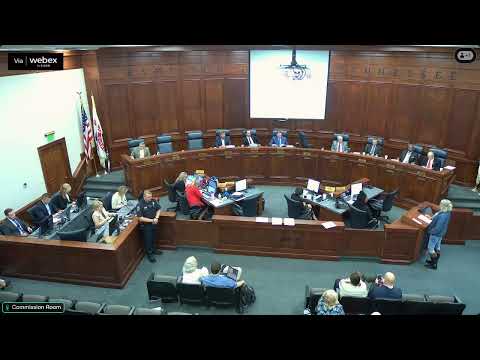
Hamilton County commission hears extensive public comment on Plan Hamilton; refers guidance to regional planning agency
Summary
The Hamilton County Commission on Aug. 13 took public testimony and debated Resolution 825-18, the county's guidance to the Regional Planning Commission and Regional Planning Agency on proposed changes to "Plan Hamilton," but did not adopt a final plan.
The Hamilton County Commission on Aug. 13 took public testimony and debated Resolution 825-18, the county's guidance to the Regional Planning Commission and Regional Planning Agency (RPA) on proposed changes to "Plan Hamilton," but did not adopt a final plan. Commissioner Helton introduced the resolution and said the measure is intended to guide the planning commission's work; commissioners and residents spoke in favor and opposed before the commission agreed to take the item up again at next week's regular meeting.
Why it matters: The discussion touched on the county's approach to unincorporated growth, infrastructure funding and the balance between property rights and development controls. Speakers representing the home-building industry urged changes to reduce regulatory costs and preserve development flexibility; neighborhood residents, civic speakers and some commissioners warned that denser or poorly sited development will strain roads, stormwater and other county infrastructure.
Most of the public comment centered on two competing positions. Julian Bell, speaking for portions of the housing and building industry, told commissioners, "We are not in favor of Plan Hamilton," and said the plan would increase costs, slow production and reduce private property rights. Bell urged adoption of a narrower, amended approach if the commission moves forward. In contrast, multiple residents and neighborhood speakers argued the county lacks the infrastructure to support more or faster growth and urged the commission to preserve rural character and require stronger limits on development in sensitive areas.
Commissioner Helton, the resolution sponsor, presented a package of proposed changes described during the meeting as a middle-ground approach: reduce A-1 (agricultural) density from existing 2 units per acre to 1.5 where specified; reduce R-1 (residential) density from 7 to 5 where sewer is available; move rezoning hearings from monthly to every-other-month; limit fill in floodplain from 100% to 75% in many cases; increase setbacks and require buffers along major thoroughfares; and add a "countryside residential" middle category that would permit higher density only where sewers are provided and after planning review. Helton said these items were intended to "lower density, increase setbacks, make provisions to not fill flood plains" and produce "a better situation." He also said the resolution is guidance to the planning commission and that the planning commission must prepare an implementing plan under state law.
Regional Planning Agency staff explained the difference between the county commission's advisory role and the planning commission's statutory duty to adopt a comprehensive plan. Karen Renick, RPA staff, confirmed the planning commission must take formal action and that the RPA planned to place Plan Hamilton on the planning commission agenda when materials were ready.
Speakers pressed technical and factual claims on both sides. Greg Lewis, an area resident who identified himself as an engineer, asked commissioners to request briefings from the experts who authored the county's "cost of community services" study so the commission can understand what costs were included and what was not. Several speakers cited the county's deferred infrastructure needs and recent storm flooding as evidence that more development will increase burdens on roads, drainage and emergency services. Builder and developer speakers said restricting development will exacerbate housing supply shortages and raise prices, citing supply-and-demand principles; others rebutted with local examples showing that housing type and market behavior, not density alone, determine affordability in many neighborhoods.
No formal vote was taken on Plan Hamilton during the meeting. The commission adjusted the public-comment time allotment for the item (each side would receive 10 minutes plus a short rebuttal period during the hearing) and instructed staff and the Regional Planning Agency to continue the plan-development process consistent with the commission's guidance. The chair said the item will return to the commission for consideration at the next regular meeting.
Ending note: Commissioners and RPA staff repeatedly emphasized that the resolution as read is advisory: the planning commission and RPA must draft and adopt the formal plan and submit it as required by state law for any final adoption by the county commission.