Get Full Government Meeting Transcripts, Videos, & Alerts Forever!
Get email alerts on the Procurement Security topic
No spam. Unsubscribe anytime.
Board approves short-term Abacus security contract; procurement reform, living wage debate continues
Summary
The Board of Estimates approved a select‑source extension and emergency procurement to keep Abacus Corporation providing unarmed security while the city prepares a new solicitation; discussion focused on living wage, best‑value contracting and program costs.
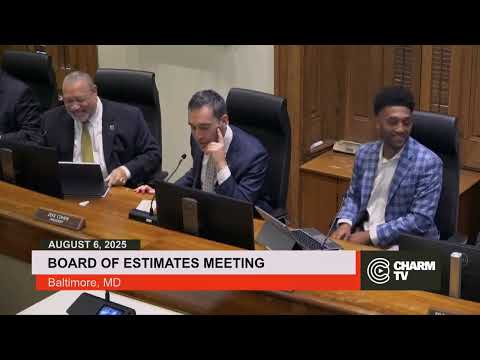
The Board of Estimates on Aug. 6 approved a short-term agreement to keep Abacus Corporation providing unarmed security services for city facilities while the Bureau of Procurement and Department of General Services prepare a new solicitation.
Chief Procurement Officer Adam Manny asked the board to approve a select‑source contract to cover an initial two-month period with an optional 12‑month renewal to extend service through the end of the year. Manny said the extension followed an emergency procurement that had been used to keep security staff on site after previous contract timing slipped. The clerk’s opening statement referenced SB2512237 and an emergency procurement amendment tied to SCON 004180 for $1,663,363.78.
Comptroller Bill Henry pressed officials about the intersection of the living‑wage requirement and contractor pay. Henry said the living wage “is actually lower than the increased pay in the proposed selected source” and asked what would happen if a new bidder submitted a lower hourly rate than current emergency contract pay. Manny said the living wage is set by law through the Wage and Labor Commission and by this board’s annual approval; procurement cannot set a higher floor than that statutory rate. Manny said the current temporary contract pays above the living wage (he and others referenced $18.50 an hour for recent extensions versus an example living wage figure mentioned as $15.30). Mayor Brandon M. Scott said the administration worked to obtain a roughly 20% increase in interim pay and signaled it would not support rolling that back.
Board members discussed moving from low‑bid “invitation for bid” procurements to best‑value requests for proposals, which Manny said would take about two additional weeks to prepare. Manny said an invitation for bid could be advertised within days; converting to a best‑value RFP would delay issuance by roughly two weeks but would allow the city to weigh qualifications and other factors beyond price.
Comptroller Henry estimated the current interim contract costs about $130,000 a month for the two‑month term — an annualized figure he described as roughly $10 million — and asked whether the city had studied bringing security in‑house. Manny said that determination would fall to Department of General Services and the Department of Human Resources. The board approved the procurement action by voice vote.
Department of General Services Director Baraki Attila (listed in the record as Attila Burke) and DGS staff described the addendum as a bridge to the planned solicitation and confirmed the administration’s desire to move toward best‑value contracting where legally possible.