Get AI Briefings, Transcripts & Alerts on Local & National Government Meetings — Forever.
Kirkwood R‑VII board approves 2025–26 strategic plan and accepts July financial statements
Summary
The Kirkwood R‑VII Board of Education on Aug. 25 voted to approve the district's 2025–26 strategic plan and to accept the July 2025 financial statements.
The Kirkwood R‑VII Board of Education on Aug. 25 voted to approve the district's 2025–26 strategic plan and to accept the July 2025 financial statements, actions taken by voice vote during the regular board meeting.
The fiscal item, brought as agenda item 6.01, passed after a motion and second; board members voted to accept the district's July financial statements, which staff described as typical for the month. District staff said July revenues were just under $2.0 million, including a little over $200,000 in delinquent tax collections; the district reported a self‑funded insurance fund balance a little over $1.5 million and medical claims of just over $1.0 million. Staff also noted a large Title II‑A federal payment received in July represented late payment for prior-year services rather than new spending.
The board then took up and approved the 2025–26 strategic plan (agenda item 6.02). Dr. Bailey, who introduced the plan to the board, said the 2025–26 plan is intended as "a bit of a bridge year" between the current five‑year plan and work that will begin on a new plan for 2026–31. "We recognize this is a bit of a bridge year as we have the fifth and final year of the current plan, and actually begin tomorrow with the approval of the RFP... to move forward with writing the new plan," Dr. Bailey said.
Why it matters: The approved plan sets district priorities for the coming school year and informs budget, staffing and program decisions. Board members and staff framed the year as an opportunity to sharpen measurements and reporting ahead of the next strategic planning cycle.
Key elements summarized by district presenters
- Cohort‑based academic goals and PLCs: District administrators said where possible the plan's academic targets use cohort calculations (tracking the same group of students year to year) rather than comparing different grade cohorts. "When possible, we've calculated any goals that we could based on cohort data and not based on a specific grade level," said Dr. Grana, who outlined PLC (professional learning community) expectations. Staff described weekly PLC meetings at multiple levels that use formative and benchmark data to guide instruction.
- Literacy and math: The district emphasized a comprehensive literacy review to meet DESE requirements across six domains (leadership and sustainability; standards‑based curriculum; intentional instruction, intervention and enrichment; assessment; partnerships; success‑ready students and workforce development). Staff highlighted ongoing LETRS training for teachers and said 63 teachers have completed or are in year‑two of LETRS training, with 20 currently in year one. For math, the district will continue using the Amplify/Desmos resource, provide job‑embedded coaching across buildings and deliver targeted professional development.
- Post‑secondary and career pathways: The plan supports expanding market value assets, industry recognized credentials (IRCs) and virtual course options. Staff said DESE maintains a long list of IRCs and that the district plans to grow high‑school opportunities, dual credit, AP and partnerships such as South County Technical programs and STL CAPS. Administrators noted pilots that allow students to take advanced courses (for example, calculus through a university partner) and work to build a mentorship/apprenticeship database connecting students and local employers.
- Special education, disproportionality and behavior: The district reported mixed results on discipline metrics and said it would continue targeted supports for students with IEPs. Staff noted Kirkwood's rate for suspensions of students with IEPs compared favorably to other St. Louis County districts, while also acknowledging ongoing disproportionality concerns. The district plans to use funding tied to disproportionality to expand professional development for school psychologists, restorative practices training, and to pilot a community mentor program.
- Restorative practices and de‑escalation: Administrators described restorative practices as an approach focused on building relationships and trust. Dr. Mapp said "80% of what restorative practices is is proactive, and only 20% of it is reactive," and explained the district offers multiple training formats. The board asked for clarity about whether the multi‑day restorative training would be required for all staff; administrators said introductory restorative training is provided broadly (including new‑hire orientation and building staff meetings) and that the full multi‑day training has not been required for every employee due to operational staffing constraints. The district indicated administrators are expected to model restorative approaches in buildings.
- Social‑emotional learning and wellness: The plan continues investment in counselors, social workers and SEL coaches. Staff reported a decline in the share of students identified "at risk" for social‑emotional concerns and described attendance committees, home‑visit protocols and partnerships with community providers to expand on‑site therapeutic supports.
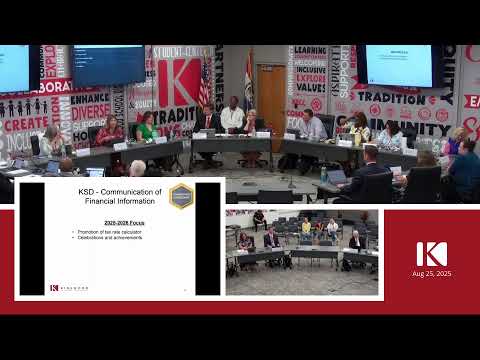
- Communications and community engagement: Staff said a recent communications push increased usage of the district's "Let's Talk" feedback tool by 31% compared with the same period last year. The district announced a community engagement event for Sept. 12 before the first home football game and said it is expanding teacher access to district tools (for example, Smore) and publishing a more detailed style guide.
Votes at a glance
- Motion to approve the July 2025 financial statements (agenda item 6.01): moved by Sharon, seconded by Neiman; voice vote, motion passed. (No roll‑call tally recorded in the meeting transcript.)
- Motion to approve the 2025–26 strategic plan (agenda item 6.02): moved by Pangborn, seconded by Hepburn; voice vote, motion passed. (No roll‑call tally recorded in the meeting transcript.)
- Motion to extend the meeting by 15 minutes: moved by Kathy, seconded by Hepburn; voice vote, motion passed.
What board members asked and staff promised
Board members pressed for clearer visuals and easier ways for the public to read cohort goals; staff clarified how to read the chart (moving diagonally to follow cohorts). Board members also asked whether restorative practice multi‑day training would become mandatory; administrators replied introductory training and ongoing refreshers are broadly provided, while multi‑day sessions remain targeted and dependent on scheduling and coverage.
Sources and next steps
The board approved an RFP to begin work on the next strategic plan (2026–31); staff said the district will present individual school highlights at the September work session and continue to post dashboard indicators for public view. The district also plans to publish a consolidated list of current industry recognized credentials and to continue rolling out the data dashboard that will display program and cohort indicators to the public.
Ending: The board adjourned after approving the plan and financials and noting upcoming dates, including the Sept. 12 community engagement event and a Sept. 22 board tax rate hearing.