Get Full Government Meeting Transcripts, Videos, & Alerts Forever!
Get email alerts on the Regional Planning Funding topic
No spam. Unsubscribe anytime.
Regional planning board asks Chemung County to double annual contribution amid federal funding uncertainty
Summary
Southern Tier Central Regional Planning and Development Board says federal grants are delayed and may shrink; it asked Chemung County to raise its annual cash contribution from $85,000 to $170,000 to sustain services and leverage matching funds.
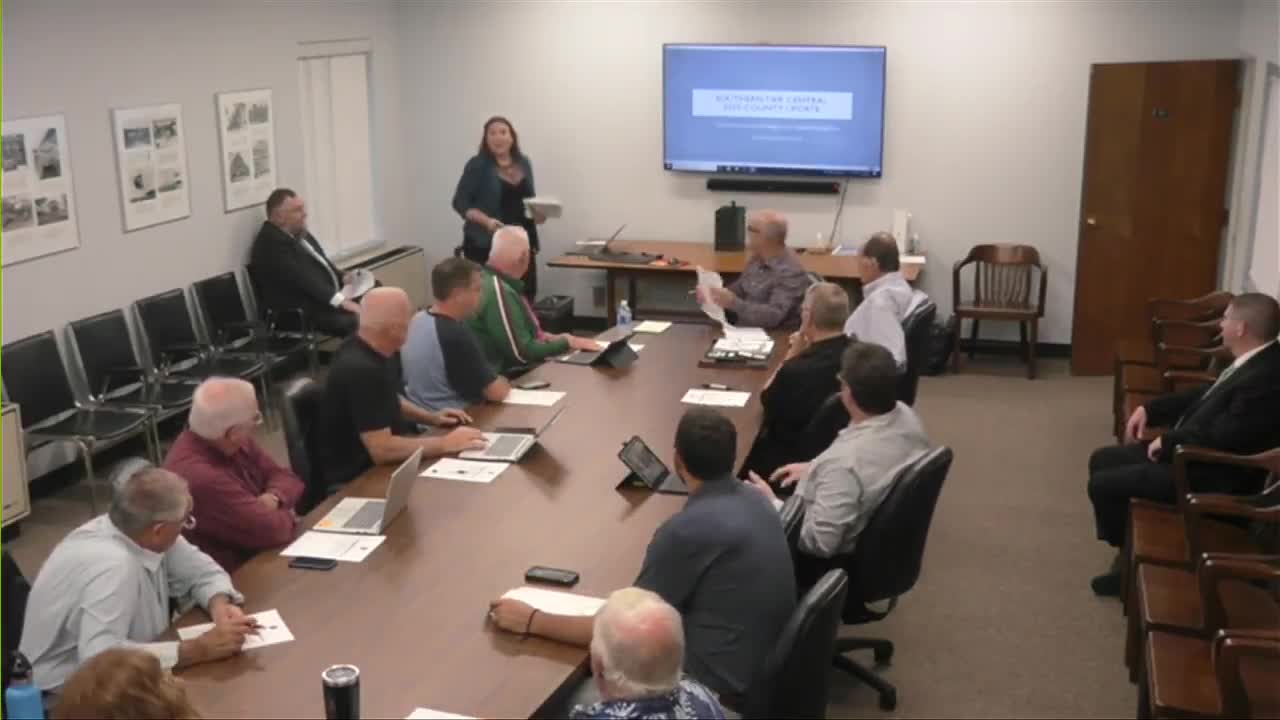
Chelsea Robertson, a representative of the Southern Tier Central Regional Planning and Development Board, told the Chemung County Legislature that the regional planning body faces near-term funding pressure and asked the county to consider doubling its annual cash contribution.
Robertson said Southern Tier Central (STC), which she described as a municipal government under New York law serving Steuben, Schuyler and Chemung counties, relies heavily on federal grants and county cash contributions to match competitive programs such as the Appalachian Regional Commission (ARC) and the Economic Development Administration (EDA). “We are primarily federally funded and there's some, you know, weird things happening in Washington,” Robertson said, adding that delayed federal payments and proposed limits on indirect cost reimbursements threaten STC’s budget.
STC provided the legislature with a 2024 annual report and a new Chemung County investment report showing how county contributions are leveraged. Robertson said Chemung’s current $85,000 contribution typically leverages roughly $610,000 in investments and services to the county in a normal year. She recommended increasing Chemung’s contribution to $170,000 while maintaining STC’s historical 40/40/20 split among the three counties.
Why the request matters: Robertson said most external grants require a local cash match and that local contributions are the only predictable, noncompetitive funding STC receives. STC’s 2024 budget was about $1.3 million; roughly 15% of that came from county cash contributions, she said. Robertson warned that if federal funding were lost next year STC would face a $718,000 shortfall, and that proposed federal policy changes capping indirect cost recovery at 15 percent could cut roughly $100,000 from STC’s administrative budget.
Robertson outlined cost-saving measures STC plans to take if additional county funding is not secured: a 20 percent staffing reduction by attrition (about $200,000 in savings), reduced travel, and pursuing additional grants. She said those measures would shrink a projected $218,000 deficit to a smaller shortfall but would still reduce services absent increased county support.
Robertson also described STC’s services — planning, zoning assistance, flood mitigation, broadband mapping, grant writing and workforce projects — and noted STC helped create the Southern Tier Network, the region’s nonprofit fiber ring. She said STC maintains a full-time flood mitigation expert now used by Chemung County and that the agency provides both fee-for-service and no-cost technical assistance, including Climate Smart Communities support.
Legislators pressed Robertson on outreach and grant timing. Robertson said ARC applications typically are due each mid-September with funds arriving the following summer, and that EDA awards often take many months and are “rolling” for large infrastructure grants. She urged municipal officials to contact STC early with projects so staff can identify funding sources and help assemble matching funds. “Call me and say this is what I have. How are we gonna get this funded?” Robertson said.
Robertson said STC is also working on a short strategic planning survey for member jurisdictions and has proposals to improve outreach to county legislators and municipal staff. She told the legislature she had been meeting individually with county officials and that final decisions about county contributions will be considered during the counties’ budget processes.
Robertson provided printed materials, including the 2024 annual report and the Chemung County investment report, and said her contact information is on those handouts.
Ending: The Legislature did not vote on the funding request during the meeting; Robertson said county budget discussions were ongoing and encouraged officials to work with STC staff on project priorities and grant timelines.