
ICE raids and federal data sharing are chilling health care use, providers say
Get AI-powered insights, summaries, and transcripts
Sign Up Free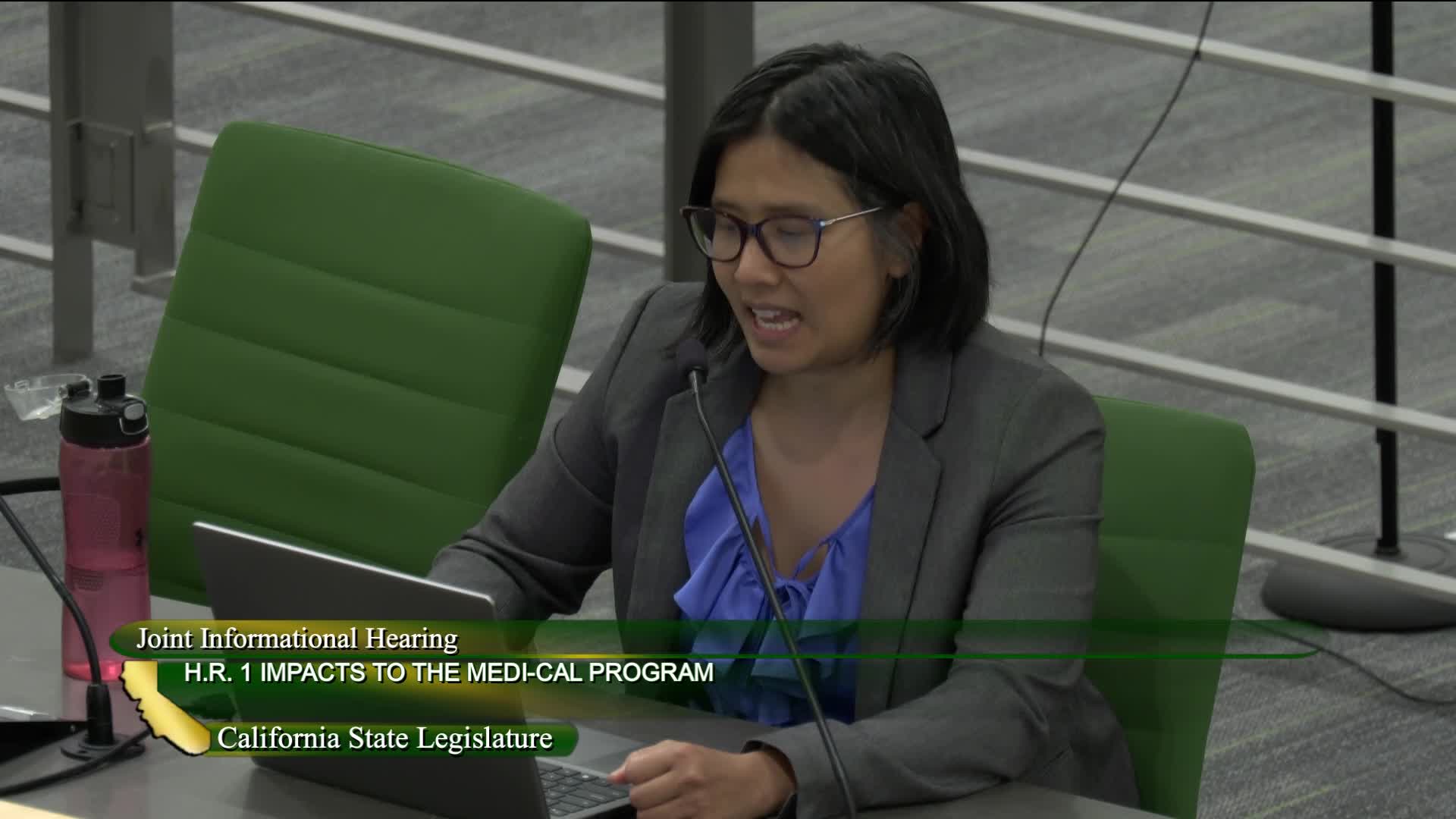
Summary
Advocates, county health officials and community clinics told legislators that recent immigration enforcement and federal data‑sharing actions have reduced clinic and emergency visits, interrupted preventive care, and driven community‑based providers to deliver care in patients’ homes.
Los Angeles County health officials, immigrant‑rights advocates and safety‑net clinics told a joint Senate and Assembly hearing that recent immigration enforcement operations and federal data‑sharing reports have created a “chill” that discourages immigrant families from seeking health care, school or early‑childhood services.
Monica Madrid, state policy advocate for the Coalition for Humane Immigrant Rights (CHIRLA), said the raids “destabilize families, inflict trauma, and undermine mental and physical health of our entire communities.” She opened with a family example and urged lawmakers to treat raids as a public‑health crisis.
Dr. Patel, a representative of the Los Angeles County Department of Health Services, outlined the system‑level effects county officials have observed. “With a workforce of over 30,000 and more than 4,400,000 patient visits a year, we’re a cornerstone of the region’s health infrastructure,” Dr. Patel said, and then described measurable declines: compared with May, the county saw emergency department visits fall about 14% in June and about 10% in July; urgent‑care visits dropped about 15% in June and 5% in July. He said some neighborhoods with large immigrant populations reported larger declines and that telehealth and multilingual outreach have been expanded to try to maintain access.
Community clinics described a range of responses to the fear. Jim Monja, president and CEO of St. John’s Community Health, described a “Health Care Without Fear” program in which clinicians visit patients at home, deliver medicine and groceries, and provide on‑site care; the clinic reported roughly 600 home visits in three weeks. Monja also said no‑show rates at his clinics rose from about 9% to more than 31% at the height of enforcement operations.
Advocates and policy analysts tied enforcement to other federal administrative actions that raise privacy and eligibility concerns. Carlos Alarcón of the California Immigrant Policy Center said reports that the Department of Health and Human Services provided information to Department of Homeland Security have magnified fears: “People are scared that ICE will know where they live, will know where they get their health care.” Several witnesses urged expanded legal‑services funding, clearer privacy guidance to patients and clinics, and stepped‑up community outreach.
Speakers highlighted specific downstream effects. Lisa Davis of The Children’s Partnership described research and community reports showing school absences and early‑childhood program withdrawals when families fear enforcement — citing a Stanford study that found a 22% increase in district‑level absences after deportation sweeps in the Central Valley. Witnesses also raised concerns about mental‑health harms, missed preventive care, and the potential for communicable disease surveillance to suffer if people avoid public health settings.
Panelists repeatedly urged that health systems and the state increase multilingual outreach, fund community navigators and legal services, protect patient privacy and avoid policies that would force further disenrollment. County and clinic witnesses said some outreach and mobile services are underway but noted that many of those activities are not reimbursed and strain limited clinic resources.
Lawmakers asked DHS and providers to share refined utilization data and to continue coordinating on mitigation strategies; no formal actions or votes were taken during the hearing.