Get Full Government Meeting Transcripts, Videos, & Alerts Forever!
Get email alerts on the Public Health And Addiction Services topic
No spam. Unsubscribe anytime.
Delcovery mobile app to map recovery and social services in Delaware County; launch imminent
Summary
County-funded Delcovery app will provide a searchable map of recovery, health and social services, officials said. The project, supported initially with opioid-response funds and more recently with ARPA dollars, is entering a public rollout and will track basic usage metrics but not collect personal data.
Delaware County officials and the Delcovery project team demonstrated a new mobile app that collates recovery, health and social-service resources across the county and said the app will be available on Android and iOS within weeks.
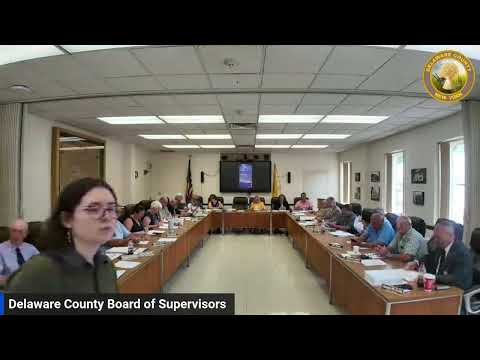
The presentation, given at the county board meeting in Delhi, said Delcovery began in 2021 as an online map and outreach effort funded by state opioid-response dollars and has since been redeveloped as a mobile application with additional support from American Rescue Plan Act (ARPA) funds provided by the county.
The app displays a county map populated with categories relevant to people seeking recovery services, including naloxone pickup locations, recovery providers, mental-health and substance-use treatment, food assistance, transportation, housing help, veterans services, law-and-justice contacts and employment resources. Users can view a street-level image for a listed resource, tap an address to open navigation in Google or Apple Maps, and tap a phone number to call directly. A “more info” link connects to an organization’s website, and resources can be shared through messaging apps.
Amber Gray of VEC Videography, the presenter, said the app “is not collecting any personal information. It's collecting very high level data just so we know how many downloads it had” and whether users are repeat or new. Gray said those aggregate metrics will be used to evaluate the project’s reach and to inform future funding decisions: “The benchmark is what do the numbers say.”
Gray described the project as phase 1 and said the team has built a database of county resources that will be kept current; she added the team expects providers who aren’t yet listed to request inclusion. She said additional educational content — short “reels” and tutorials aimed at people exiting jail, family members of people in active addiction, and others — will be distributed via Facebook, Instagram and the project website, with published campaign metrics informing any follow-on funding.
Project organizers said promotional materials will include QR-code cards to distribute in jails and clinics, a hard-copy branded county map for major providers, and outreach to law enforcement and recovery coaches. The team said the app and website are integrated; the website is in development and will carry links to app stores and social platforms.
The presenters said they are not service providers or clinical recovery specialists and that educational materials will be reviewed by appropriate officials before publication. County board members did not oppose the presentation; the project team thanked the board for funding support.
If used widely, organizers said the app should reduce the burden on individuals and providers who now compile web links by hand. The county meeting record shows the board has appropriated ARPA funds to the project; specific amounts were not stated during the presentation.
The Delcovery name and database will be branded “Delcovery — Delaware County.” The presenters encouraged county providers and residents to request inclusion or corrections to the database as the project rolls out.