Get Full Government Meeting Transcripts, Videos, & Alerts Forever!
Get email alerts on the Data Governance topic
No spam. Unsubscribe anytime.
Council debate over State of JAX data dashboard exposes split on city-funded data tool
Summary
Councilmembers debated a proposed $237,300 expenditure for a State of JAX data dashboard, with critics calling the contract redundant with nonprofit offerings and a potential vehicle for controversial equity work; supporters argued for a neutral, public-facing data resource.
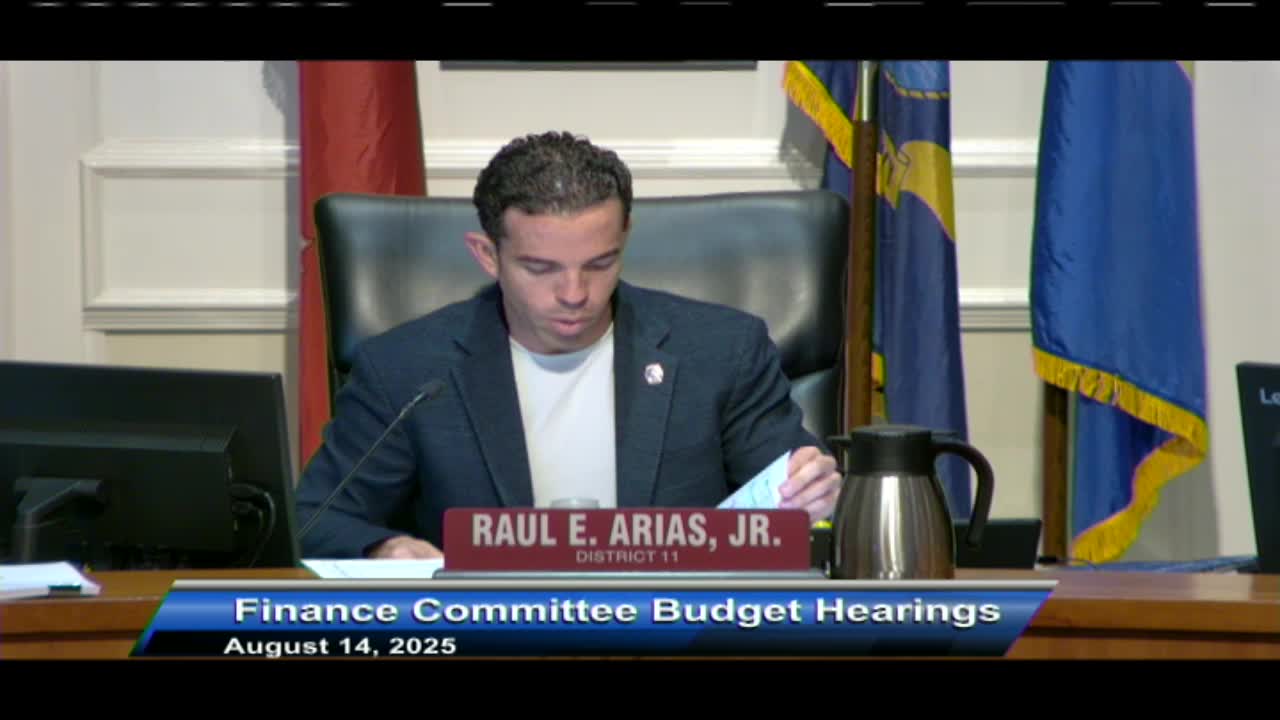
A proposed city contract to create a public data dashboard labeled “State of JAX” drew sustained debate on Aug. 14, exposing deep disagreement among council members over the need for a city‑funded data tool and concerns about process and duplication.
The proposal presented to the Finance Committee would have directed $237,300 to a managed data tool and website intended to aggregate and visualize city metrics. Supporters said the tool would provide a neutral, city‑owned resource with more granular access than privately run products; they described the project as a public‑private effort with United Way and university partners contributing cash and pro bono work.
Opposition and process concerns: Multiple council members argued the dashboard duplicates existing nonprofit tools, singled out the Nonprofit Center’s MySidewalk/Catalyst work as already providing many of the desired features, and objected that council members had not received timely briefings before budget action. Some critics framed part of the effort as connected to equity‑oriented (“DEI”) initiatives and voiced opposition to perceived bypassing of council oversight. Councilmembers called for public records related to prior discussions and for the administration to justify the additional licensing expense.
Committee actions: After an initial motion to remove the item from the budget passed, members reconsidered and then ultimately placed the item in “bucket number 1,” moving it forward in the budgeting process. Auditors noted the contract includes $200,000 in one budget area and $37,300 in another; staff recommended a technical shift of part of the $37,300 into the non‑departmental grants area if approved.
Why it matters: The episode highlights tensions about the city’s role in producing public data, the appropriate use of limited budget dollars for digital tools, and how the city coordinates with nonprofit data efforts. Council members asked that a side‑by‑side comparison of city proposal versus nonprofit options and any related emails be provided for further review.
Ending: Committee members deferred final action while several asked staff to produce additional documentation, and to coordinate more briefings before final budget votes.