Get Full Government Meeting Transcripts, Videos, & Alerts Forever!
Get email alerts on the Post Conviction Reform topic
No spam. Unsubscribe anytime.
Public Defender, DA outline post-conviction work; dozens freed but grants that fund unit are ending
Summary
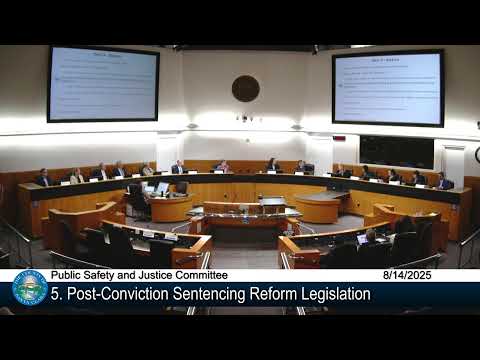
The Public Defender and District Attorney updated the Public Safety and Justice Committee on Aug. 14 about a surge of post-conviction work tied to recent state sentencing reforms, reporting 135 people granted new or reduced sentences since 2021 and warning that grant funding for the unit will expire.
The Santa Clara County Public Defender and District Attorney told the Public Safety and Justice Committee on Aug. 14 that recent state sentencing reforms have created substantial new workload for both offices but also delivered measurable results: since 2021 the public defender reported 135 clients obtained new or reduced sentences, and the offices estimate more than 1,600 years of incarceration were saved as a result of resentencing and post-conviction relief work.
Why it matters: The work responds to statutory changes such as the Racial Justice Act and other state reforms that allow some people to seek resentencing or post-conviction relief. County staff and community partners said the program reduces long-term incarceration, saves state and county costs and supports reentry, but the externally funded grants that helped build the public defender's post-conviction unit are set to expire.
What presenters said: Deidra Edgar, supervisor of the post-conviction unit in the Santa Clara County Public Defender's Office, said the county's post-conviction infrastructure was built largely with external grant funds and has been operated efficiently in partnership with the court and the district attorney's office. "We have saved over 1,600 years of incarceration," she said, describing that figure as a conservative estimate and noting an associated savings calculation drawn from the Legislative Analyst's Office.
Edgar and other presenters described the unit's partnership network — reentry service providers, faith-based groups and county programs — that assist people upon release. A client, Mr. Ho, described how the post-conviction effort helped secure release, housing, work authorization, restoration of his green card and employment. "Without you guys, I don't have this day," he told the committee.
District Attorney office staff said the workload is rising sharply. The DA's representative noted the office reviewed 732 prosecution-initiated resentencing matters over the last two years and that immigration-related post-conviction petitions rose roughly 85% since 2022, with an increase in "rush" petitions for people in immigration detention.
Public input: Multiple community speakers — including interns and organizers from Silicon Valley De-Bug and family members of incarcerated people — urged the board to preserve funding for post-conviction representation and called the county a state model for getting people home.
Budget and next steps: Presenters and supervisors discussed alternative funding avenues including competitive grants, fellowship partnerships with law schools, pro bono legal partnerships and broader efforts such as SB 90 claims seeking reimbursement for unfunded state mandates (a draft decision on an Racial Justice Act SB 90 claim is pending at the commission). The committee voted to receive the report and directed staff to return with an update in September.
Action: Committee received the report and requested a follow-up update in September with further information on funding strategies and the status of expiring grants.