Get Full Government Meeting Transcripts, Videos, & Alerts Forever!
Get email alerts on the Criminal Justice Funding topic
No spam. Unsubscribe anytime.
Committee hears AB 109 spending report as county faces structural deficits; staff asked for outcome-focused guidance
Summary
County staff briefed the Public Safety and Justice Committee on how Santa Clara County spends AB 109 (realignment) funds, flagged structural deficits and difficult budget choices, and were asked to return with clearer outcome measures and prioritization guidance. The committee voted to receive the report.
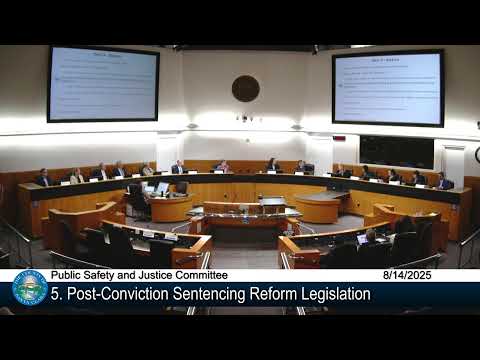
Santa Clara County staff briefed the Public Safety and Justice Committee on Aug. 14 about the county's use of AB 109 public safety realignment funds and asked the committee for guidance as the county prepares for a constrained fiscal 2026–27 budget.
The presentation described AB 109 as one of several state-to-county realignment efforts and emphasized that Santa Clara County has used the funds to support a broad reentry system, including county personnel and contracts with community-based organizations (CBOs).
Why it matters: AB 109 supports reentry services intended to reduce recidivism. County staff said revenue growth for AB 109 is modest while costs are rising, and that the funding stream will not cover all current programs without prioritization. Departments face potential reductions during the next budget cycle.
Key figures and program structure: Deputy County Executive and staff reported a base AB 109 revenue of roughly $75 million, with fiscal-year 2025–26 AB 109 expense allocations of about $84 million for county uses. Staff noted AB 109 represents under 6% of the total funding for public safety and justice departments and that approximately $17.2 million in AB 109 is currently allocated to contracted services across 15 categories. Employment services were listed as the largest category; education the smallest.
Public comment and lived experience: Yesenia Velasquez, speaking for the reentry and justice-impacted community, asked for a public report showing which positions are funded, where services are geographically allocated, service reach, and the extent of lived-experience involvement in contracting decisions. Formerly incarcerated reentry worker David Estrada urged the committee to preserve services that support employment and community connections.
Committee direction and next steps: Committee members asked staff to shift the focus from categorical spending lists toward measurable, outcome-focused metrics tied to recidivism reduction. Supervisors pressed for information about which subcontracts and programs demonstrate the strongest evidence of impact and whether services funded by AB 109 have alternative funding sources. Staff said they will return with a clearer, consolidated reentry strategic plan and additional data to inform prioritization and to summarize committee feedback for the full board. The committee voted to receive the report.
Quote: "Everything we are doing with these funds should be in pursuit of [reducing recidivism]," Supervisor Allenberg said during the discussion, urging clearer metrics to measure impact.
Action: The committee received the AB 109 report and asked staff to prepare more outcome-oriented materials and to return to the board/committee as the fiscal process proceeds.