Get Full Government Meeting Transcripts, Videos, & Alerts Forever!
Get email alerts on the Circuit Court Caseloads topic
No spam. Unsubscribe anytime.
Marion Circuit Court reports surge in name and gender-change filings, holds steady on staffing
Summary
Marion Circuit Court reported a sharp rise in name and gender-change petitions and described FY2026 budget needs focused on maintaining staffing, navigator help for self-represented litigants and outreach to youth.
Amber Collins, presiding judge of Marion Circuit Court, told the Public Safety and Criminal Justice Committee on Aug. 13, 2025, that the court is seeing an exceptional increase in name and gender-change petitions and is absorbing additional caseload with existing staff.
"In 2023, there were 483 total cases of that type filed in Marion County. In 2025, we've already between January 1 and May 31 of this year, we had over 508," Judge Amber Collins said during the presentation, noting the court projects more than 1,000 such filings for the year. Many of those petitions are filed by self-represented litigants; the court funds a navigator at the Legal Help Center to assist.
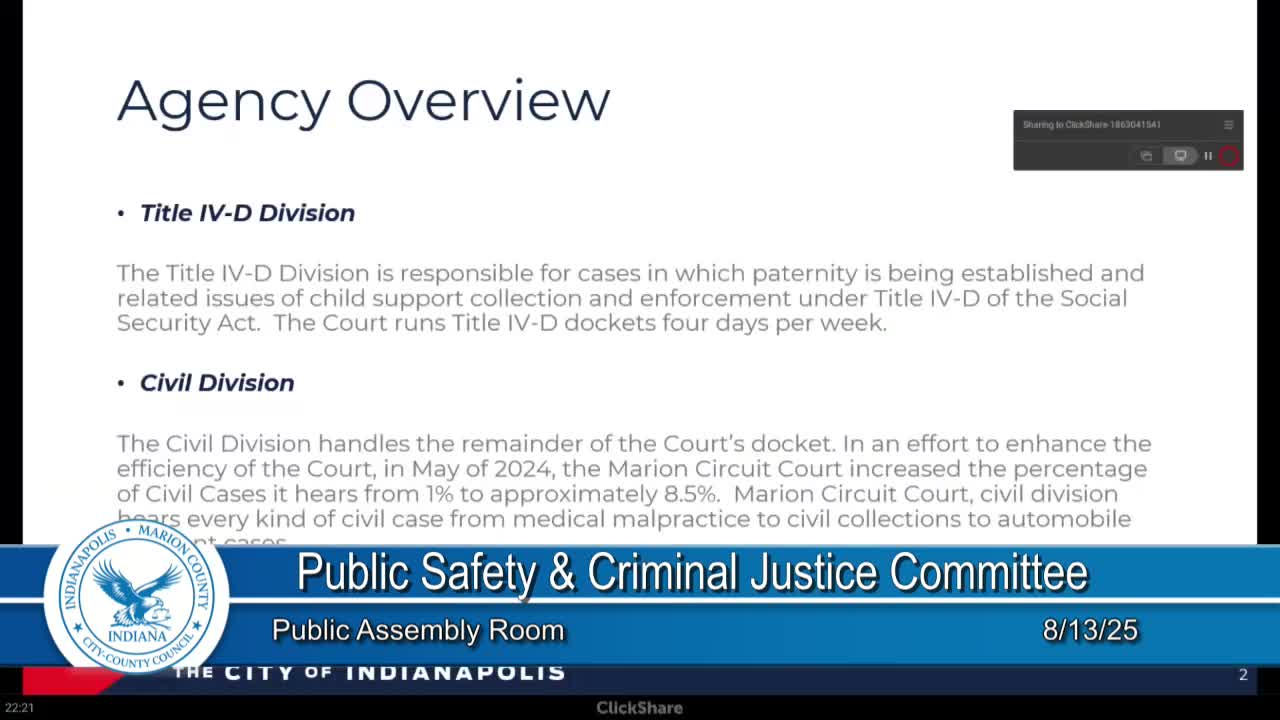
Collins described the court's Title 4(d) child support enforcement docket and a civil division that hears about 8.5% of general civil cases in Marion County, including quiet-title and correction of birth-certificate matters. The circuit court—udget for 2026 was presented as $1,307,135 total, a modest decrease from the prior year, and the court described priorities to expand community outreach to youth and to add staff if civil collection workloads continue to increase.
Councilors asked about filing fees and waivers; Collins said filing fees in civil cases are subject to petition for waiver and that low-income filers on TANF or Medicaid typically receive waivers. The court also highlighted its outreach programs that bring mock trials and court tours to schools to familiarize youth with the justice system.
No formal funding action was taken; the circuit court said it will monitor caseload trends and may return with additional staffing requests if workload increases persist.