Get Full Government Meeting Transcripts, Videos, & Alerts Forever!
Get email alerts on the Municipal Budget Shortfall topic
No spam. Unsubscribe anytime.
Lynnwood council holds work session on general fund shortfall, considers reserve change and cuts
Summary
Lynnwood City Council held a special work session to review a growing general fund shortfall, consider temporary changes to the city's reserve policy and discuss potential revenue and expenditure options ahead of a mid-biennial budget review in November.
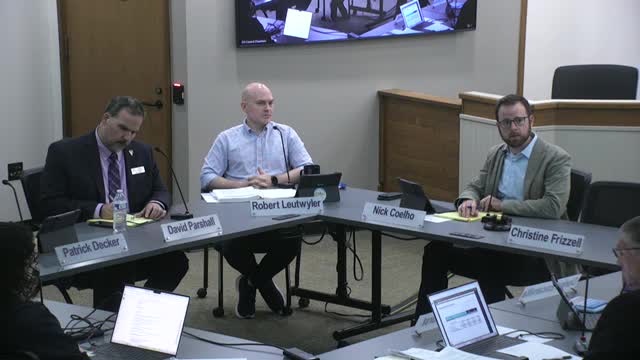
Lynnwood City Council members and city finance staff met in a special work session to discuss a projected general fund shortfall, options for new revenues and potential service cuts as staff and council prepare for the mid-biennial budget review.
The discussion, led by Finance Director Meyer and Council Member and Finance Committee chair Council Member Hurst, focused on updated forecasts, reserve policy options, personnel implications and a timeline that culminates in a formal mid-biennial process beginning in November. "We were told that the departments had all agreed to this and I've asked for specifics and never received that," Council Member Hurst said of earlier budget management materials. Director Meyer described earlier modeling and said the administration began with a 3% target and has since moved to department cuts ranging from roughly 6% to 10%, depending on department and bargaining-unit considerations.
Why it matters: the council is weighing short-term actions to shore up the fund balance while maintaining essential services into 2026. Director Meyer told the council the city is forecasting a general fund gap that, under the presentation shown July 28, left the city about $4.1 million short of its 2.5-month minimum reserve for 2025 and roughly $10.7 million short for 2026. Meyer said temporarily lowering the reserve policy from 2.5 months to 2 months would reduce the 2025 shortfall to about $1.5 million and the 2026 gap to about $8.0 million, but cautioned that changing the policy must be paired with a clear plan to meet the new target.
Council members pressed staff for details they can share publicly and for structured information from each department. Council Member Decker asked for a spreadsheet by department showing head count, positions identified for elimination or held vacant, percent changes in staffing, and the budgetary impact of those changes. Several council members asked departments to provide org charts with pay grades (without names) and lists of projects funded from the general fund for the coming biennium.
On personnel and hiring, council members discussed whether a hiring freeze applies across departments. Director Meyer and staff said some positions are being held to meet reduction targets and that negotiations with five labor unions are ongoing; Meyer emphasized that collective bargaining rules constrain what staff can share about specific personnel actions. Council members and staff also noted that recruitment difficulties, especially for custody and police officer positions, mean some vacancies persist because applicants are not available, not solely due to a formal freeze. Council Member Parcel said he did not believe city administration had imposed a hiring freeze on the police department, and council members referenced conversations with Police Chief Langdon about hiring challenges.
Council members discussed the Justice Center's ongoing operating costs. Council Member Lewweiler said debt service tied to the Justice Center will add about $5 million to the general fund and another roughly $1 million out of a public safety fund in coming years, increasing long-term recurring obligations.
Staff presented potential revenue options compiled from the Municipal Research Service Center's November 2024 revenue guide and the city's fund descriptions, including the property tax levy as an available tool. Director Meyer noted the city has authority under state law to levy up to a statutory cap and said the city is currently about $3.6 million under that cap; raising the levy within legal limits would affect 2026 revenues. Council Member Decker stated he would oppose any tax increase and suggested voluntary community-supported programs such as park adoptions and privately funded program sponsorships as alternatives.
Council members offered small, voluntary cuts within the legislative branch: council staff summarized roughly $21,000 in 2025 savings tied to a council vacancy plus up to $36,000 in higher-end voluntary reductions by foregoing travel, training and discretionary spending. Council Member Decker proposed using those funds to start third-party audits of city departments.
Next steps and timeline: Director Meyer reviewed the council's adopted mid-biennial schedule. Formal work sessions begin Nov. 3, with a public hearing on Nov. 10 and anticipated adoption of any budget amendments and the 2026 property tax levy by Nov. 24 (the date by which the levy must be certified to the county). Meyer and council members said staff will continue work through August and will return with detailed department-level information for a September meeting; council asked that questions and information requests be sent to staff in writing so the administration can provide targeted answers.
Council members also discussed public engagement options, including a town-hall style meeting or information booth at the upcoming local fair, but agreed timing should align with availability of sales-tax and other revenue data. Director Meyer said recent retail sales and sales-tax deposits are flat compared with 2024, and that Washington state sales tax trends are lagging national trends.
Council members requested detailed department reports for the next round of meetings: proposed position changes and vacancies, org charts with pay grades, service-level impacts tied to potential cuts, lists of general-fund projects and their contingencies, and a clear statement of legally mandated functions (citing applicable state statutory requirements). Several council members emphasized preserving essential public services and considering long-term structural changes to revenue reliance.
The work session concluded with council agreement to collect written questions for staff and to schedule more detailed briefings ahead of the November mid-biennial process. The session ended without formal votes or adopted actions.