Get Full Government Meeting Transcripts, Videos, & Alerts Forever!
Get email alerts on the Committee Structure topic
No spam. Unsubscribe anytime.
Council debates new committee structure; co-chair model rejected, some amendments tabled
Summary
Councilors debated a resolution to restructure Portland council committees and leadership. A Dunphy amendment to require chair/vice-chair (rather than co-chairs) failed, and another amendment to guarantee at least one committee chair from each district was tabled for later consideration.
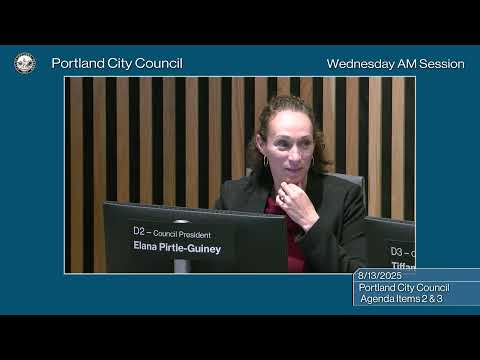
Portland City Councilors continued debate on a resolution to establish a new committee structure at the Aug. 13 special meeting, but made no final determination. Multiple amendments were considered; one failed on a roll-call vote and another was tabled for later discussion.
Why it matters: Committee structure defines how council workload is distributed, which committees take up policy work, and which councilors hold leadership roles. Those choices affect who sets agendas, how the public engages with policy discussions and how bureau staff allocate time and resources.
What happened - Dunphy amendment A (establish a mandatory chair/vice-chair model with specified chair and vice chair responsibilities) — moved by Councilor Dunphy and seconded; the amendment failed on a 4–8 vote. - Dunphy amendment B (require each district to have at least one committee chair) — moved by Councilor Dunphy; debate highlighted implementation questions tied to the eventual number of committees and chair availability. Councilor Dunphy moved to table that amendment; the council agreed to lay the amendment on the table for further consideration.
Discussion highlights Debate focused on two enduring choices: whether committees should use a co-chair model (two co-equal chairs) or a chair/vice-chair model; and how to ensure geographic representation without constraining the presiding officer's authority to appoint chairs. Several councilors, including Councilors Novick, Murillo and Ryan, expressed support for co-chair arrangements as a way to broaden leadership and balance perspectives; others favored a single chair with a clear vice chair to preserve clarity of responsibility and streamline coordination with the council president.
Committee leadership and a proposed "leadership team" Council President described an administrative use for a leadership coordination forum among committee chairs and the council president and vice president: an information-exchange venue to coordinate scheduling and agenda sequencing (not to take final votes on matters). Some councilors and the city attorney flagged the public-meetings law implications of any repeated, decision-level meetings of a subset of councilors; the president said the proposed coordination venue would be used for administrative coordination rather than final dispositions of motions.
Ending The council recessed debate on the committee-structure resolution and will continue consideration at the Aug. 14 recessed meeting (reconvened session) to give members time to review competing proposals and supplemental materials from staff.