Blount County schools seek $1.26 million for HVAC controls and unplanned replacements after years of failures
Loading...
Summary
Blount County Schools asked the county to approve two budget increases — $709,078 for planned HVAC controls replacements and $550,000 for unplanned emergency HVAC replacements — prompting extended debate about budgeting, fund structure and response times for broken units.
Blount County Schools asked the county commission on Aug. 12 to move two budget items forward to a full commission vote: $709,078 to replace outdated HVAC controls at Carpenter Middle School and William Blount Ninth Grade Academy, and $550,000 to create an unplanned HVAC replacement fund for fiscal 2025–26.
School staff and county finance officials said the controls replacement is part of an ongoing multi-year plan to replace obsolete control systems that are no longer serviceable; the unplanned fund is intended to allow rapid replacement when units fail so classrooms are not left without heat or air while formal bidding and appropriation processes run their course.
The school-side presenters said many existing control systems are obsolete and cannot be repaired because parts are unavailable, and that replacing controls on a single vendor platform gives district staff one app to monitor and manage multiple buildings. "This is a continuing effort to replace the old Novar control system that's failed throughout the district," a school facilities speaker said. He said four schools were converted last year and the requested money continues that work.
School operations staff and several commissioners pressed for clarity about whether the $709,078 is on a state contract and why it was not already included in the regular annual budget. County finance staff said the controls work is being purchased off a state cooperative contract, so a separate formal bid was not required, and that items routed through Fund 177 (capital) come before the commission rather than being included in the operating budget.
The larger $550,000 request drew the most debate. School facilities staff told the committee that over the past three years the district has averaged roughly that amount annually in unplanned HVAC replacement costs. "These are things that nobody planned for. You can't repair it. It's old units," a school official said. District speakers said ESSER (federal) funds had covered a portion of recent unplanned replacements, and that when those funds expired the district shifted the expected unplanned replacement need into Fund 177 for county appropriation.
Commissioners questioned why the county would appropriate a pot of money large enough to replace multiple very large rooftop units at short notice. County finance staff explained that Fund 177 is appropriated on a per-request basis and that the commission's prior decision to require appropriation of 177 funds means school staff cannot trigger purchases from fund balance without the commission's approval. Finance staff also said checks and balances would be applied: funds appropriated into the HVAC line would be verified by the schools' CFO and county finance before being spent and transfers out of that line would require mayoral approval.
Questions about scale and urgency framed the debate. School facilities staff said the district has roughly 1,300 HVAC units across 21 schools and that rooftop units range widely in cost depending on size — a 20-ton unit can cost on the order of $125,000 while 5-ton units are far less. Commissioners and a classroom teacher who spoke in favor of the fund both described occasions when having emergency funds available shortened outages dramatically: in one example a classroom lost air conditioning and was back in service the next day because a replacement unit was available.
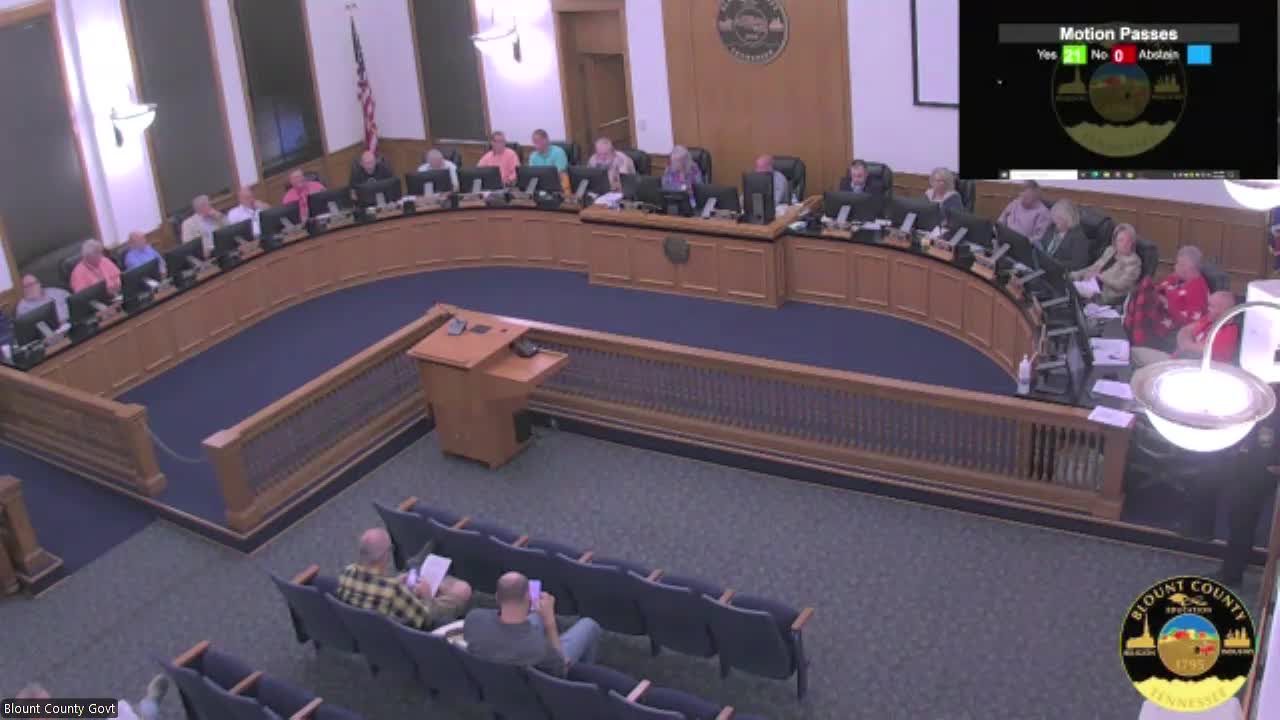
Votes: the $709,078 controls replacement measure (resolution 258005) was approved by the budget committee and reported as 21 yes votes to be moved to the full commission. The $550,000 unplanned replacement pot (resolution 258007) passed the committee and was reported as 17 yes, 2 no votes and will also be moved forward.
Why it matters: school HVAC failures directly affect classroom conditions and can require moving students or cancelling activities; the county and school system are balancing the need to plan capital replacements against the need to react quickly when equipment irreparably fails. The discussion highlighted the limits of school-side budgeting under the county’s Fund 177 rules and the tradeoffs between centralized oversight and operational speed.
What remains: commissioners asked for clearer lists of planned replacements, warranties on recently replaced equipment, and ongoing reporting on how Fund 177 uses are tracked and justified. School and county staff said they would provide additional documentation to the commission before the full-county vote.