Get Full Government Meeting Transcripts, Videos, & Alerts Forever!
Get email alerts on the Code Enforcement topic
No spam. Unsubscribe anytime.
Kingsburg code enforcement reports more proactive inspections, 390 cases in first half of 2025; staff to propose 2024 property maintenance code adoption
Summary
Building official AJ O'Connell reported 390 code enforcement cases in the first half of 2025—a 16% increase from 2024—with 86% of those cases closed and 78% generated proactively. Staff plans to propose adopting the 2024 International Property Maintenance Code to update enforcement tools.
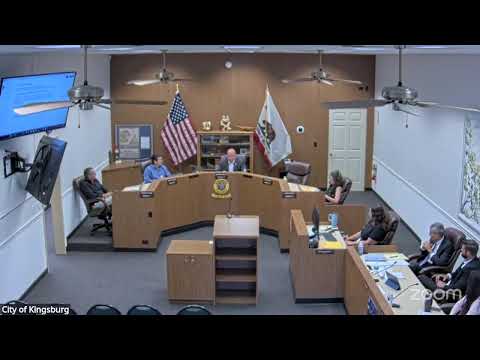
AJ O’Connell, Kingsburg’s building official, presented the city’s biannual code enforcement report on Aug. 6, describing inspection activity, case dispositions and next steps for code updates.
O’Connell reported 390 code cases generated in the first six months of 2025, a 16% increase from the same period in 2024. Of those, staff said 86% had been closed. The city’s code officers generated 78% of new cases through proactive inspections in 2025, up from 70% in 2024, while reactive or complaint‑based cases decreased by about 15% in gross number.
Property maintenance violations made up the largest category of cases (about 32%), which includes issues such as excessive weed growth, mow‑strip maintenance and rubbish accumulation on vacant lots, O’Connell said. Water‑usage violations accounted for slightly less than one‑fifth of cases. O’Connell showed photos of a proactive case that was resolved through a “knock and talk” with a tenant; staff adjusted compliance dates and accepted phased abatement to accommodate the resident’s circumstances.
The presentation noted 926 site inspections were completed in the first half of 2025 (up from 899), and that 71% of case dispositions resulted in courtesy notices intended to educate property owners. Notices of violation or formal public nuisance declarations represented just under 21% of dispositions. O’Connell said administrative citations totaling $10,625 were assessed but not collected because properties came into compliance voluntarily.
O’Connell answered council questions about enforcement challenges for renters and absentee owners, noting owners organized as out‑of‑state LLCs can be harder to reach. He described one active case involving four adjacent vacant lots for which the city has declared a public nuisance and assessed daily fines; the city may abate or place liens on the property if necessary, consistent with the municipal code.
Staff told the council it will return with a formal proposal to update the municipal property maintenance code from the 2021 International Property Maintenance Code to the 2024 edition to strengthen enforcement tools and ensure current standards.
Council members commended the enforcement staff for outreach and responsiveness and asked staff to continue working with property owners, tenants and community partners to address problem properties.