Get Full Government Meeting Transcripts, Videos, & Alerts Forever!
Get email alerts on the School District Operations topic
No spam. Unsubscribe anytime.
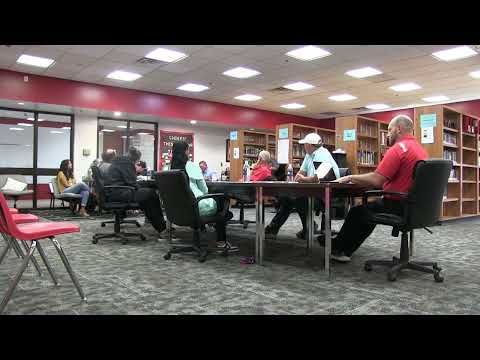
Cherokee Public Schools board approves technology and security purchases, discusses handbook changes and concurrent-enrollment support
Summary
At a regular board meeting, Cherokee Public Schools trustees approved consent-agenda purchases including new laptops and restroom/locker-room detectors, reviewed bond and insurance expenses, and discussed proposed changes to the district handbook affecting valedictorian/salutatorian criteria and a concurrent-enrollment requirement.
Cherokee Public Schools trustees approved several technology and security purchases and reviewed near-term budget items at a regular meeting where administrators also presented proposed handbook changes covering valedictorian and concurrent-enrollment rules.
School staff reported that the district used an OETT grant to purchase Apple laptops, spending about $21,000, and installed detectors in junior high and high school bathrooms and locker rooms at a reported cost of about $22,000. A staff member described the detectors as having “noise detection” and motion-detection features and said they will send text and email alerts and indicate tampering.
The board also reviewed larger fiscal items as the school year begins: the transcript records a bond-fund payment of $600,000 listed in the bond fund and references an upcoming insurance premium payment the district described in the meeting as “43,503,” phrased in the transcript as “43,503 thousand dollars,” an unclear formulation; the district said the amount relates to an insurance premium and that officials expect updated appraisal information soon. Other summer-completion projects reported were parking-lot work (a $30,000 payment to the county), softball-field maintenance (about $5,000), and carpet installation at the elementary school (about $5,800).
Principal’s report and handbook revisions dominated discussion. The principal said teachers returned to campus and described handbook updates that replace earlier “cell phone” language with “personal electronic device,” adopt the electronic-device policy the board approved last month, and revise graduation and valedictorian/salutatorian requirements. Proposed changes would require students seeking valedictorian or salutatorian recognition to avoid a grade below B in weighted classes and avoid NC (no credit) marks; the draft also includes language about disciplinary records and suspensions, which some board members urged removing or leaving to administrative discretion.
Board members discussed adding a requirement that students complete at least one concurrent-enrollment or AP/upper-level class to be eligible for valedictorian or salutatorian honors. Trustees debated fee barriers for families and possible options for covering costs: the transcript records references to Northwestern (college) fees of $63 per credit hour and that some students can take up to 12 tuition-free hours. Board members proposed a reimbursement process, directing families to scholarship foundations, or having the district consider paying for one class in some cases. Several trustees emphasized they did not want the district to create an administratively complex needs-based fee program; instead they preferred a straightforward “road map” to funding resources or a reimbursement pathway.
Enrollment and staffing figures were noted: the district reported about 53 total employees on staff, high-school enrollment expected to exceed about 120 students, and junior-high enrollment around 95. Officials also said they had not yet received the state aid allocation that typically comes in July.
Other actions taken by the board during the meeting included approving the adjunct teaching list (names recorded in the minutes), accepting a single bid for a listed project, approving eleventh- and twelfth-grade mathematics and science courses taken at the CareerTech Center for the 2025–26 school year (an accreditation-related vote), and moving into an executive session to discuss the superintendent’s evaluation (no action reported after the executive session).
Votes at a glance - Motion to approve the consent agenda: approved. Recorded yes votes: Michael; Poe; Jensen; Collins; Parker. - Motion to refer handbook language on valedictorian/salutatorian for revision and to strike the suspension clause for further review: approved. Recorded yes votes: Michael; Poe; Gibson; Collins; Parker. - Motion to accept the single submitted bid (bidder not fully specified in the transcript): approved. Recorded yes votes: Michael; Powell; Gibson; Collins; Parker. - Motion to approve eleventh- and twelfth-grade math and science courses from the CareerTech Center for 2025–26: approved. Recorded yes votes: Michael; Poe; Gibson; Collins; Parker. - Motion to approve adjunct teaching appointments listed in the agenda: approved. Recorded yes votes: Michael; Tom; Gibson; Collins; (also recorded: Burger yes). - Motion to enter executive session to conduct the superintendent’s evaluation: approved. Recorded yes votes across roll call as recorded in the transcript.
Discussion, next steps and context Board members asked administrators to refine handbook language to clarify discretionary authority in cases of disciplinary records and to outline a simple pathway for families to request fee assistance or reimbursement for concurrent-enrollment courses. Staff said they would bring revised handbook language and a clearer description of funding/reimbursement options back to the board for further consideration. Multiple trustees noted that, in practice over recent years, valedictorians and salutatorians typically completed at least one concurrent or upper-level course.
No formal policy adopting the new valedictorian/salutatorian language was recorded as approved at this meeting; rather, the board approved sending the proposed change back for revision and directed staff to return with clarified language and implementation details.
The meeting included routine operational reporting (summer projects completed or underway, parking-lot and light-pole work, painting and siding, and athletic-field maintenance) and several ministerial votes required for accreditation and operations. The board did not take public comment at the start of the meeting, and an executive session on the superintendent evaluation produced no public action.