Get Full Government Meeting Transcripts, Videos, & Alerts Forever!
Get email alerts on the Justice Court Deferred Disposition topic
No spam. Unsubscribe anytime.
Dimmit County justice court judge says donations in lieu of fines legal but raises ethics questions
Summary
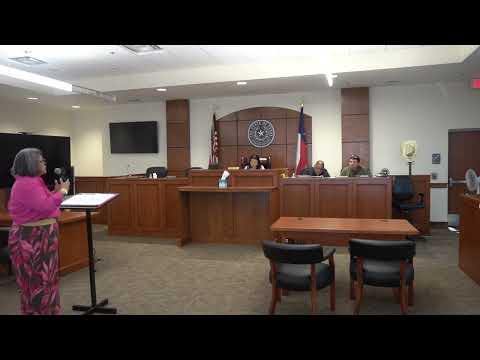
Justice of the Peace Sonia Guerrero Perez told the Dimmit County Commissioners Court on July 14 that her office's practice of allowing donations or community-service conditions in deferred dispositions is legal, but county officials and the court's legal advisers urged caution over possible judicial-conduct and record implications.
Justice of the Peace Sonia Guerrero Perez told the Dimmit County Commissioners Court on July 14 that her office's practice of allowing donations or community-service conditions in deferred dispositions is legal, but county officials and the court's legal advisers urged caution over possible judicial-conduct and record implications.
Perez, who presented the monthly JP Precinct 1 report, said she had consulted the Texas Justice Court Training Center and the attorney general's office and would provide written guidance to commissioners. She said community-service and donation options are intended to help people who cannot afford fines and that her office runs three such charity-driven events a year in addition to ordinary case processing.
County Attorney Danny Gonzalez raised concerns earlier that accepting donations in lieu of fines could reduce county revenue if cases were later dismissed rather than resulting in convictions. Perez responded that in her practice the alternative is not a dismissal: when donations are accepted as a condition of disposition, a conviction can remain on record unless a deferred disposition is granted.
Staff attorney Mark Zuniga advised the court that, under the Code of Criminal Procedure, deferred dispositions may allow a judge to impose "any reasonable condition" and that community-service conditions can include placement at nonprofit organizations that provide services to the public. Zuniga cautioned that the Texas Code of Judicial Conduct could still restrict how judges solicit or accept donations and recommended consulting the State Commission on Judicial Conduct about ethical limits.
Commissioners and other speakers urged clarity and documentation. Several commissioners said Perez had followed a process of consultation and supplied statutory references; others urged an inquiry to the judicial conduct authority to ensure there is no appearance of political or improper influence. Perez said she had discussed the matter with Gonzalez and with the Texas Justice Court Training Center and would continue the practice unless law or guidance changed.
The court took a formal vote to approve JP Precinct 1's monthly report (motion by Commissioner Alonso Carmona; second by Commissioner Cabrera); the motion carried.
Why it matters: The exchange highlights the tension between local court discretion to impose alternatives to cash fines and the ethical limits on judges' conduct. If a practice affects case outcomes or county revenue, it can trigger legal review and potential changes in internal policy or county procedures.
What was not decided: Commissioners did not adopt any new written policy or ordinance restricting JP practices at the meeting; the county attorney flagged concerns and staff recommended seeking advice from the State Commission on Judicial Conduct.
Looking ahead: Perez said she would provide the written paperwork and training-center guidance to the court and continue the limited program unless formal legal guidance or new law requires change.