Get Full Government Meeting Transcripts, Videos, & Alerts Forever!
Get email alerts on the Education Facilities Leasing topic
No spam. Unsubscribe anytime.
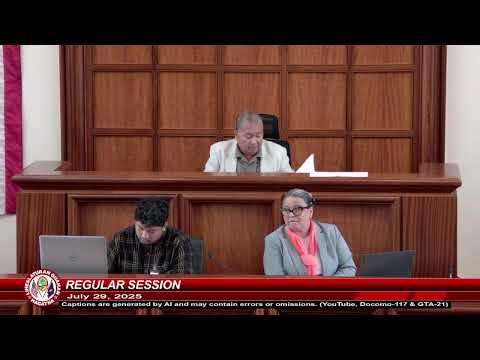
Senate debates leasing measure for GDOE properties; amendment to set lease parameters passes, broader safeguards fail and bill returned to committee
Summary
The Guam Senate debated Bill 70-38 COR, which would let the Guam Department of Education lease unused school properties to generate revenue, and adopted an amendment requiring GDOE to develop lease parameters with other agencies; after additional amendments failed, the bill was returned to committee.
The Guam Senate spent multiple hours debating Bill 70-38 COR, a measure that would allow the Guam Department of Education (GDOE) to lease unused school properties and deposit revenue into a fund earmarked for education. Senators agreed to an amendment requiring GDOE to develop lease parameters in consultation with other government agencies, but several other proposed safeguards failed and the chamber ultimately voted to return the bill to committee.
The core amendment adopted on the floor, proffered by Senator Sabina Perez, adds a new subsection requiring GDOE "to develop lease parameters in consultation with the Guam Economic Development Authority, Department of Land Management, Department of Administration, and other government entities as deemed necessary." Perez said the change replaces the word "plan" with lighter, more flexible "parameters" so the department can move without being unduly constrained while still seeking expert guidance.
Major points of debate: - Minimum lease price: A separate amendment that would have required lease amounts to be a minimum of 90% of the appraised value (with a proposed exception for educational institutions or government agencies paying cash) was debated at length and failed. Opponents said the exception would erase the minimum and risk undervaluing public property; proponents argued flexibility is needed when government or educational entities require space. - Oversight and expertise: Supporters of requiring GDOE to consult GEDA, DLM and DOA argued those agencies provide procurement and land-management expertise and can help protect DOE from missteps; critics warned prior administration responses to DOE requests were uneven and urged the Legislature to ensure any assistance does not turn into delays or further obstacles. - Priority for students: Multiple senators pushed to ensure leasing does not undercut efforts to alleviate double sessions (cases where students attend school in split shifts). An amendment to permit leases only if the property cannot be used to end double sessions failed to pass on the floor. - Potential for below-market deals: Several senators voiced concern the bill as amended could allow arrangements with very low rent (for example, nominal-dollar leases) if a broad exception remained; proponents said the bill already includes appraisal and valuation steps to prevent "sweetheart" deals.
Quotes from the floor: Senator Sabina Perez, explaining her amendment, said on the record: "GDOE shall develop lease parameters in consultation with the Guam Economic Development Authority, Department of Land Management, Department of Administration, and other government entities as deemed necessary." Senator Khambhtumuning (floor identification) proposed a separate idea for a dollar-for-dollar offset that would let lessees deduct investments they make in a facility from lease payments; he framed it as a way to get defunct schools repaired and returned to productive use.
Procedural actions recorded in the transcript: - The chamber voted without objection to adopt Senator Perezs amendment adding the requirement for GDOE to develop lease parameters in consultation with GEDA, DLM and DOA. - Multiple subsequent amendments were debated (including the 90% floor with exceptions and an amendment tying leasing to alleviation of double sessions); the 90%-with-exception amendment was defeated in a recorded voice/raising-hands process. The double-session limitation amendment also failed on objection. - A motion to return Bill 70-38 COR to committee was made and ordered without objection; the chamber recessed following that motion.
Why this matters: GDOE told the Legislature it lacks sufficient operating funds and faces maintenance backlogs. Proponents of the bill framed leasing unused facilities as a sustainable revenue source that could be dedicated to school facilities and operations; critics warned the Legislature must guard against undervaluing public property or allowing leases that harm long-term student needs.
Next steps: With the bill returned to committee, sponsors and committee staff are expected to refine language on parameter-setting, appraisal floors and protections for double-session students before bringing a revised measure back to the floor.
Ending: Senators speaking on the floor agreed on the urgency of addressing both GDOE's maintenance needs and double-session impacts on students; the bill will be reworked in committee before further action.