
UN briefing: humanitarian situation in Ukraine "deteriorated sharply" as funding covers 34% of appeal
Get AI-powered insights, summaries, and transcripts
Subscribe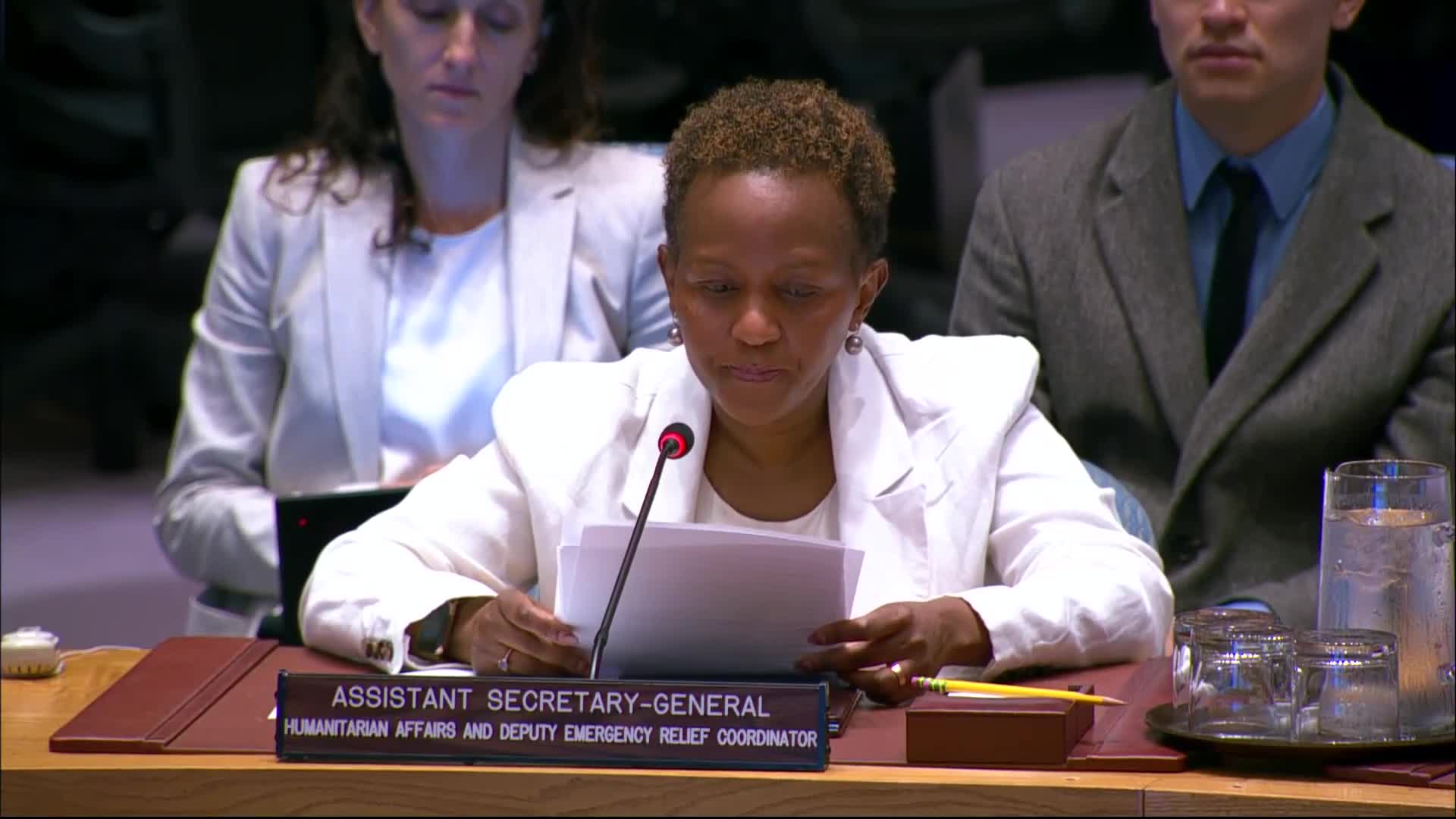
Summary
At a United Nations council briefing, Joyce Nsuya said renewed strikes and access constraints have sharply worsened civilian harm in Ukraine, with nearly 13 million people needing assistance and just 34% of the $2.6 billion 2025 appeal funded.
Joyce Nsuya, a United Nations official, told the council on Oct. 25 that the humanitarian situation in Ukraine has “deteriorated sharply” since the last UN update on June 20, describing renewed missile and drone strikes, rising displacement and critical funding shortfalls.
Nsuya said nearly 13,000,000 people now need assistance in Ukraine, and just 34% of the $2,600,000,000 required for the 2025 humanitarian needs and response plan has been received, forcing cuts to cash assistance, mental-health support and programs addressing gender-based violence.
The briefing matters because winter is approaching, access to people in need is constrained by fighting and administrative impediments, and funding shortfalls and diminished local capacity threaten life-saving services, United Nations briefers warned.
Nsuya described a recent week of “renewed waves of missile and drone strikes” that damaged homes, schools, hospitals and public infrastructure across multiple regions. She said authorities reported strikes in urban centers, including Cherkasy, Kharkiv and Odesa, that killed five civilians and injured 93 people in one recent 24-hour period, including 11 children. Attacks in Dnipro, Kharkiv and Sumy in a single weekend “reportedly killing dozens” and injuring more than 70 people, Nsuya said. In Kharkiv, she said, a rehabilitation center for people with disabilities was hit; in Kyiv a kindergarten, a metro station, shops and residential buildings were damaged.
"There is no safe place left in Ukraine," Nsuya said, summarizing repeated strikes on population centers and the continuing use of explosive weapons, including long-range missiles and drones, as a “key driver of civilian harm.” She told the council that nearly 3,700,000 people remain internally displaced inside Ukraine and nearly 6,000,000 people are refugees abroad. Since April, more than 26,000 people fleeing hostilities have registered at transit centers, and partners are opening new sites in the Sumy and Dnipro regions to meet rising needs.
Nsuya also flagged cross-border reports of civilian casualties and damage to infrastructure in Russian regions including Kursk, Bryansk, Belgorod, Voronezh, Kaluga, Lipetsk and Tula. She reiterated the briefing’s legal point that “under international humanitarian law, all parties must take all feasible precautions to avoid and minimize civilian harm.”
The speaker warned that access constraints are limiting aid delivery in areas under the control of the Russian Federation. The UN estimate cited in the briefing places about 1,500,000 civilians in those areas in need but difficult to reach because of “persistent access impediments” that have delayed or suspended aid convoys, particularly in Kherson and Donetsk.
Nsuya raised the continued use of anti-personnel mines as a daily risk to civilians and noted recent steps by some states, including a Ukrainian presidential decree announcing Ukraine’s withdrawal from the Anti-Personnel Mine Ban Convention. She said the convention “strictly prohibits” these weapons and cited the secretary-general’s call for states to adhere to humanitarian disarmament treaties.
On funding and preparedness, Nsuya said the UN and partners launched the 2025–26 winter response plan to reach 1,700,000 people with heating support, winter clothing, shelter repairs, emergency energy solutions and cash. She said more than 3,600,000 people have received emergency health care, shelter, clean water and cash since January, but that without an immediate influx of resources even prioritized programs will be at risk ahead of a fourth wartime winter.
Nsuya closed by urging three actions: protect civilians and civilian objects; ensure safe, rapid and unimpeded humanitarian access everywhere; and for member states to increase support so the response can be sustained and expanded. "We urge member states to act now so that emergency supplies are in place before winter hits," she said.
The briefing contained no recorded council vote or formal decision; speakers asked the council to press member states for funding and to facilitate humanitarian access.