Lincoln Public Schools previews 2025–26 budget; district will cover 19 mental‑health positions after federal cut
Loading...
Summary
At a July 22 special work session, district staff told the Board of Education the proposed 2025–26 budget assumes steps to sustain programs facing federal funding cuts, includes a small levy reduction and a 1‑cent building fund proposal, and emphasizes contingency planning for roughly $8 million in at‑risk federal funds.
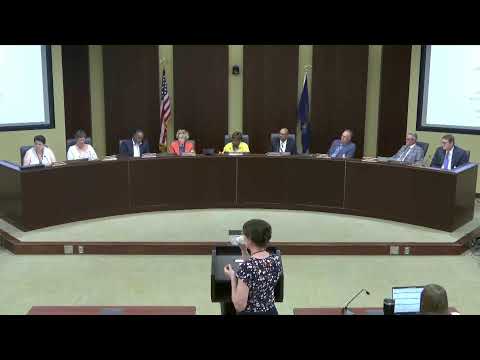
Lincoln Public Schools presented its preliminary 2025–26 budget at a July 22 special work session, and district staff told the Board of Education they will cover positions if specific federal grants are discontinued.
Dr. Standish, the district’s lead presenter during the work session, said the district “has placed sufficient funding in the budget proposal to sustain the 19 FTE for the 2526 school year” after a school‑based mental‑health grant was discontinued and will end on Dec. 31. She told the board staff are monitoring other federal funding streams and planning for a one‑year fiscal impact before decisions for 2026–27.
Why it matters: district officials said roughly $8 million in federal funds are under review and that those risks could affect about 44 full‑time‑equivalent (FTE) positions if the funding is lost. The budget staff recommended stabilizing programming for 2025–26—using the general fund where needed—and planning staffing and program changes for the 2026–27 budget cycle if the federal picture does not clarify.
Major budget moves and context District staff said the proposed 2025–26 budget uses the district’s full base‑growth levy allowance and recommends a levy reduction of about 7 cents for the general fund. The proposal also includes a 1‑cent increase in the building fund; staff estimated that 1 cent would generate about $3.8 million to be used for acquiring property, improving sites and buildings, and other one‑time capital needs. Dr. Standish noted the district’s building‑fund balance is about $7.8 million.
Staff described the district’s overall size and cash flow: the general‑fund budget cited in the presentation was approximately $559 million; payroll runs at about $30 million per month; the proposal uses about $1.3 million of cash flow in 2025–26. All‑funds accounting (with some duplicated line items across funds) was described as roughly $900 million in total.
Federal funding and grants under review Dr. Standish told the board staff distilled more than $100 million of federal grants (multi‑year totals) down to the portion that affects the upcoming year. She identified three areas of immediate uncertainty: - School‑based mental‑health grant: district staff received notice the grant will be discontinued, affecting about 19 FTE and creating a one‑year fiscal impact the district estimated at nearly $2 million if the position costs were carried for the full year. The district’s plan, she said, is to sustain those 19 FTE through 2025–26 and then re‑evaluate for 2026–27. - Promises grant (Nebraska entity): staff said the notice of discontinuation was sent to a regional partner listed as “Nebraska West/Westland” and that the partner is appealing; transcript text identified a fiscal input number of “287” but did not specify units (see clarifying details). - U.S. Department of Education review of Title programs: the district reported the U.S. Department of Education is reviewing funding for multiple Title streams (listed in the district materials as Title 1C, 2A, 3A, 4A and 4B). Staff prepared an estimate that, if those Title streams were affected in 2025–26, the district could face roughly 24 FTE and about $3.7–4.0 million of impact for that year.
Dr. Standish summarized the district’s approach: “The goal of the school district is always what can we do that would be stable?” and emphasized the district’s intent to stabilize programming for 2025–26 and then use the 2026–27 budget cycle to make longer‑term decisions based on updated information.
Other revenue streams and risks Staff discussed a recurring revenue source that is not a grant: Medicaid reimbursement. The district reported a five‑year average of about $2.2 million per year in Medicaid reimbursement for school‑provided services; staff said state legislation affecting that stream will be monitored.
Enrollment and staffing context Dr. Standish and budget staff said LPS remains a growing district: enrollment increased by about 575 students after last year’s budget adoption, and staff expect roughly 135 additional students this coming fall. The presentation emphasized that most district spending is personnel: the budget is roughly 89% personnel costs.
Class sizes District staff member Dr. Salem gave a snapshot of average class sizes if school started the next day: Title I kindergarten classes about 17 students; first grade about 18.1; second about 18; third about 19; fourth about 18.5; fifth just under 20. Staff said non‑Title elementary schools average about two to three students more per classroom; middle school averages were presented as roughly 21–25 students per class, with a few schools in the mid‑20s; high‑school staffing is handled through a points model (see below).
Cost‑savings and operations notes Budget staff highlighted several cost‑savings efforts and investments, including energy projects: the Park Middle School geothermal project was cited as reducing energy costs by 54%. The presentation also noted operational efforts (waste diversion, energy demand reductions at Northwest and Standing Bear) and the district’s roughly 8 million square feet of facilities to maintain.
How staffing and funding choices are made Budget staff described a “points” model used at secondary schools: each staff role is assigned points (a teacher role was given as an example at 20 points) and schools receive points based on student need (enrollment, special‑education counts, mobility, attendance factors). That system is intended to allocate resources on a needs basis and allow principals to hire the best available candidate for their building.
Next steps and public process Staff reminded the board that the district completed an online input window in July, will hold public work sessions and forums, and will accept public comment at upcoming board meetings. The district expects to hold a local property‑tax request hearing (presenter said “would be September 9”) and to file its final budget by the statutory September 30 deadline.
Dr. Standish and staff encouraged questions and said the finance committee reviewed the budget and recommended no wholesale changes after the public process. She closed by highlighting that staff will continue to monitor federal and state developments and bring recommended actions to the board if circumstances change.
Ending The board scheduled the property‑tax request hearing and additional meetings in August and September and adjourned the work session. The presentation materials and question‑and‑answer documents staff reviewed at the session are posted on the district website, budget keyword search, according to Dr. Standish.