Get Full Government Meeting Transcripts, Videos, & Alerts Forever!
Get email alerts on the Parks Strategy Trails Grants topic
No spam. Unsubscribe anytime.
Parks board debates long-term role, trails and grant strategies as county grows
Summary
Broadwater County's parks board discussed whether to develop a forward-looking strategic plan, expand trails and pursue large grants such as pedestrian-bridge funding, and assigned staff to research templates and neighboring-county practices.
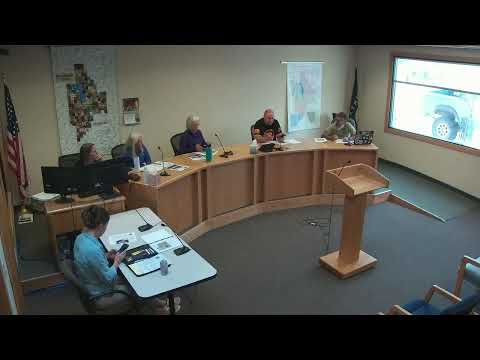
At the July 21 meeting the Broadwater County Parks and Recreation Board discussed whether the county should develop a strategic parks and recreation plan beyond the adopted Canton Lane master plan and how the board should position itself for future projects, trails and large grants.
Board members said growth in Broadwater County and increasing park usage make it appropriate to consider a multi-year vision. One board member told the group the board functions as an advisory body and suggested a short strategic template could help the board focus limited funds and volunteer capacity.
Board members and staff discussed several near-term priorities: aiding the county trails group on digitizing maps, researching pedestrian or ATV bridge options across the river, and organizing youth participation on boards. The board identified grants as a key pathway for large projects and repeatedly cautioned that many federal and state grant programs require multi-year commitments and engineering support.
“We we do our board meetings every other month,” a parks-board member said while describing the practical limits of board action. County staff and board members agreed to research templates and examples used by neighboring counties. Lindsay offered to check with other counties and the board asked staff to collect a simple vision or strategic-plan template for future use on the county website.
The board also discussed trail enforcement and user conflicts at local walking paths, where ATVs and trucks reportedly use routes designated as nonmotorized. Members asked staff to follow up with the trails coordinator, and to explore whether highway widening or other state Department of Transportation projects could affect trail alignments.
Board members proposed smaller, achievable projects that could be done without major capital budgets—tree-planting schemes, partnerships with civic groups such as the Lions Club for maintenance, and targeted grant applications. The board noted that some projects may fit within county trust-board match requirements or be partly in-kind contributions.
On youth involvement, staff reported an upcoming meeting with local schools to test interest in placing youth representatives on the board. The board agreed to pursue outreach and to revisit youth engagement at a future meeting.
Ending: Staff will gather strategic-plan templates, follow up with trail coordinators on digitization and enforcement, and research grant options; the board set assignments and asked for an update at a future meeting.