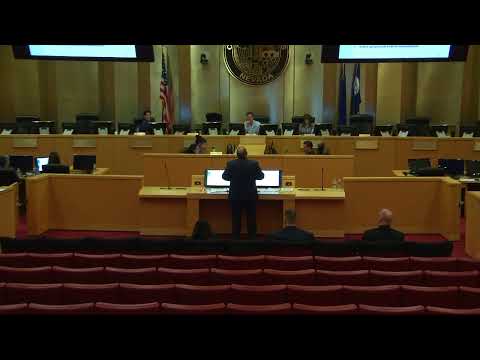
Audit identifies data, collection and scheduling gaps in Las Vegas business licensing compliance section
Loading...
Summary
James Burnett, senior internal auditor, presented the Audit Office’s review of the Department of Community Development’s business licensing compliance section on July 21, 2025.
James Burnett, senior internal auditor, presented the Audit Office’s review of the Department of Community Development’s business licensing compliance section on July 21, 2025. The audit found fees and fines are assessed in accordance with the municipal code but identified gaps in sending unpaid amounts to collections, inconsistencies in InForce system permissions, opportunities to improve performance metrics and potential coverage gaps for evening/weekend businesses.
The audit matters because the compliance section enforces municipal code provisions including Title 6 (business taxes and licenses), certain provisions of Title 9 (health and safety), Title 12.22 (special events and filming) and Title 16.22 (nontransient lodging). Effective performance data, timely collections and coordinated inspections affect regulatory compliance, public safety and city revenue.
Burnett summarized objectives: assess performance metrics and reporting to city management and council; verify fees/fines collection procedures; evaluate causes of operational inefficiency in licensing fourplexs related to fire prevention inspections; and review InForce system permissions and shift coverage. The compliance section completed 4,552 field inspections in calendar year 2024 and is staffed by a currently vacant compliance section manager position, two senior license officers and seven license officers.
Key findings and recommendations included: 1) expand and make performance metrics more accessible to department management and council and evaluate data sharing via the city’s transparency website; 2) improve documented procedures and workflows to ensure unpaid fines are forwarded to the city’s collection agency as policy requires and determine which existing fines should now be assigned to collections; 3) improve coordination with Fire Prevention for fourplex licensing to reduce repeated restarts of the application process and update applicant handouts to clarify inspection scheduling; 4) document and implement a process to promptly remove or change InForce system permissions when employees transfer or separate, and confirm changes; and 5) evaluate shift arrangements or periodic evening/weekend sweeps to address businesses that operate primarily outside standard Monday‑Thursday schedules.
Darcy Edelbe (business licensing manager) told the committee the compliance section has responded and is working with IT; she said she did not have a total amount for unpaid collections and indicated that fines and fees have not been sent to collections reliably since about 2020 because of system limitations. Seth Floyd, director of community development, said technology solutions to publish and refine metrics are expected to be in place by October 2025, though Darcy later said more comprehensive metric development tied to privileged-license sweeps has been pushed into the next year to build a larger dataset.
Committee members asked for more context about the scale of uncollected fees and the benchmark for inspection volume; auditors and department leaders said they will provide additional context in future reporting. The committee accepted the report by motion.