Get Full Government Meeting Transcripts, Videos, & Alerts Forever!
Get email alerts on the Transportation Sales Tax topic
No spam. Unsubscribe anytime.
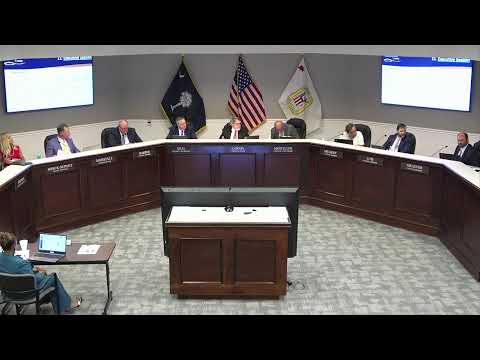
Lancaster County Council OKs transportation sales-tax referendum for November with amendments
Summary
The Lancaster County Council voted 5-2 to place a proposed 10-year transportation sales and use tax referendum on the Nov. 4 ballot, approving a $253 million project package and related bonding question after several amendments to which projects and priorities the revenue would fund.
The Lancaster County Council voted 5-2 on third reading to place a proposed transportation sales-and-use tax package on the Nov. 4, 2025, ballot that would raise the county sales tax from 8% to 9% for 10 years and is projected to generate about $253 million for road widenings, intersections, resurfacing, right-of-way and utility costs, and smaller mobility projects.
The measure approved by council also asks voters a second question permitting the county to issue up to $100 million in bonds backed by proceeds of the special sales tax so projects can move forward more quickly than pay-as-you-go funding would allow.
Council members amended the ordinance on the floor multiple times before final passage. The council voted unanimously (7-0) to add Harrisburg Road and Barbourville Road to the major-widening funding bucket. A separate amendment to replace one intersection project with another (substituting the Still Hill/Old Hickory alignment for the South White/3 Crow/Old Hickory alignment) passed 4-3. Council also added language in the ordinance’s project exhibit to earmark $1 million of the greenways bucket for the Lindsay Pettus Greenway; that earmark was approved 7-0.
Why it matters: county staff and advocates said the county’s road needs outstrip existing annual revenue streams and that state and federal grants are more likely where local matching funds are available. The approved ballot language groups projects into funding “buckets” (major widenings, intersections, resurfacing, right-of-way/utility work, greenways/sidewalks and implementation/management) rather than listing every segment on the ballot, though the full project list will be included in the ordinance exhibit and used in voter education.
Council discussion and amendments: presenters emphasized the need to pair sales-tax funding with state Transportation Bank or SCDOT matching funds to widen high-traffic corridors more quickly. Several council members voiced concerns about the cost estimates for right-of-way, utility relocation and project management, saying those line items are often underestimated and that the public needs clear expectations about what the tax will and will not cover. Some council members also cautioned that voters rejected a similar question in November and said they were hesitant to return to the ballot so soon; proponents said a narrower, more-targeted plan could be more persuasive to voters.
Vote and next steps: the motion to adopt the ordinance as amended passed 5-2. The transcript records that Councilman Steve Harper and Councilman Billy Mosteller opposed the measure in earlier votes and were the two dissenting votes during the final third-reading approval. If the council’s action stands, the county will begin a public education campaign and file the ordinance and exhibits with the county voter registration office so the question appears on the Nov. 4 general-election ballot.
What’s included: the approved package allocates funding across the county and to towns for widenings, intersection upgrades (including added roundabouts), resurfacing and pavement preservation, right-of-way acquisition and utility relocation, implementation costs, and a $2 million greenways/sidewalks bucket (with $1 million now identified in the ordinance exhibit for the Lindsay Pettus Greenway). The presenters said the $98 million major-widenings bucket includes planned phases on Highway 521 and Henry Harris Boulevard but cautioned that the $98 million will not be sufficient to widen entire corridors and may be used partly as local match to obtain additional state or federal funding.
Public and staff materials: staff said the ordinance’s exhibit contains a multi-page list of roads and projects by municipality and county jurisdiction that will be used in outreach. Council directed staff and communications to prepare clear educational materials explaining that projects will be prioritized and that some projects will be phased, dependent on grant awards and right-of-way acquisition timelines.
Provenance: council debate and staff presentation beginning at the meeting presentation on the ballot question and project exhibit, with amendments recorded in the legislative debate and vote.
Ending: Council members who supported the measure said the referendum gives the county a local funding tool to leverage state and federal dollars and address safety and capacity problems on county roadways; opponents warned voters should be given realistic cost expectations for right-of-way and utility relocation and that returning to voters so soon could risk another defeat.